
Introduction
This paper includes the history of car usage in Rome, the initial issues associated with it and actions taken, the rise of limited traffic zones (ZTLs) and the impact they has on modern day transportation in Rome.
The Rise of Car Usage in Italy and Rome
Italy has a long history with cars. Paolini in the book Made in Italy goes over that the industry started in 1894 with motor tricycles and quadricycles and quickly expanded into motor cars. Fiat became the first company to branch out the industry into the upper middle class by creating the Zero in 1912. Fiat continued to transform the car industry by introducing the 509 and 500 A Topolino but it was still not accessible to the everyday person. In 1950, there was one vehicle per 81.9 Italians whereas West Germany, France, Great Britain and the United States all had smaller numbers (48.7, 17, 15.2 and 3.1 respectively). It wasn’t until the 600 and 500 models were released in 1955 and 1957 that Italy’s accessibility to cars increased exponentially. By 1974, Italy had one vehicle for every four Italians. Over time, the Italian car industry changed to be more focused on bigger and foreign cars but the overall popularity of cars continued to grow. In 2000, the ratio was one car for every 1.72 Italians, the most cars per capita in Europe (Paolini, 2013). That ratio has continued to the present day with the European Union reporting for 2025 that Italy had 709 cars per 1000 inhabitants or a ratio of 1 car per 1.41 Italians. Today, that makes Italy have the second highest number of cars per capita, only behind Liechtenstein (Eurostat, 2025).
Rome is no exception being a part of Italian car culture. In 2024 in the annual Rome Mobily Report, it was recorded there was 677 cars per 1000 residents. This is the 2nd highest ratio for an Italian city, just behind Turin, Italy. Beyond that, the recorded overall motorization rate (cars and motorcycles) per 1000 of the working age population in Rome was a whopping 976 vehicles. In total Rome has 2.88 million cars and 540,000 motorcycles in the metropolitan area (Rapporto mobilità roma 2025: Dati e analisi | Roma Mobilità, 2025). On a daily basis, around 50% of trips in Rome are done by car, 27% are public transport, 17% are walked and 6% are mixed between methods (I documenti - Roma Servizi per la Mobilità, 2024).
Initial Issues
Due to the increasing popularity of owning a car in Italy in the 1960s, issues presented themselves from the start. Every public area and street was overtaken by cars and many cities just did not have the capacity for it, including Rome. Examples in 1956 and 1963 of this congestion at Piazza del Popolo (Figure 1) and Piazza Colonna (Figure 2) are shown below.
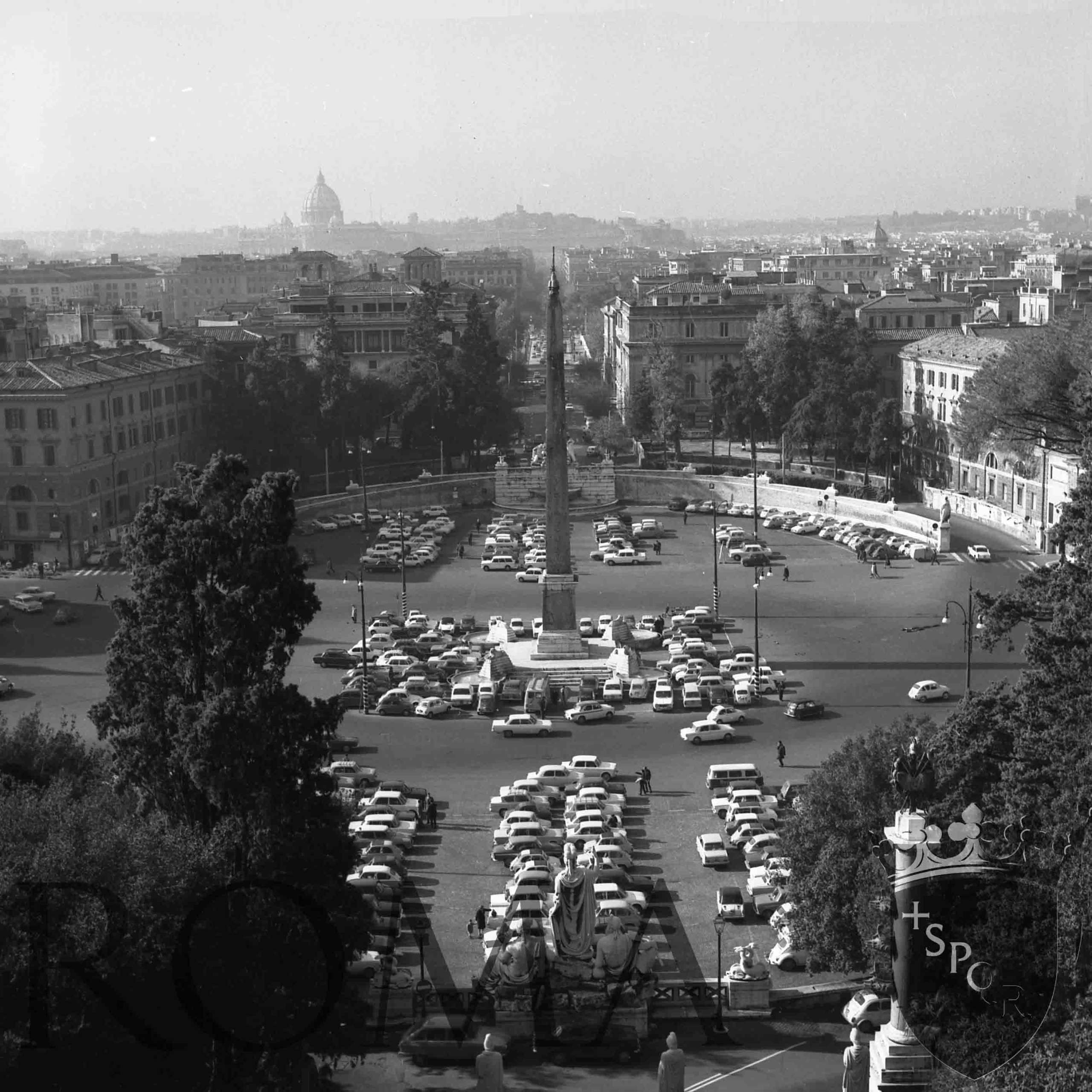
Figure 1. Piazza del Popolo
From Roma Capitale, 2019
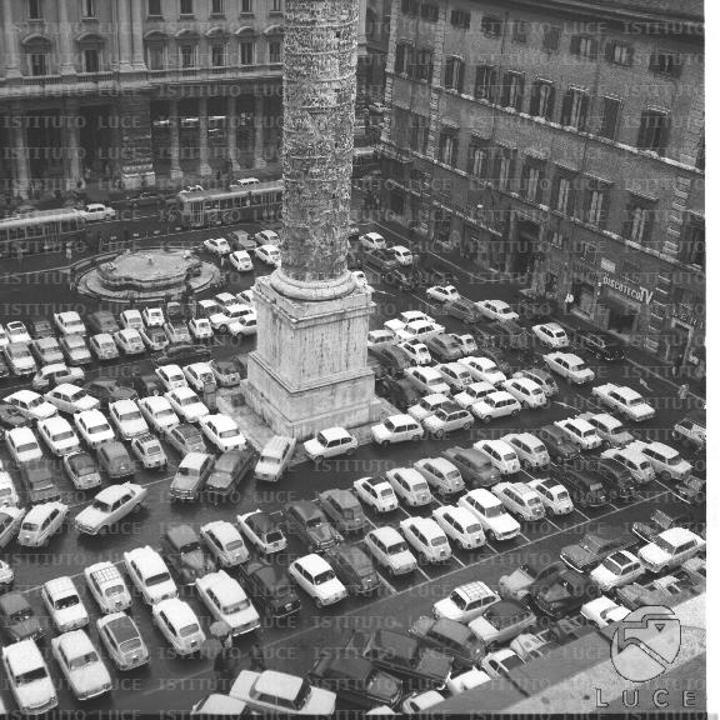
Figure 2. Piazza Colonna
From Luce Archivio, 1963
There was no space left for the cars in Rome and traffic was so bad experimental measures were taken. In 1966, Time reported that Antonio Palapro, the Rome Traffic Commissioner at the time, “prohibit[ed] all private cars from 9 a.m. until 1 p.m. and from 5 p.m. until 9 p.m. from the 35-block, 25-acre heart of the city’s shopping center”. Although the increased traffic around the area died down after the first few days, small shops were not happy with the extreme change and eventually got the policy reversed (Time, 1966). Another example was in 1971, the New York Times reported that a 9 day experiment occurred where all public transit was free in Rome. The city council approved the plan in hopes of potentially continuing it after seeing traffic reduce but the plan failed due to many citizens not even learning of it (Hofmann, 1971). Just a few years later in 1974 and 1975, the New York Times continued to report closures of sections of the city to private traffic. For each of these closures, it can be assumed they did not last long due to backlash and failure to reduce car usage.
Another problem was also arising: air pollution levels. The emissions in the area negatively impacted historical monuments. According to the New York Times, photos from 1950 and 1980 of ancient roman monuments were compared and many of the monuments were considered “unrecognizable” as parts have fallen off due to pollution (Tanner, 1980). A study done in 1995 on the Arch of Titus, found that nearby street traffic contributed to 18% of the SOx concentrations in the area (Metallo et al., 1995). This is impactful because SOx reacts with calcite in marble and limestone and causes the calcite to dissolve. Also, when calcite, water, and sulfuric acid are combined, gypsum is formed causing a persistent black coating on the monuments (USGS, 2022). In the 1970s/80s, cars were considered the cause of this issue (Tanner, 1980). However, the 1995 study concludes that although cars do contribute to SOx emissions, they are not the only source as the main source was heaters (Metallo et al., 1995).
Initial Solution (ZTLs)
Although car emissions were found later to not be the only reason for the monuments’ damages, concerns were rising. Environmental concerns, congestion and subsequent failures to fix it, led to the creation of Rome's first limited traffic zone plan otherwise known as a ZTL in 1989 (U.S. Department of Transportation Federal Highway Administration, 2014).
A ZTL is exactly what the name implies. It limits traffic flow to certain areas to hopefully help with congestion in the city. Although the process varies by city, it usually involves obtaining a permit to drive or park in areas of the city certain times a day (Travel Information Europe, 2026). According to DeRobertis in World Transport Policy and Practice Journal, Siena was considered the first city in Italy to limit cars by banning them in Piazza del Campo in 1962. Later Siena created the first ZTL (although it was not known as that at the time) in 1965, closing four main streets to all traffic except residents, buses, taxis, ambulances, and also deliveries during a certain time of the day. Bologna, another city in Italy, followed suit in 1974 coining the term “Zona a Traffico Limitato”. Many other cities continued the trend until a national law was passed and a definition was established in 1989 (DeRobertis, 2022).
The way the ZTL system worked originally in Rome was people obtained paper permits and police would enforce the permits at the entrances. Now the system is automated and a camera (examples shown below in Figures 3a and 3b) takes a picture of the license plate and verifies if it is in the permit system (U.S. Department of Transportation Federal Highway Administration, 2014). To avoid fines, it's important as a driver to pay attention to signage to see if the ZTL is active. Example of signage at one of the Trastevere entrances is shown below in Figure 4.
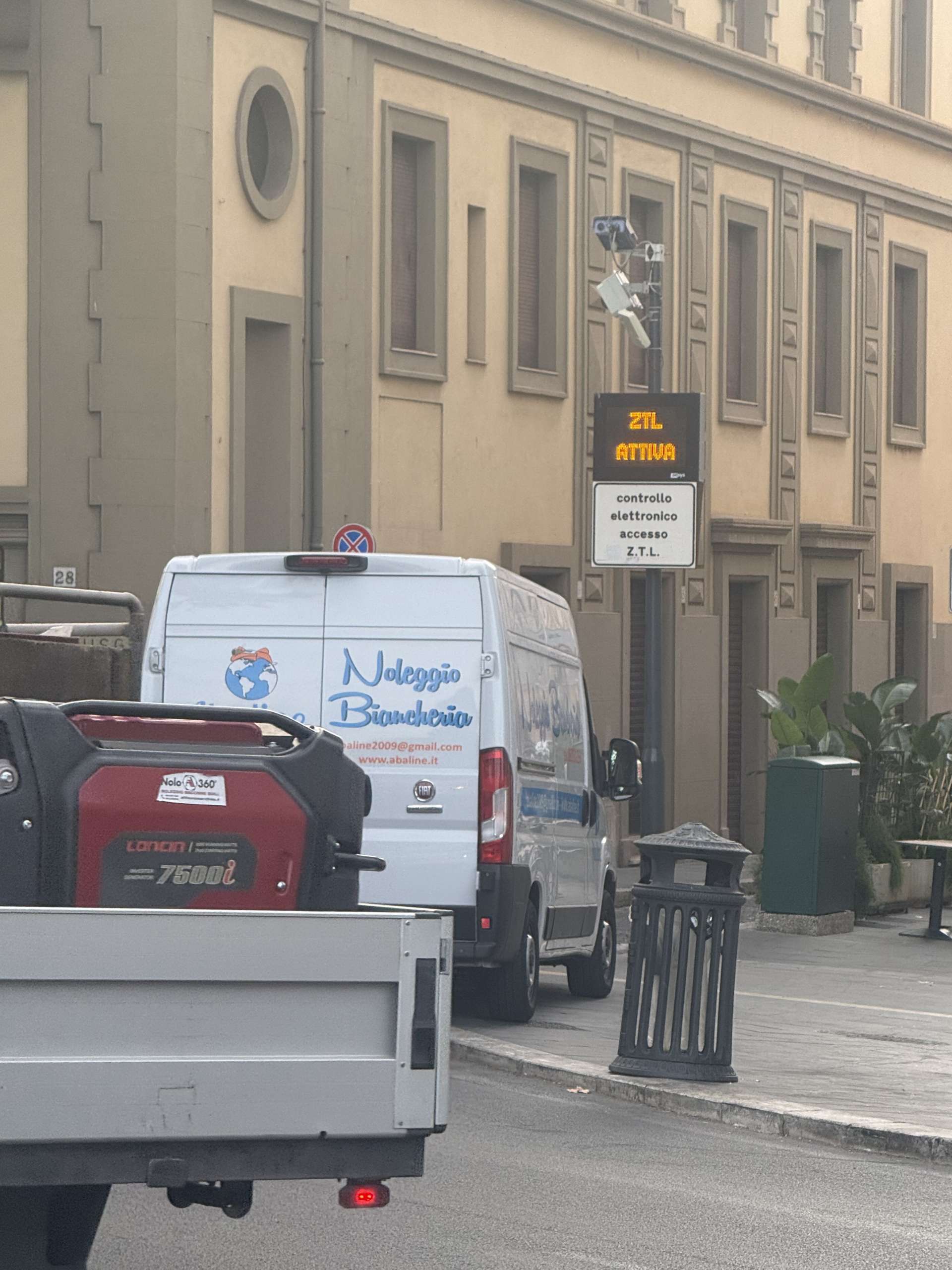
Figure 3a. Active ZTL with Camera
From Author
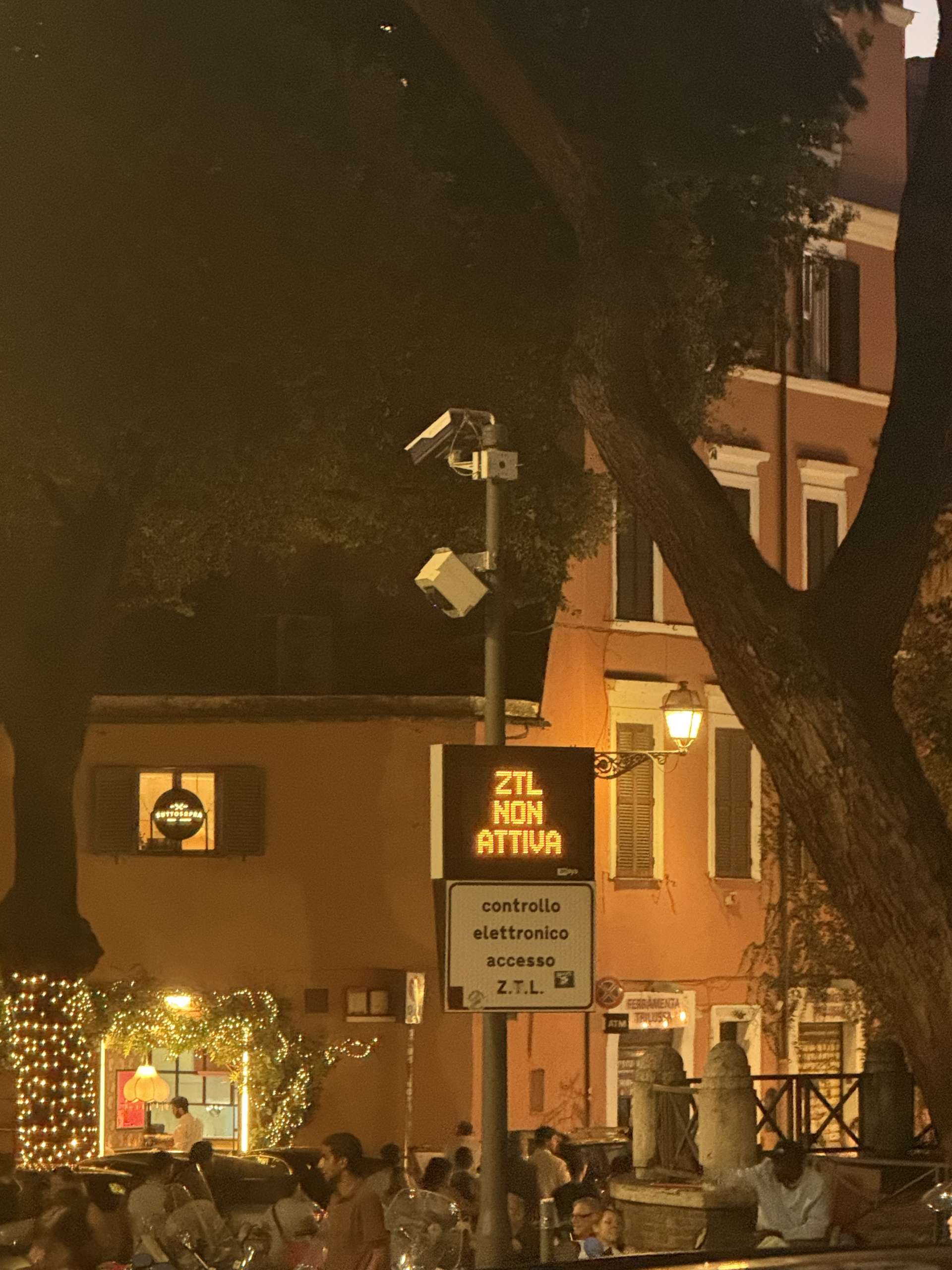
Figure 3b. Inactive ZTL with Camera
From Author
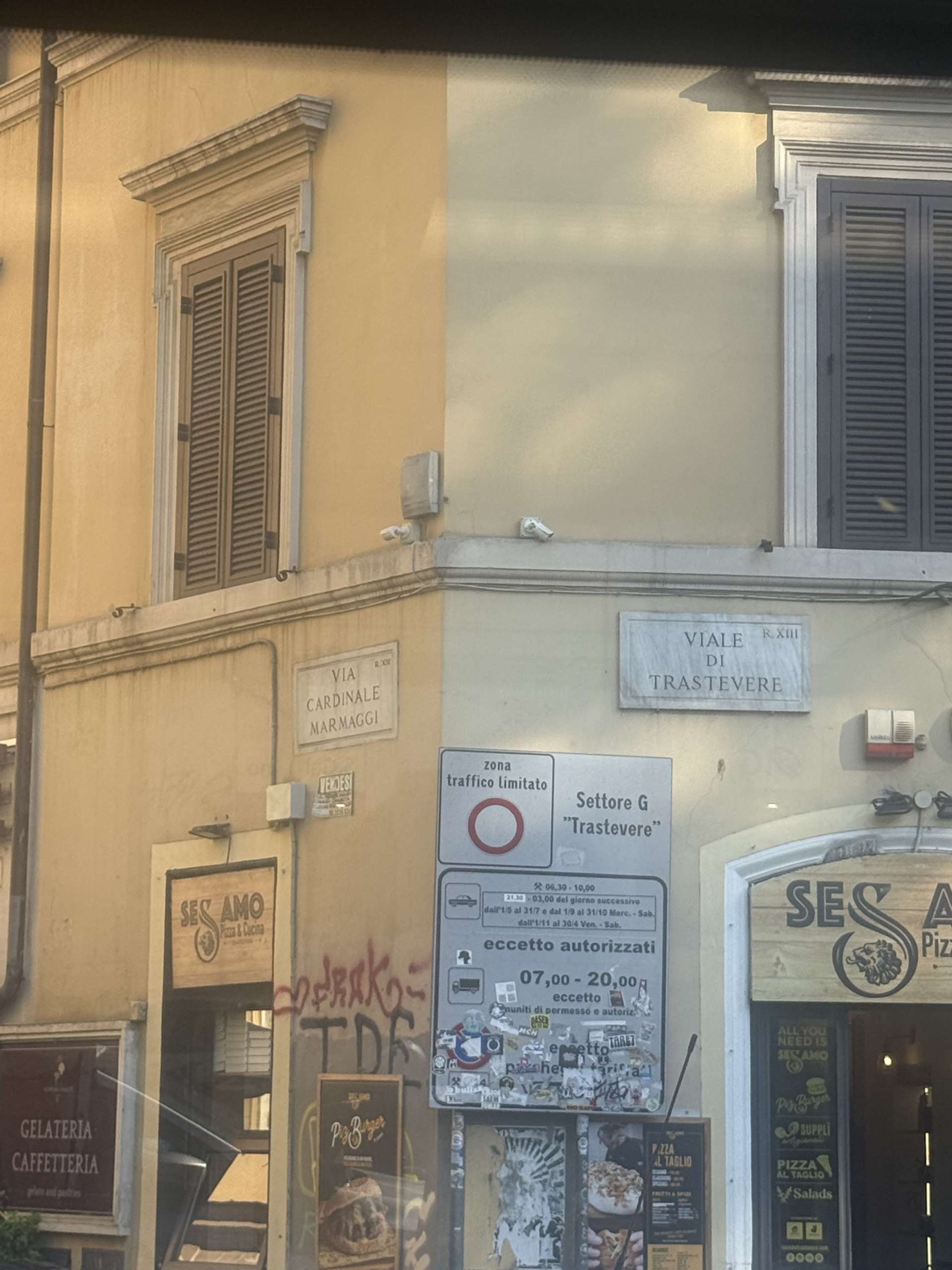
Figure 4. ZTL Signage
From Author
Today, Rome has 5 main ZTLs for the city center, each with different rules including for day and night time. These five are Testaccio, San Lorenzo, Trastevere, Tridente and Centro Storico (ZTL, 2026). A map of the zones is shown below in Figure 5.
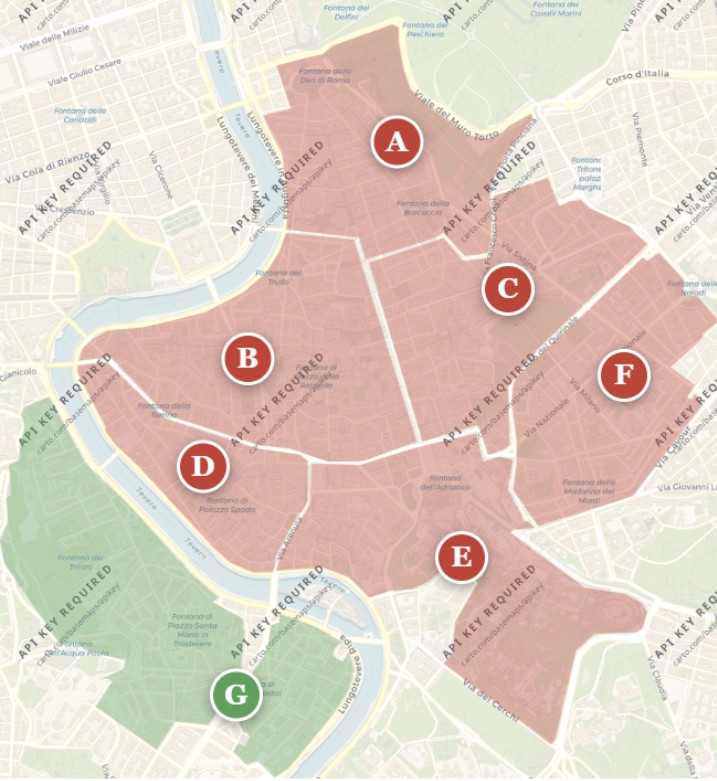
Figure 5. 5 Main ZTLs in Rome
From Essential City Info, 2026
Rome also has a complex separate ZTL system for trucks delivering goods to the city (Distribuzione in ZTL Merci E VAM, 2026). Also, Appia Antica has a newly implemented ZTL (started on Sept 19th 2026) (ZTL Appia Antica, 2026). This ZTLs goal is not to limit the amount of cars in the area but to limit through traffic on the weekends. Any vehicle can enter the gates freely but it must exit through the same gate unless it is a residential, public transit or emergency vehicle. All the ZTLs zones are shown below in Figure 6.
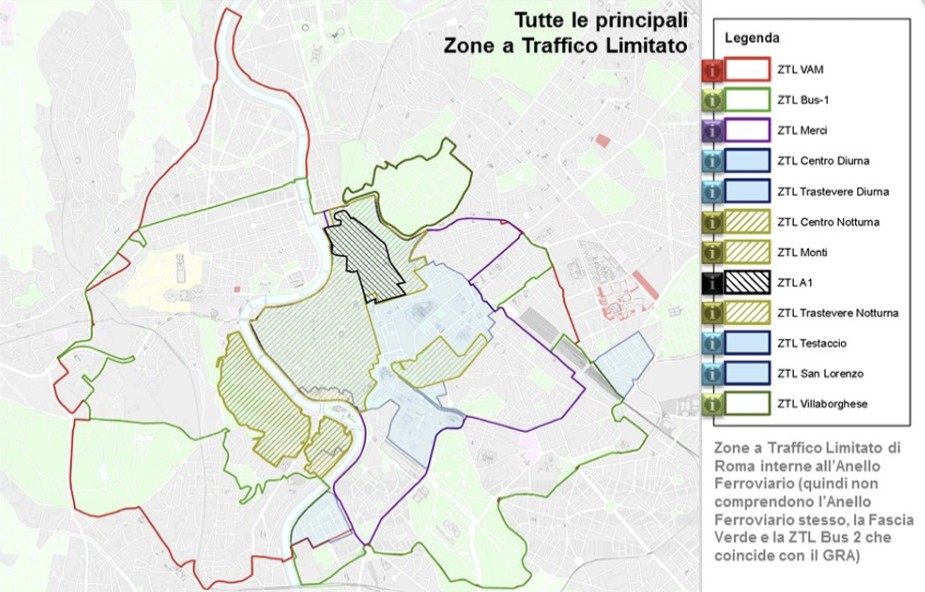
Figure 6. All ZTLs
From Rapporto mobilità roma 2025: Dati e analisi 2025
Beyond those zones, Rome has a green zone which limits access all day Monday to Saturday to certain Euro car levels (a system assigning numbers to cars based on the cars emissions) (ZTL Fascia Verde, 2026). A map of the green zone and its overlappings with the ZTLs is shown below in Figure 7. The goal of this system is to prevent air pollution in Rome. If the monitored air pollution levels get to a certain level, more Euro car levels are restricted in the area until pollution levels go down.
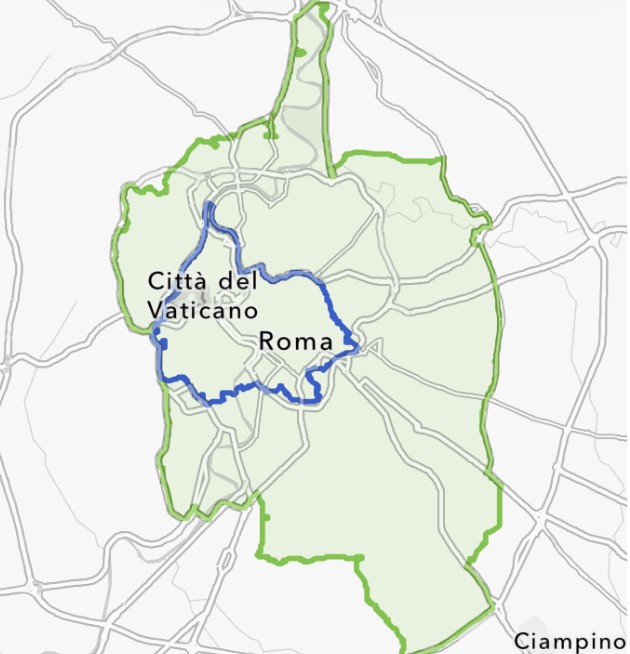
Figure 7. Green Zone in Rome
From ZTL Fascia Verde, 2026
ZTL Direct Sucess
Since ZTLs control which cars and how many enter the city, air pollution and traffic have gone down. According to a study done in 2001-2005 and released in 2011, NO2 car emissions in two low emission zones as compared to a non low emission zone, decreased an extra −4.13 and −2.99 μg/m3. PM10 emissions also decreased more in the two low emissions zones as compared to non low emission zones reporting a −0.70 and −0.47 μg/m3 (Cesaroni et al., 2011). Additionally, from 2001 to 2004 it was reported that “traffic flows decreased by 15 to 20 percent, average speed in the zone increased by 4 percent, and public transport use was up by 5 percent as a result of the ZTL and pricing scheme” (U.S. Department of Transportation Federal Highway Administration, 2014).
ZTL Indirect Success
With the implementation of ZTLs, less cars are taking up the city and other methods of transportation are able to be built up. This has especially impacted pedestrianization and walkability of the city.
Parking Problems Turned into Pedestrian Solutions
As mentioned earlier, Rome used to be overflowing with cars and so they would park anywhere including plazas. Now in the modern day, Piazza del Popolo and Piazza Colonna are void of cars. The plazas were turned back into spaces where pedestrians could walk freely and the historical monuments were left alone. Figures 8 and 9 show the plazas below.
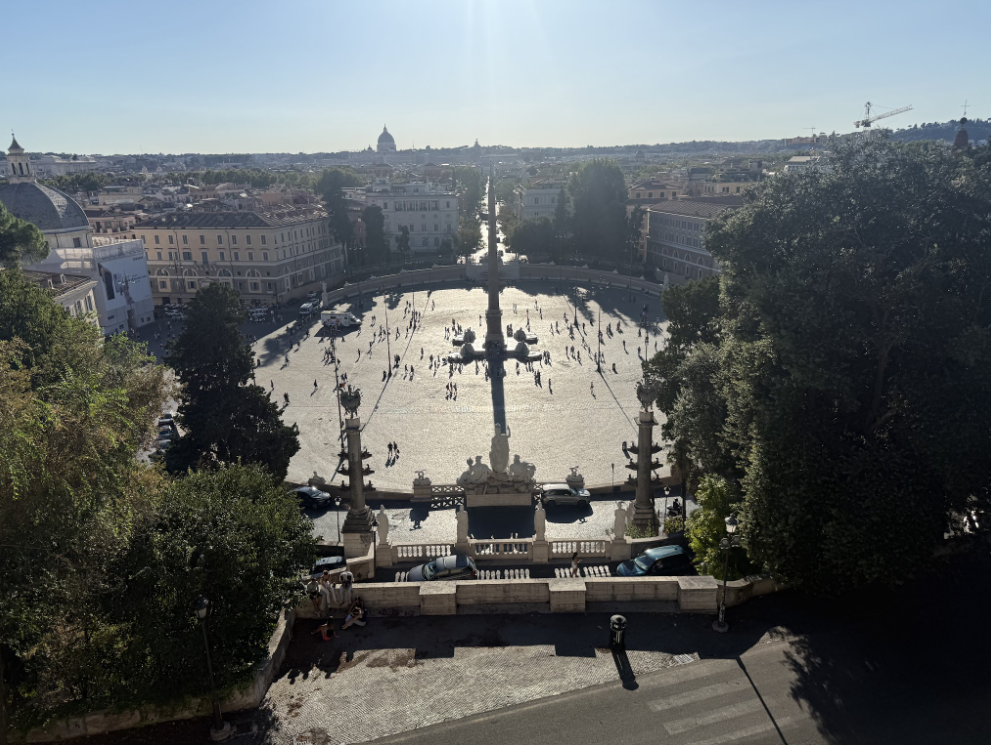
Figure 8. Piazza del Popolo
From Author
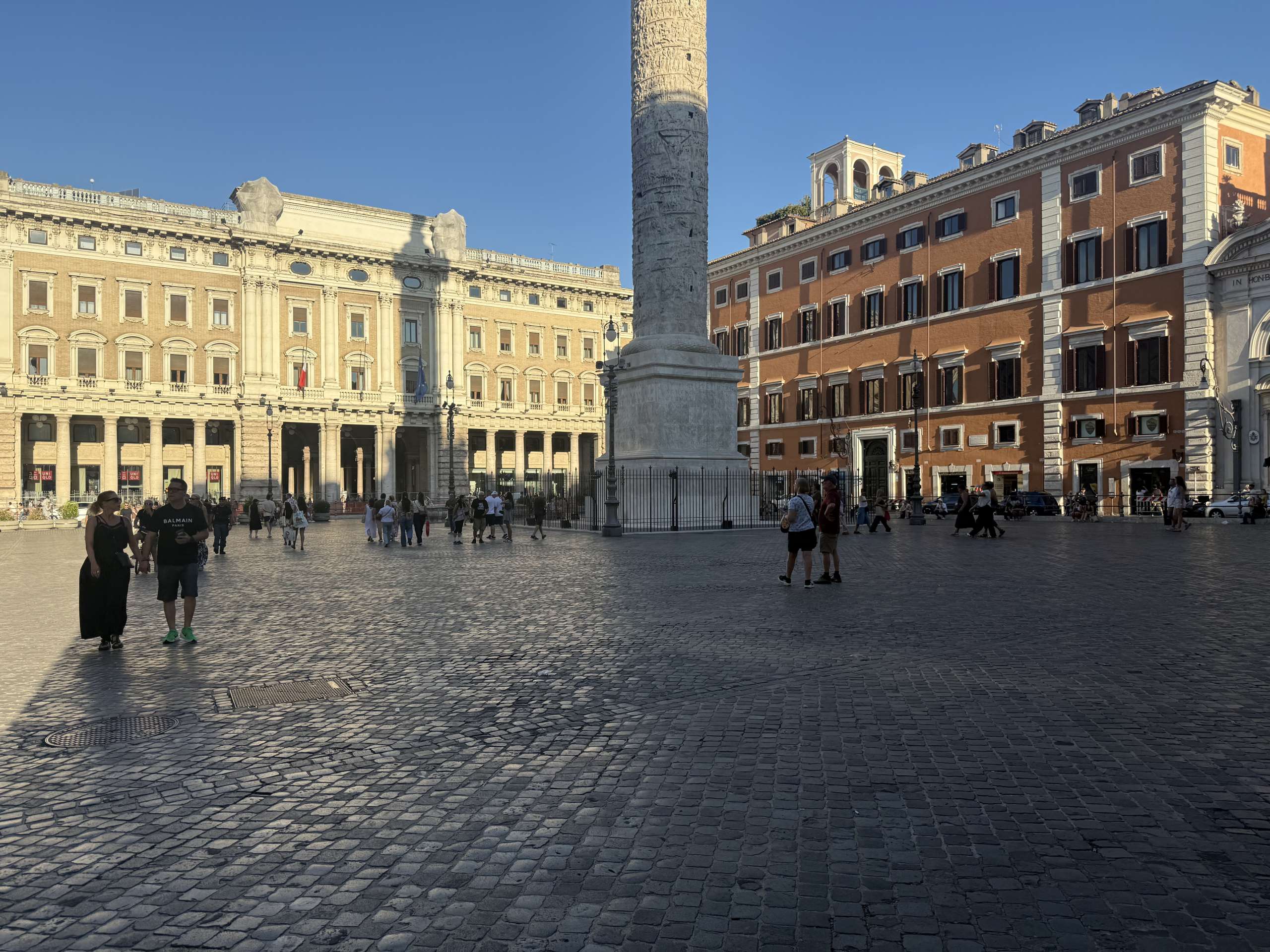
Figure 9. Piazza Colonna
From Author
Also, places that have historically been used for illegal parking, are being transformed. As part of Rome's plan to be climate neutral by 2030, Piazzale Clodio is being redesigned from an illegal parking lot, to green space (Piazzale Clodio, Iniziati I Lavori Di Depavimentazione, 2025). Part of the newly established park is shown below in Figure 10 and the rest is under construction nearby. This is not the only plaza being changed from parking to a park, as it is part of a greater plan called 100 parks for Rome (Progetto “100 Parchi per Roma”, al via 16 Nuovi Cantieri, 2026). Rome has continued to try to make the city more walkable and green especially with hotter weather from climate change.
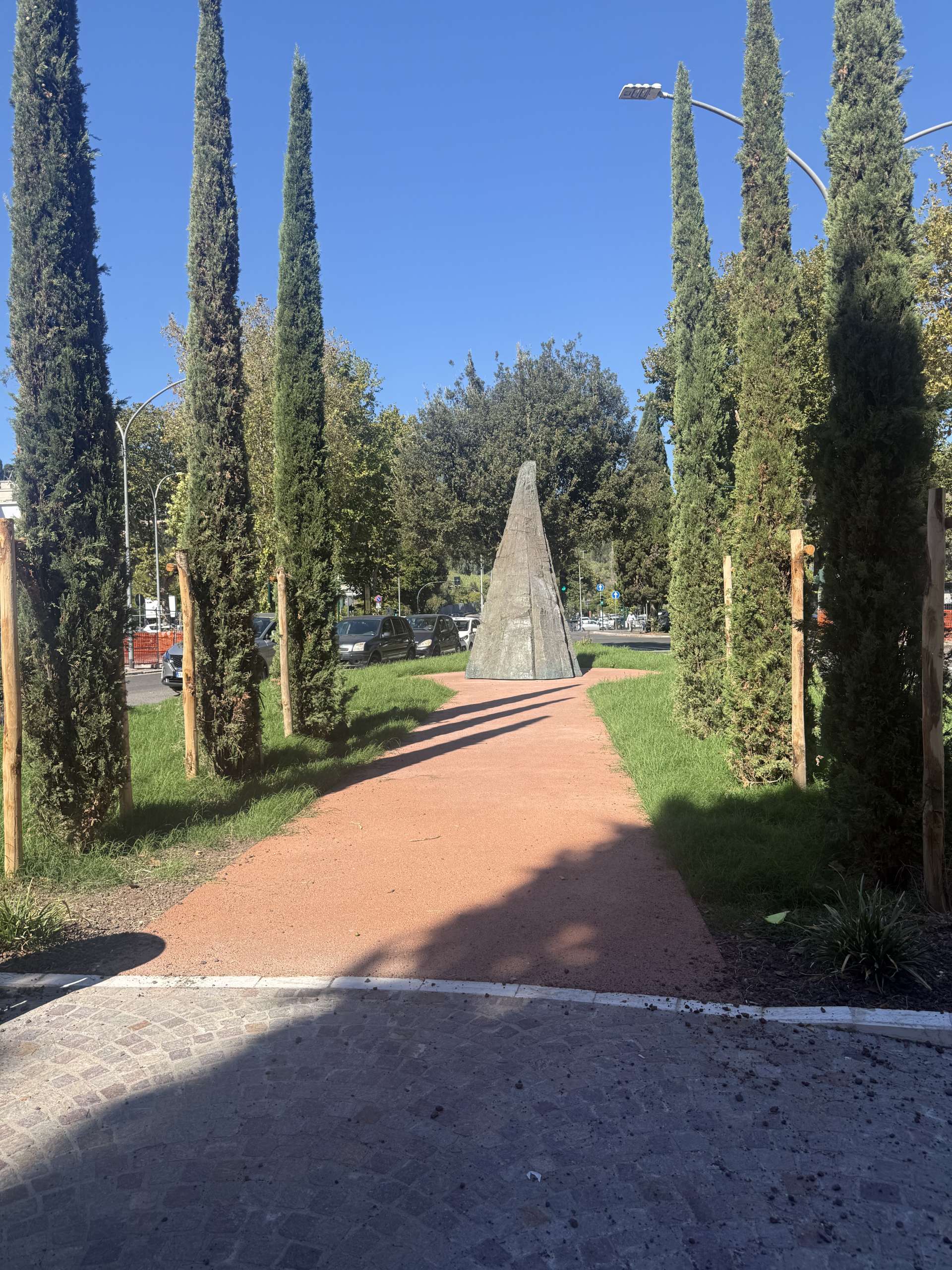
Figure 10. Piazzale Clodio Green Space
From Author
Case Study: Via Dei Fori Imperiali
Beyond pedestrian areas being created, the ZTLs decrease in traffic helped allow for full implementation of the Via dei Fori Imperiali being closed to private cars. In the 1930s, Mussolini built the Via dei Fori Imperiali, a road right next to the colosseum. This road has long been a crucial part of roman traffic because of its proximity to historical sites, reaching a projected 1,600 vehicles an hour during peak times of the day. Partly as a byproduct of the success of ZTLs, Rome was able to close this road for good. It had been in the works since 1981 to pedestrianize it due to its proximity to historical monuments but it was not finalized until traffic could successfully be redirected elsewhere. In 2013, the Rome mayor at the time, Ignazio Marino, banned all private traffic on the road only allowing buses, taxis, bicycles and most importantly pedestrians (Seattle Times 2013). This decision was met with a lot of backlash as businesses nearby thought they would lose customer traffic, and the nearby roads would be the burden with the new traffic. However, the decision stayed and to this day, the road is closed to all traffic except buses, bikes and pedestrians (taxis are no longer allowed). Photos of the road and a sign demonstrating the limited traffic in the area are shown below in Figures 11 and 12.
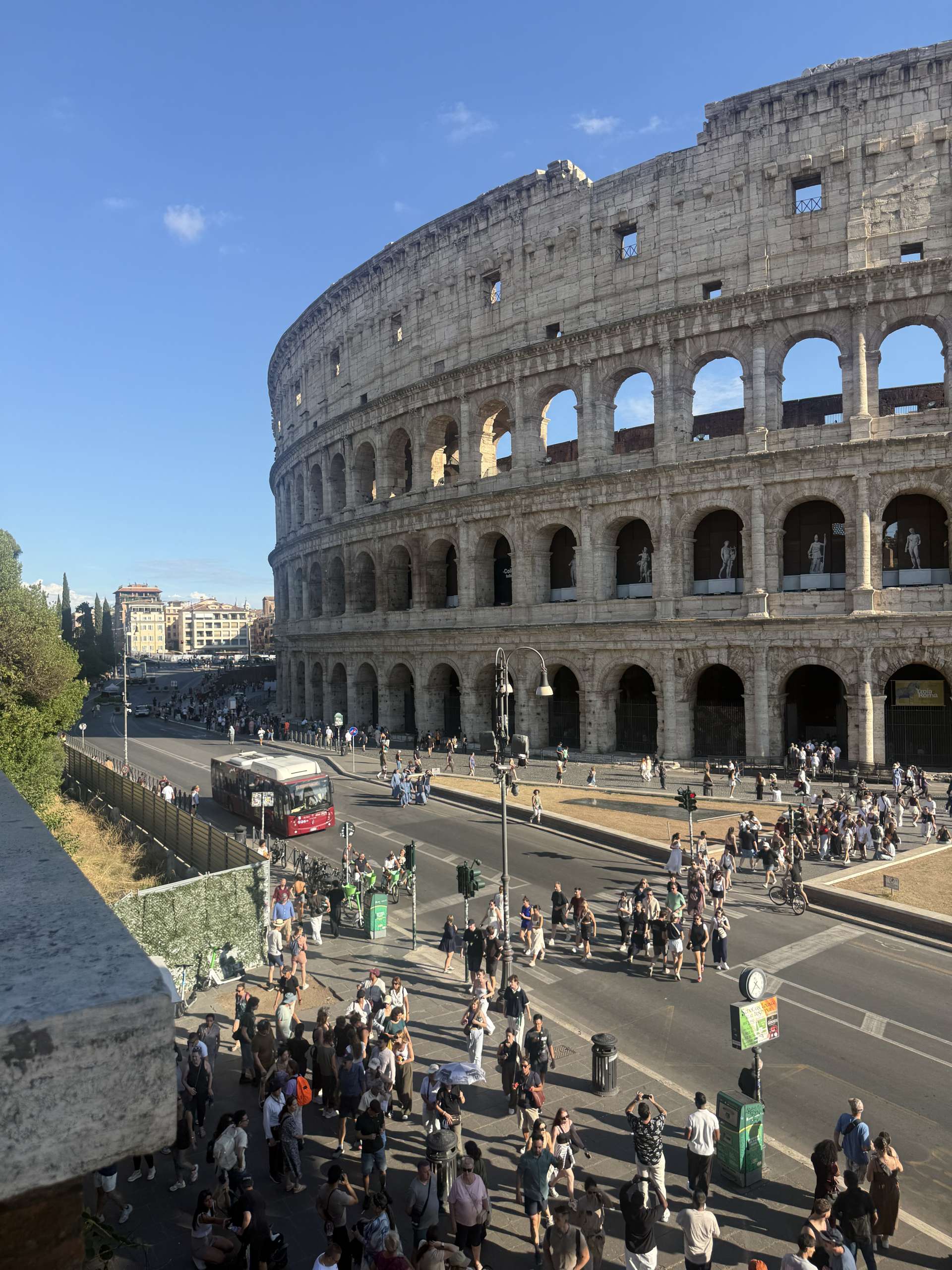
Figure 11. Pedestrians walking and Bus Going Down Via Dei Fori Imperial
From Author
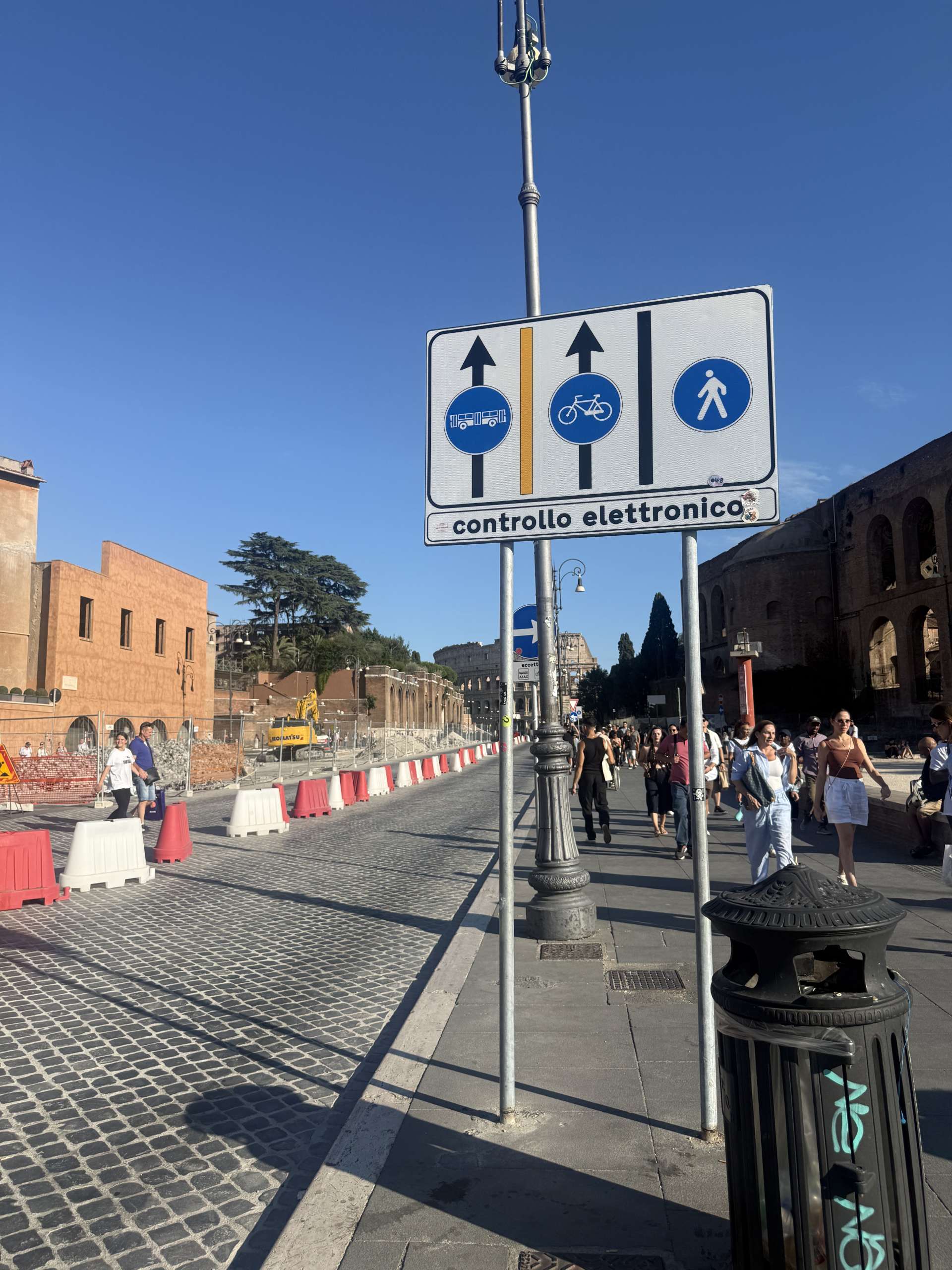
Figure 12. Sign for the controlled access to Via Dei Fori Imperiali
ZTL Issues
The ZTLs do a good job at limiting cars into the city but that does not always mean the alternative transportation options people choose are better. Since 2 wheeled vehicles have free access around all but one of the ZTLs, many people have switched to motorcycles and mopeds as their transportation (see Figure 13 below) (ZTL in Centro, 2026). This means that if 2 wheeled vehicles continue to grow in popularity, the same problem that caused the creation of ZTLs will occur again. The streets will be filled with too many motorcycles and mopeds and too much traffic and air pollution will be created. Even though 2 wheelers are smaller, it is still possible for the city to be packed with them. I’ve seen this already starting in Rome as anytime I pass by motorcycle parking, it is full.
Additionally, until recently (July 1st 2026), electric and hydrogen vehicles did not need to get a permit to enter ZTLs as they are cleaner cars. However, that created issues as too many people were allowed to enter the ZTLs (75,000 electric vehicles allowed to access) and traffic was increasing again. Thankfully with the permit system now in place for these vehicles the access rate has gone down drastically (2,500 vehicles now permitted) so traffic can decrease again hopefully. ((Ztl Centro Storico, Patanè: “Risultati Concreti Contro La Congestione” - , 2026).
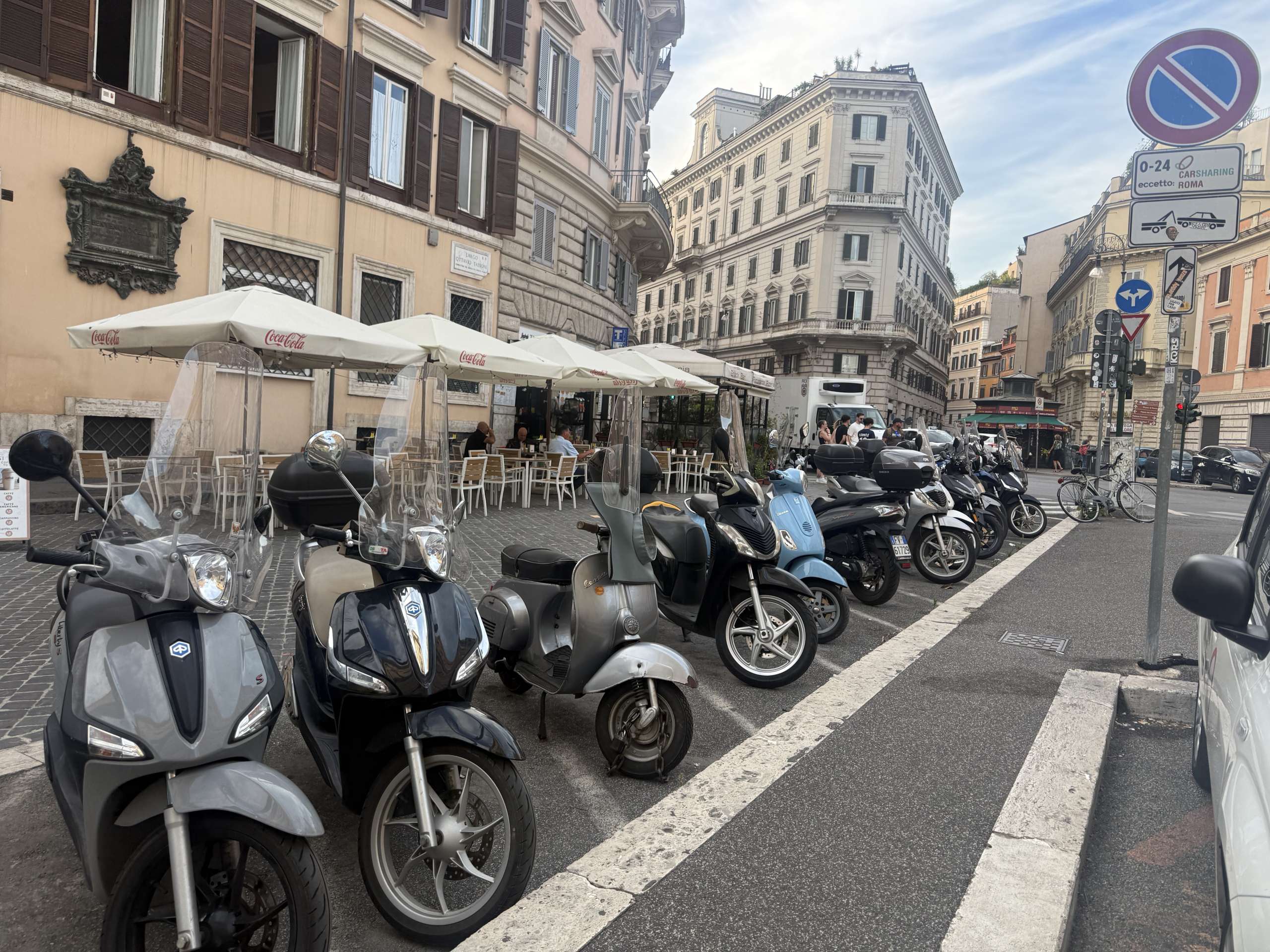
Figure 13. Motorcycles in the City
From Author
Also, even though traffic has overall decreased in the city, morning traffic and stoppages in the busier parts of the city are still an issue. When I went on my run one morning, I especially noticed this as each side along the Tiber river was blocked up (see Figure 14 below). No matter how many cars Rome limits to come in, if they all come in through the same entrance at the same time, traffic will occur. That is a problem Rome will always have to face as everyone needs to get to work at the same time.
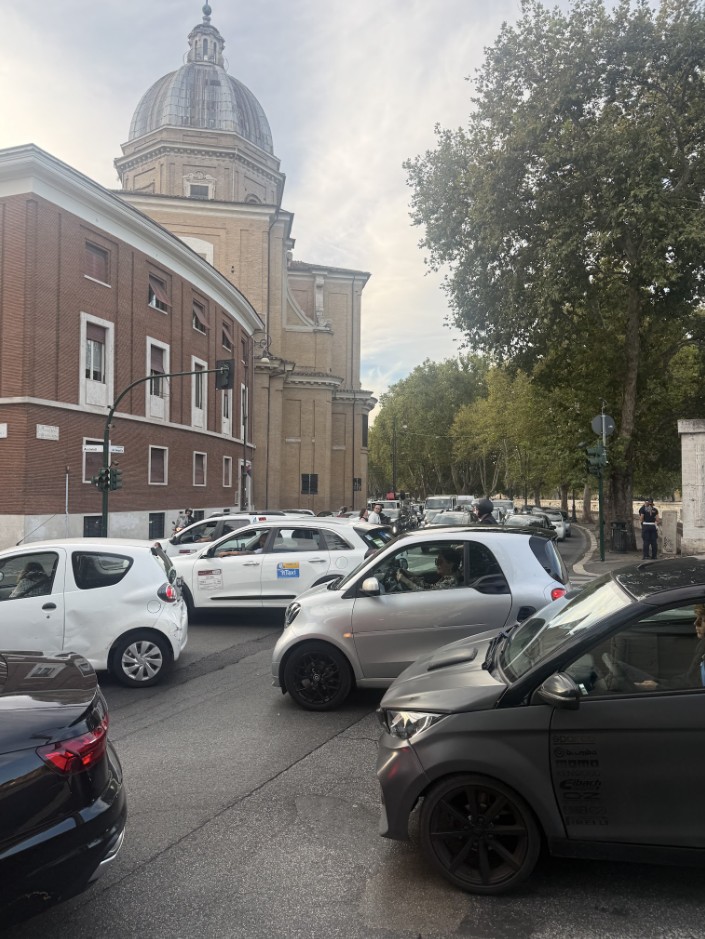
Figure 14. Morning Traffic Along the River
From Author
Personal Thoughts
My image of Europe before coming to Rome was that every city revolved heavily around public transportation and that cars were an afterthought. Maybe I am not well informed, but I thought that because Europe has such a vast train system and a lot of old tiny roads in the cities, that it would be a lot easier to focus on building up other methods of transportation. However since coming to Rome, I’ve learned how similar Italy is to the US. Culturally, the countries are very different for sure, but at the end of the day both countries deal with the same civil engineering problems just with different challenges to combat. For example, the US has to figure out a transportation system with spread out infrastructure and Rome has to figure out one with archaeological sites along the path. Rome, like many cities in the US has a reliance on cars and that has been a tough problem to overcome.
I overall think that ZTLs are one of the more effective measures Rome has to combat traffic. It is very confusing for newcomers but they have had ZTLs for over 35 years so it is clearly a system that works for them. It has been an interesting system for me to see first hand as even though there is traffic in some places, in a lot of the city there is not so much. I can definitely tell there is a greater focus on pedestrians in the modern day and I think that would not have been possible without the support of the ZTLs.
I am extremely curious though how it would go if the US tried to implement a ZTL system. The US has just started testing out congestion pricing in some cities but not gone as far as doing a permitting system. I definitely think a lot of people would have mixed reviews (mostly negative) on not being able to access the city unless they pay in advance.
Conclusion
In conclusion, ZTLs are the main system for controlling car traffic in Rome and although there are some downsides I think it is an overall efficient and useful system. The ZTLs have successfully created an environment where air quality is prioritized and historical moments can be protected. However, other traffic control methods must also be utilized to create a fully functional transportation system.
References
Cars banned in Rome Area. (1975, January 12). The New York Times. https://www.nytimes.com/1975/01/12/archives/cars-banned-in-rome-area.html
Cesaroni, G., Boogaard, H., Jonkers, S., Porta, D., Badaloni, C., Cattani, G., Forastiere, F., & Hoek, G. (2011). Health benefits of traffic-related air pollution reduction in different socioeconomic groups: The effect of low-emission zoning in Rome. Occupational and Environmental Medicine, 69(2), 133–139. https://doi.org/10.1136/oem.2010.063750
Chapter 2: Case Studies Rome, Italy. (2014, November 7). U.S. Department of Transportation Federal Highway Administration . https://international.fhwa.dot.gov/traveldemand/t1_p08.cfm
DeRobertis, M. (2022). A brief history of traffic limited zones (ZTL) in Italy and other early car-restricting strategies. World Transport Policy and Practice Journal, 27(2), 33–43. https://trid.trb.org/View/2118364
Distribuzione in ZTL merci e VAM. (2026, July 7). Roma Servizi per La Mobilità. https://romamobilita.it/muoversi-a-roma/distribuzione-in-ztl-merci-e-vam/
European Union. (2025). Passenger Cars - Per Thousand Inhabitants. Eurostat. https://ec.europa.eu/eurostat/databrowser/view/road_eqs_carhab__custom_13978239/bookmark/bar?lang=en&bookmarkId=28651723-9400-4d5b-a4b5-99a4c9a053cc&c=1732873893428
Hofmann, P. (1971, December 31). Rome Offers Free Transit Rides in Test to Reduce Auto Traffic. The New York Times. https://www.nytimes.com/1971/12/31/archives/rome-offers-free-transit-rides-in-test-to-reduce-auto-traffic.html
How does acid precipitation affect marble and limestone buildings? (2022, March 24). USGS. https://www.usgs.gov/faqs/how-does-acid-precipitation-affect-marble-and-limestone-buildings
I Documenti. (2024, November 12). Roma Servizi per La Mobilità. https://romamobilita.it/piani-e-progetti/i-documenti/
Inquadratura dall’alto dell’assembramento di automobili prospicienti la colonna Antonina in piazza Colonna - campo lungo. (1963). [Graphic]. In Luce Archivio. https://patrimonio.archivioluce.com/luce-web/detail/IL0030001877/11/traffico-roma-12.html?startPage=0
Italy ZTL zones 2026: How to avoid fines in Rome, Milan. (2026, September 17). Travel Information Europe. https://travelinformation.eu/italy/low-emission-zones/
Le piazze di Roma - Piazza del Popolo. (2019). [Graphic]. In Roma Capitale. https://www.comune.roma.it/web/it/galleria-multimediale-storica.page?contentId=GAL484280
Metallo, M. C., Poli, A. A., Diana, M., Persia, F., & Cirillo, M. C. (1995). Air pollution loads on historical monuments: An air quality model application to the Marble Arch of Titus in Rome. Science of The Total Environment, 171(1–3), 163–172. https://doi.org/10.1016/0048-9697(95)04690-0
Paolini, F. (2013). Designing a new society: A social history of Italian car design. Made in Italy, 211–224. https://doi.org/10.5040/9781474294133.ch-011
Piazzale Clodio, iniziati i lavori di depavimentazione. (2025, November 11). Roma Capitale. https://www.comune.roma.it/web/it/notizia/piazzale-clodio-iniziati-lavori-depavimentazione.page
Progetto “100 parchi per Roma,” al via 16 nuovi cantieri. (2026, May 26). Roma Capitale. https://www.comune.roma.it/web/it/notizia/progetto-100-parchi-per-roma-al-via-16-nuovi-cantieri.page
Rapporto mobilità roma 2025: Dati e analisi. (2025, October 3). Roma Servizi per La Mobilità. https://romamobilita.it/rapporto-annuale-mobilita-ram-2025/
Rome widens ban on cars. (1974, May 19). The New York Times. https://www.nytimes.com/1974/05/19/archives/rome-widens-ban-on-cars.html
Rome ZTL. (2026, September 5). Essential City Info. https://essentialcityinfo.com/rome-ztl-map
Tanner, H. (1980, March 16). Urban pollution is turning glory that was Rome to dust; sculpture has fallen off monuments and lungs. The New York Times. https://www.nytimes.com/1980/03/16/archives/urban-pollution-is-turning-glory-that-was-rome-to-dust-sculpture.html
World: A Moment for Pedestrians. (1966, January 6). TIME. https://time.com/archive/6628747/world-a-moment-for-pedestrians/
ZTL. (2026, September 8). Roma Servizi per La Mobilità. https://romamobilita.it/muoversi-a-roma/ztl/
ZTL appia antica. (2026, September 8). Roma Servizi per La Mobilità. https://romamobilita.it/muoversi-a-roma/ztl-appia-antica/
ZTL fascia verde. (2026, September 16). Roma Servizi per La Mobilità. https://romamobilita.it/muoversi-a-roma/ztl-fascia-verde/
ZTL in Centro . (2026, July 28). Roma Servizi per La Mobilità. https://romamobilita.it/muoversi-a-roma/ztl-in-centro/