
Geologic Context of the Roman Empire
When we consider the engineering achievements of the ancient Roman Empire, we typically focus on the feats themselves – aqueducts, highways, sewers, domes – but rarely the raw materials and natural history that made these achievements possible. The fortuitous geology of the Italian peninsula, especially in the Tiber River region, is the unspoken backbone of Roman success. Here, we explore the geological context and coincidence of the Roman Empire.1
1 – What do you think of when you read the term “geology?”
This essay focuses heavily on geological concepts. Geology is typically understood as the science of rocks; but, more accurately, geology is the story of all natural processes and origins. Throughout this essay, allow geology to be a reminder that engineering is a product of place. Applied engineering never happens in a vacuum and is inextricable from the cultural and natural history in which it is made.
Narrative Geological History of the Italian Peninsula
This essay will discuss five key rock resources: dolomite (dolostone), marble, pozzolana (scoria), basalt, and travertine. These materials formed at various stages throughout Italy’s geologic past.
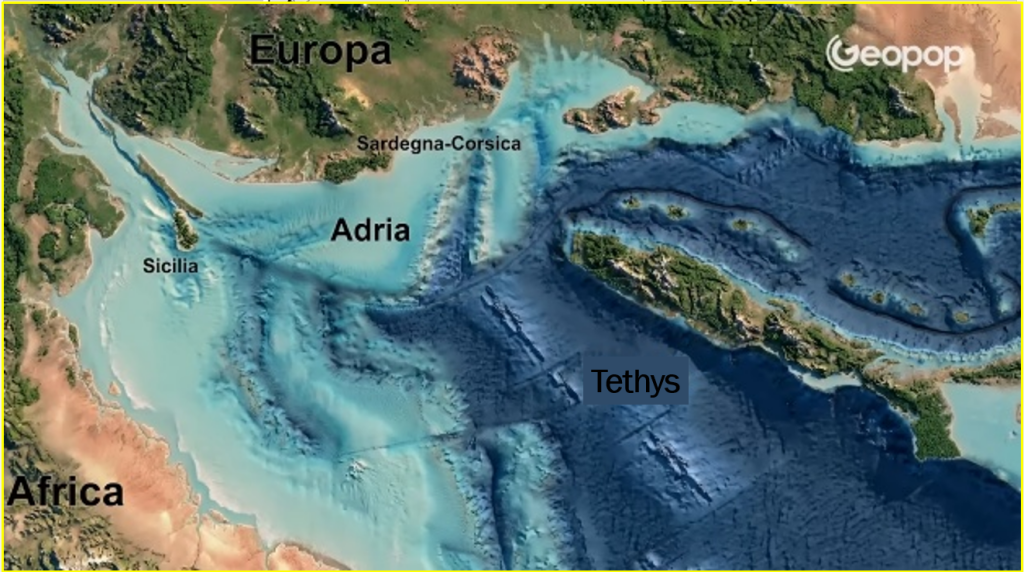
Italy’s geological history begins around 240 Ma with the Adrian microplate. The Adrian microplate was a small area of oceanic crust in the Tethys Ocean along the eastern edge of the supercontinent Pangaea (Fig. 1; Geopop, 2026; Meister et al., 2013). The shallow seas of the Adrian supported broad coastal ecosystems of carbonitic organisms; from approximately 240 to 200 Ma, these organisms accumulated on the seabed and lithified into vast platforms of limestone and dolostone (Bernoulli, 2007, and sources therein). Carbonate2 deposition in this region came to an end around 200 Ma, when Pangaea rifted apart, forming the northern Atlantic Ocean; and when, further east, the Adrian microplate separated from the European plate, creating a deep oceanic trough called the Ligurian-Piedmontese (Bernoulli, 1964; Laubscher & Bernoulli, 1977; Meister et al., 2013; Fig. 2, Geopop, 2026). Diagenetic hydrothermal activity then further altered limestone to dolostone (Carmichael et al., 2008; Meister et al., 2013).
2 – What does “carbonate” mean?
A carbonate is a mineral containing the carbonate ion (CO32-). Both limestone (CaCO3) and dolostone (MgCO3) consist of carbonate minerals and are therefore carbonate rocks. When this paper refers to “carbonates,” it is referring in general to rocks that have some amount of limestone and some amount of dolostone; it is rare for a rock to be 100% one or the other.
On a similar note, this paper will use “dolostone” and “dolomite” interchangeably because this is commonly done — but if we wanted to be specific, we would use “dolomite” to refer to the mineral MgCO3, and we’d use “dolostone” to refer to rocks consisting of crystals of dolomite.
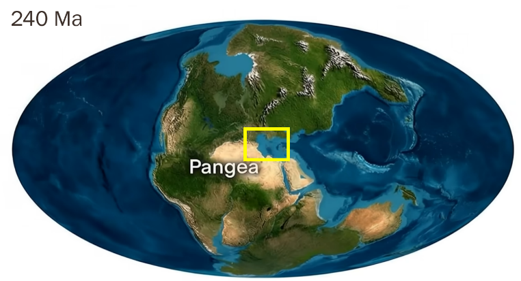
Fig. 1. Global tectonic arrangement circa 240 Ma; yellow box highlights the region of the Adrian microplate (Geopop, 2026).
Fig. 2. Tectonic arrangement of continental margin along Tethys Ocean circa 240 Ma, including region of the Adrian microplate.
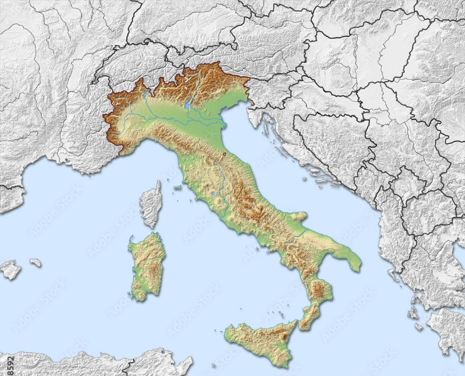
Around 150 Ma, regional tectonics changed from extensional to compressional and the African plate rotated counterclockwise, forcing the Adrian microplate northward into subduction under the European plate (Conti et al., 2020; Meister et al., 2013). This collision initiated the rise of the Alps, including the uplift and deformation of the Adrian limestones and dolomites. By roughly 30 Ma, convergence had closed the Ligurian-Piedmontese Ocean and thrust the Alps into their current position along the southern European continent (Meister et al., 2013; Fig. 3). Today, the carbonitic portions of the Italian Alps stand as the Dolomites UNESCO World Heritage site (UNESCO World Heritage Center, 2009). Subduction also continued to the east until approximately 12 Ma, forming the Appenine range along the now recognizable Italian peninsula (Boccaletti et al., 1971; see Fig. 3). Throughout both the Alpine and Appenine mountain-building events, carbonates were metamorphosed into marbles, including the famous Carrara marble of the Appuane Alps (Meccheri et al., 2007; Coli & Criscuolo, 2021; Conti et al., 2020).
Fig. 3. Topography of the Italian peninsula in modern geologic time; brown areas indicate areas of high altitude, including the Alps (north) and Appenines (along axis of peninsula (Schwahenblitz, n.d.).
Once these collisions occurred, complex crustal dynamics resulted in magmatism behind (i.e., to the west of) the Appeninic subduction zone. From 14 Ma onward, extension and crustal thinning west of the Appenines facilitated the volcanism of the Tuscan (14 to 1 Ma), then Roman (760 ka to present), then Lucanian Magmatic Provinces (700 to 300 ka; Conticelli et al., 2010; Conticelli et al., 2004; Worthing et al., 2017). This volcanism generated the most significant volcanoes of Roman history, including Mount Vesuvius, and the volcanic edifices visible along the horizon of today’s Rome, such as the Alban Hills. More importantly for this essay, this volcanism featured both explosive and effusive eruption products: explosive eruptions yielded scoria (pozzolana) and tuff3 deposits and effusive eruptions produced basalt lava flows (Conticelli et al., 1997, 2004, 2009, 2010a-b). These materials were exceptionally rich in potassium and calcium due to magmatic assimilation of carbonate country rock (Conticelli et al., 2004).
3 – We don’t have a specific section for tuff in this paper. What is tuff?
3 – Although not addressed by a full section here, tuff is an abundant and significant rock resource for the ancient Roman Empire. Tuff is a volcanic rock of lithified, non-welded ash. This ash can be deposited by gravity (“fall deposit”) or turbulent flows of ash suspended in gas (“pyroclastic density current,” e.g., the 79 C.E. eruption of Mount Vesuvius). Tuff is typically dense and compact (see Table 1) but its surface weathers relatively easily because its material is fine-grained and poorly cemented (Lockwood et al., 2022; personal comm., Pompei VIP, Sep 20 2026).
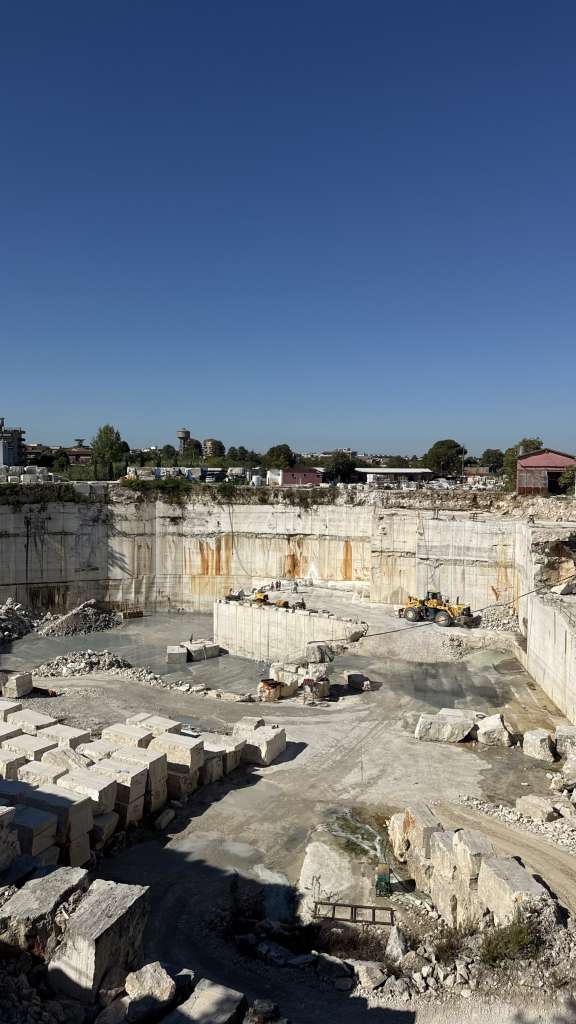
Finally, the extensional environment to the west of the Appenines also caused normal faulting and the formation of low-lying basins. Val Tiberina is one such basin that birthed the iconic Tiber River (Boncio et al., 1998; Conti et al., 2020). These topographic lows are particularly relevant in the Tivoli region, where warm, sulfur-bearing spring waters (from Roman Magmatic Province volcanism) have partially dissolved the region’s limestone (from the Adrian carbonate platforms) and now form evaporitic travertine (Chafetz & Folk, 1984). The gentle regional topography facilitates exceptionally deep (~60 to 85 m; Fratelli Pacifici S.p.A., personal comm., Sep 16 2026; Chafetz & Folk, 1984) and broad (hundreds of km2; Chafetz & Folk, 1984) travertine deposits.
Engineering Applications of Rock Resources
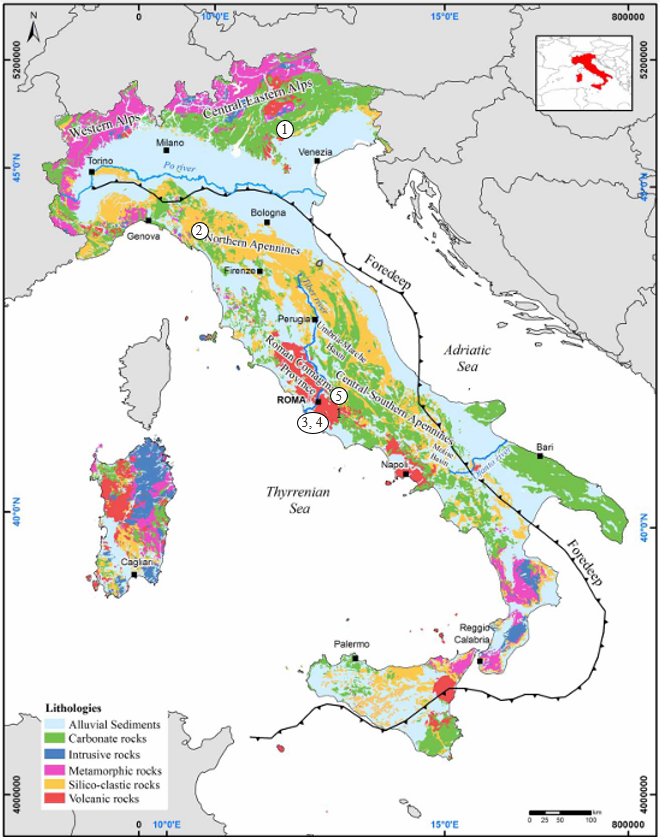
The environment in which ancient Rome developed was shaped by several million years of geologic coincidence (Fig. 4). The morphology and materials made accessible by this history inform the following rock resources, their physical properties, and their ancient Roman engineering applications.
Dolomite (Dolostone)
| Rock Type | Sedimentary; forms from low-temperature, low-pressure sedimentation and recrystallization |
| Composition | (Ca,Mg)CO3; greater Mg than Ca content.2 |
| Notable Properties | Gray to white, resistant to weathering, hard |
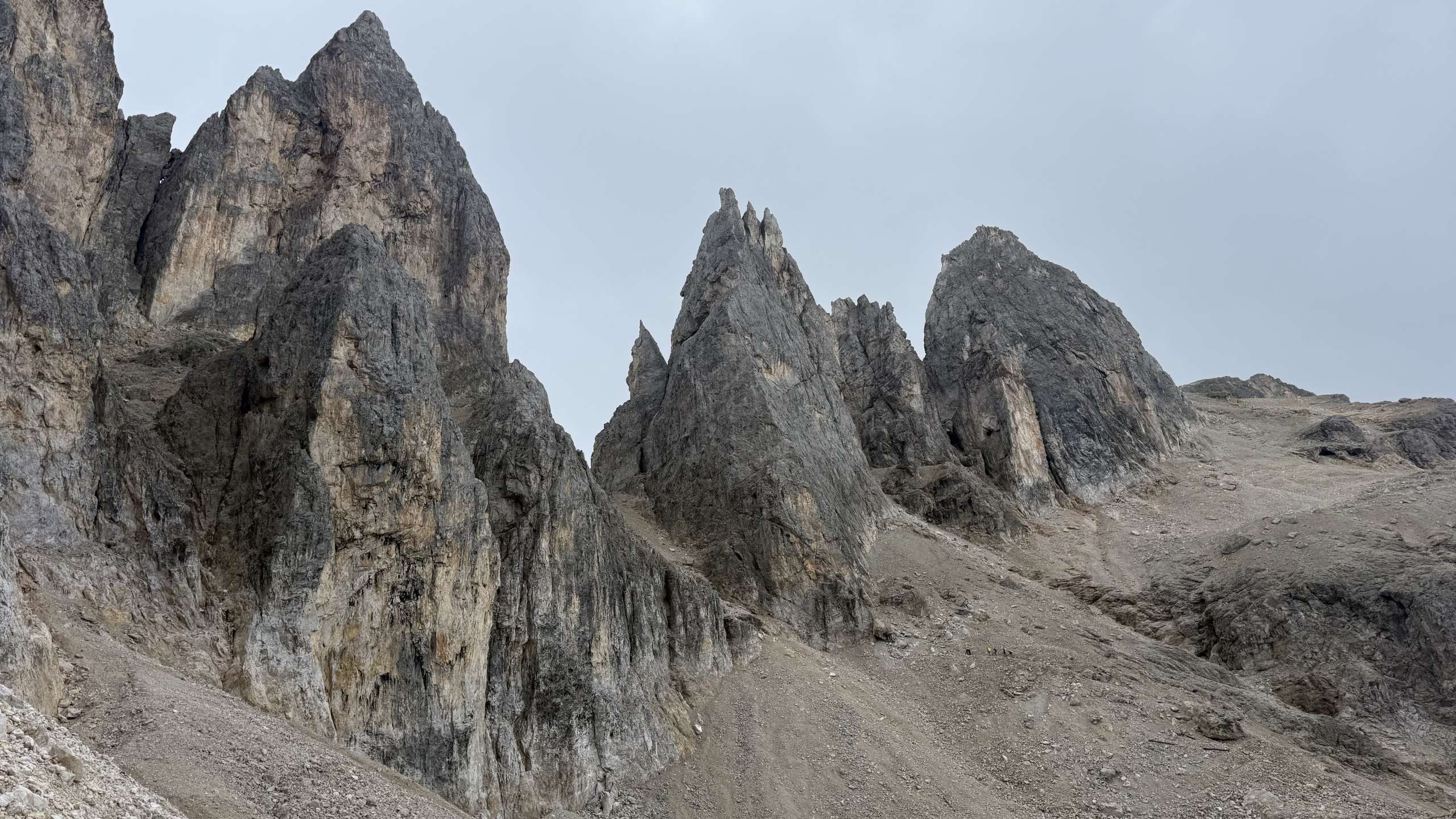
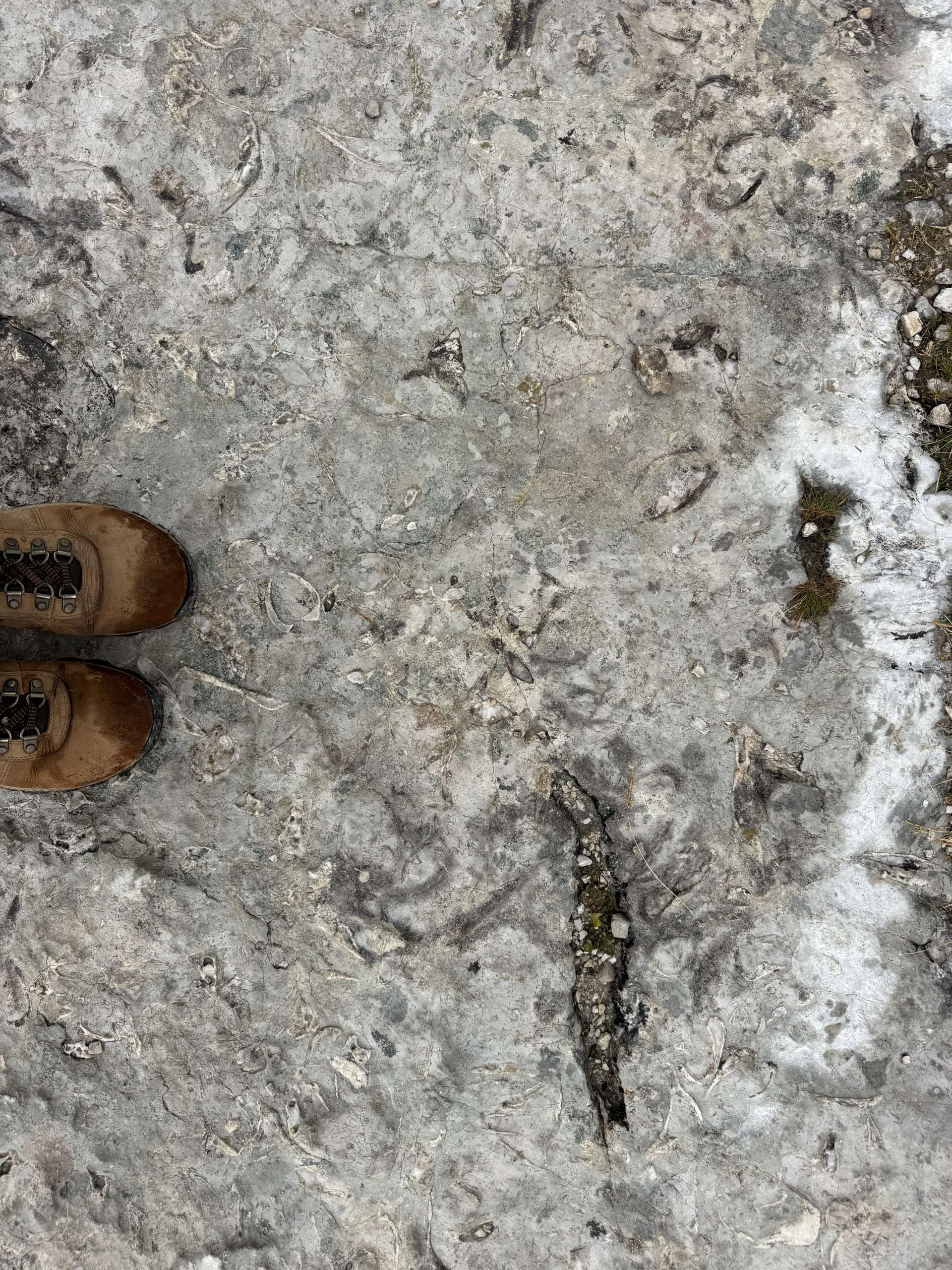
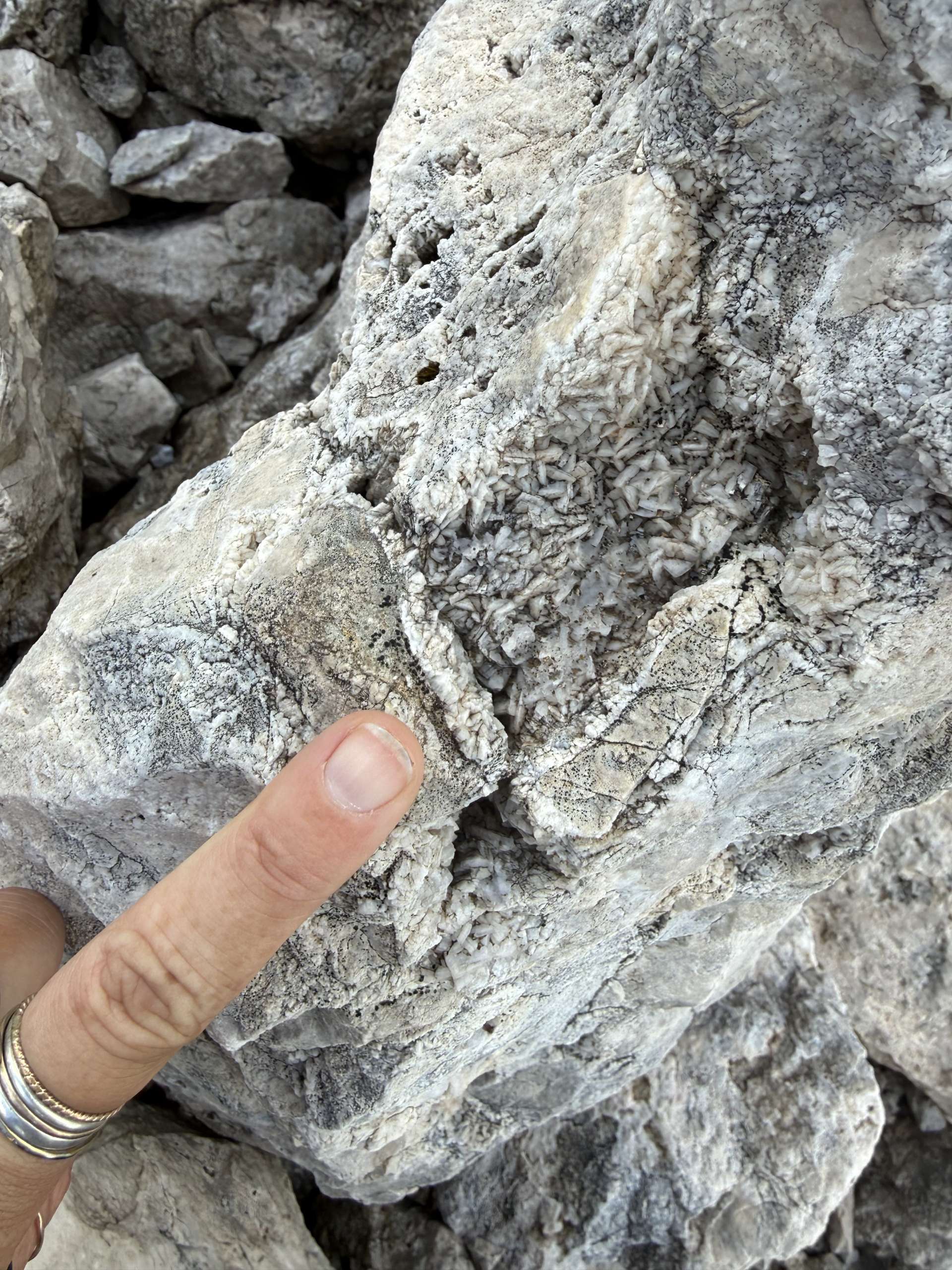
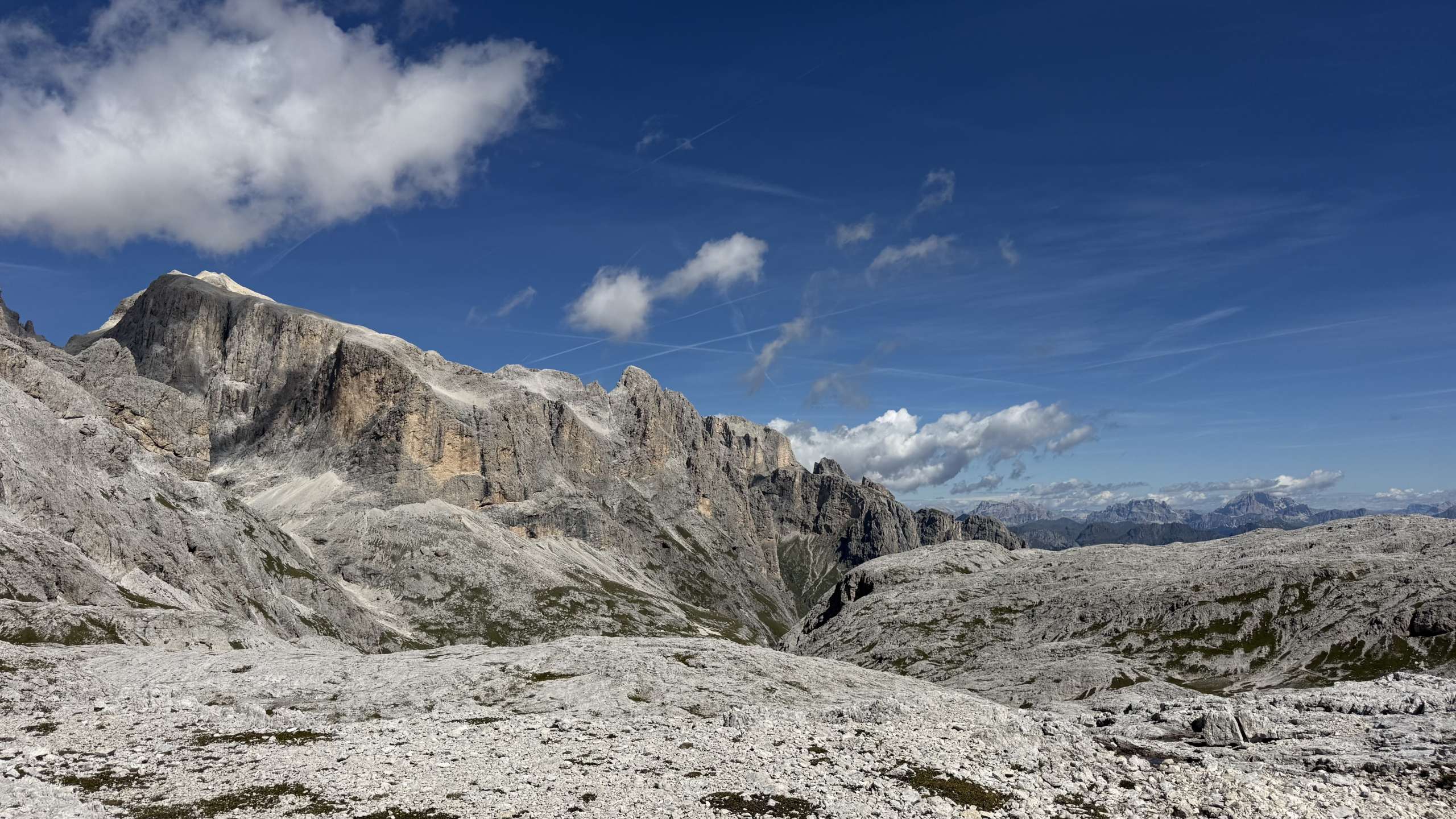
Dolomite is a magnesium-bearing carbonate rock that is harder and less soluble than calcium-bearing limestone. This material is prevalent in the northern Italian Alps (see [1] in Fig. 4), where it forms mountain ranges renowned for their “dramatic” and “spectacular vertical forms such as pinnacles, spires, and towers, with contrasting horizontal surfaces including ledges, crags, and plateaux” (UNESCO World Heritage Center, 2009; Fig. 5). This topography insulates the Italian peninsula from the European continent and has complicated mountain crossings since the ancient Roman era.
For the Romans, the Dolomites and the broader Alps region were a frontier. Despite widespread transportation and commercial hubs throughout the Italian peninsula – including plenty across the Appenine mountain range – Roman-era routes through the Alps were extremely limited (Fig. 6; Haas & Tol, 2017) due to non-navigable terrain. In a classic example, the Alps defended the nascent Roman civilization: in 218 B.C.E., Hannibal attempted to invade via a western Alps traverse, but was thwarted partially due to high altitude and steep slopes (e.g., Mahaney et al., 2008). The Romans were forced to reckon with this terrain in order to maintain imperial supremacy. During the reign of Julius Caesar, the Alps-Dolomites region required systematic installation of fortresses and watchtowers to maintain Roman military prowess there (Haas & Tol, 2017; Delbrück, 1990). In fact, Julius’ Caesar’s military route during the Gallic Wars (50 – 58 C.E.) followed the contours of the Alps to the west, as opposed to crossing them in a direct route to the Helvetii (U.S. Military Academy, 2012).
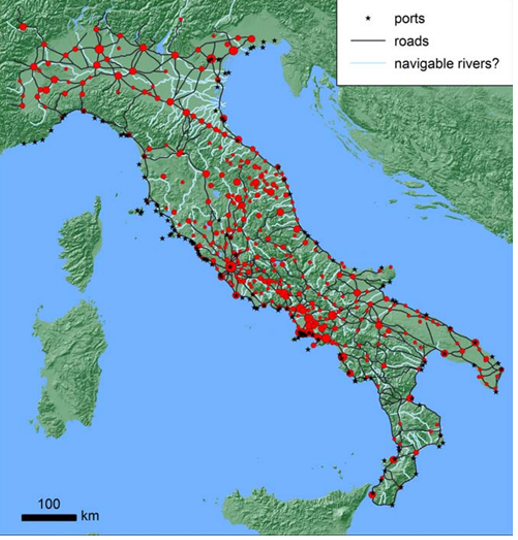
Fig. 6. Roads, rivers, and ports in Roman-era Italy; red dots indicate relative size of population centers (Haas & Tol, 2017).
Certainly, it’s obvious that armies will prefer valleys to mountains – but less obvious is how the geological circumstance of those mountains makes them more difficult to cross than others. The Alps, particularly in the Dolomites region of the east, are morphologically complex and extremely resistant to weathering, resulting in an extreme, high-altitude landscape. Those characteristics have both challenged and protected Roman military exploits over the course of ancient history.4
4 – How were the Italian Dolomites influential in WWI?
In the modern geological era, the ranges of the Dolomites remain so impenetrable that during World War I, via ferrate, or “iron ways,” were engineered to expedite steep, exposed traverses for military troops. These old systems of iron cables, ladders, and bolts are no longer in use, but their rusted remnants are visible along high-altitude trails such as the Alta Via 2. Today, via ferrata routes are instrumented and maintained by the Club Alpino Italiano (e.g., Bressan & Melchiorri, 2012). Below is the author along a via ferrata route near Cima Pisciadù.
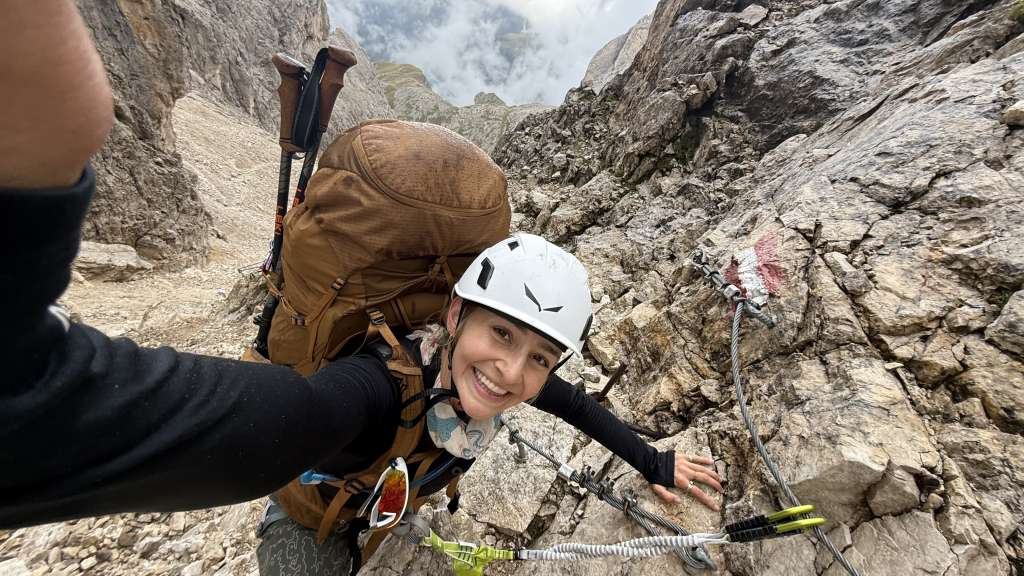
What struck me about the Dolomites was the sense of wonder they inspired. The sheer size and scale of these mountains is difficult to envision until you are standing beside them. I can imagine how, to the Romans, these ranges felt impenetrable and otherworldly, forming a barrier that was as psychological as it was physical. It certainly felt psychological when I was hiking up and over these peaks during my Alta Via 2 traverse!
Marble
| Rock Type | Metamorphic; limestone and/or dolostone that has been put under extreme heat and pressure. |
| Composition | (Ca,Mg)CO3 |
| Notable Properties | Impermeable; polishable; able to acquire many colors based on variations in chemical composition and pre-metamorphic history |
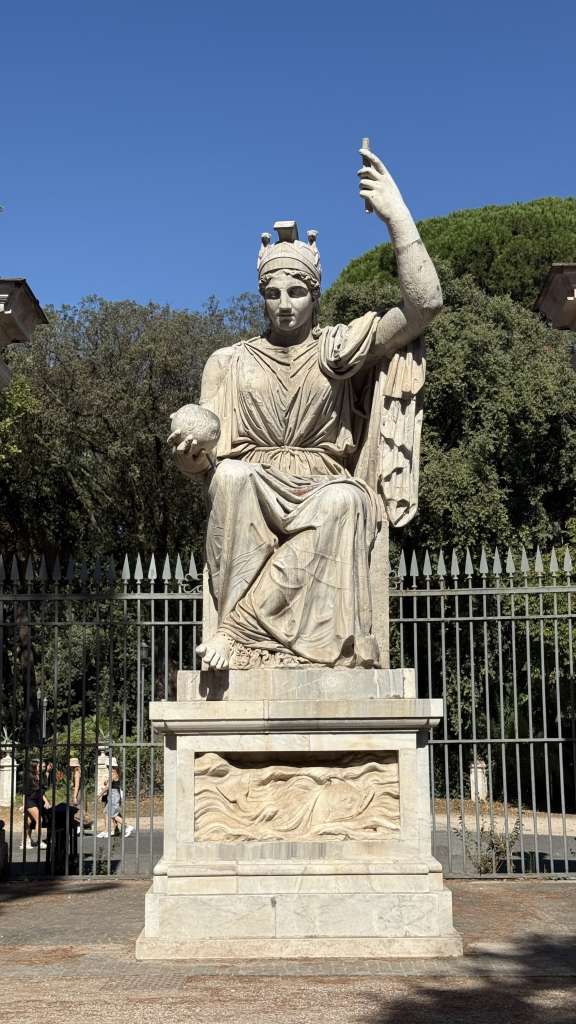
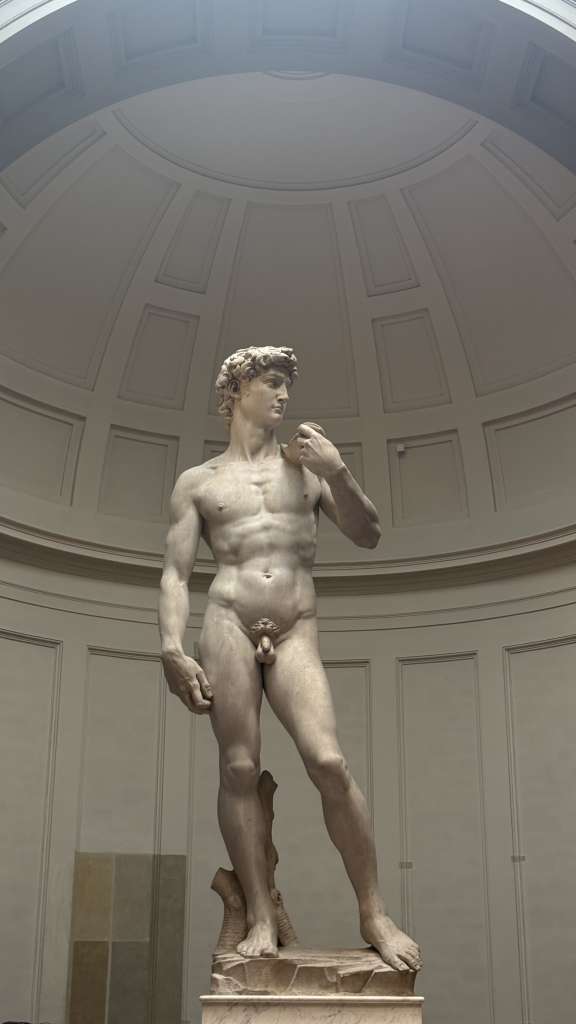
When limestone and/or dolostone are subjected to intense heat and pressure, the calcite/dolomite within reorganize into a tight, crystalline matrix of marble. This material is dense, impermeable, workable, and capable of acquiring an exceptional polish, making it a key sculptural and architectural resource in ancient Rome (Meccheri et al., 2007; Coli & Criscuolo, 2021; Fig. 7).
The most famous marble deposits of the Italian peninsula are the pure, white Carrara marble of the Appuane Alps (see [2] in Fig. 4), created during the intense thrust-fold mountain-building events of the Alps/Appenines. This high-shear environment forced directional crystal alignment within the marble; in turn, this alignment formed planes of weakness, which manifested as a consistent large-scale fracture pattern in rock outcrops. Italian quarriers called this primary fracture system verso. Tectonic unloading (i.e., decompression cracking) produced secondary fracture systems roughly orthogonal to verso; quarriers call these contro and secondo. Together, these fractures naturally segmented marble outcrops into extractable blocks (Fig. 8, 9).
Fig. 8. Outcrop of Carrara marble with verso [S1] oriented oblique to the page, secondo [S2] oriented orthogonal to verso, and contro [C] oriented subvertical.
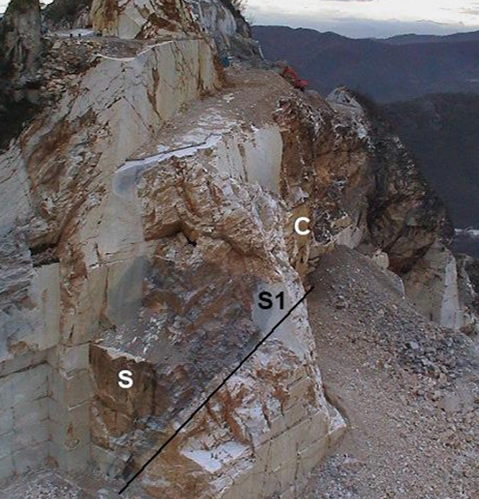
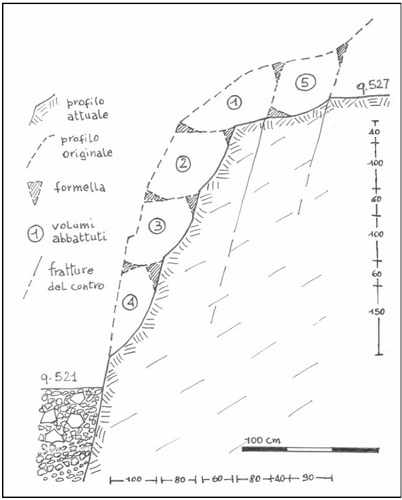
Fig. 9. Sketch of Roman quarrying method, taking advantage of verso (sub-horizontal, widely spaced dashes), contro (sub-vertical, narrowly spaced dashes), and secondo (plane in which sketch is drawn) to extract marble blocks.
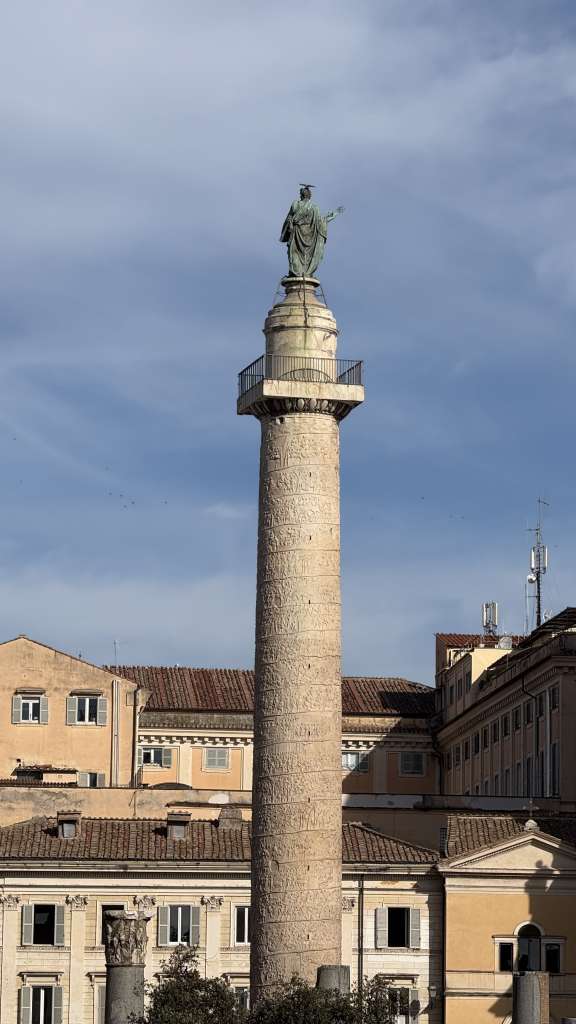
Ancient Romans took advantage of this block structure and have quarried marbles from the Carrara region since the first century B.C.E. (Meccheri et al., 2007). In antiquity, this marble type was referred to as marmor lunense (Fant, 1999) and was used to construct Trajan’s Column (113 C.E.; Venning, 2011; Fig. 7a), the Column of Marcus Aurelius (193 C.E.; Beckman, 2011), and Michaelangelo’s David (1504; Bracci et al., 2004; Fig. 7d). These structures demonstrate three key properties of marble:
- Workability. These structures are extremely detailed. This artisanry is only possible because marble is densely crystalline (and therefore does not easily crack) but is soft enough to shape with metal tools.
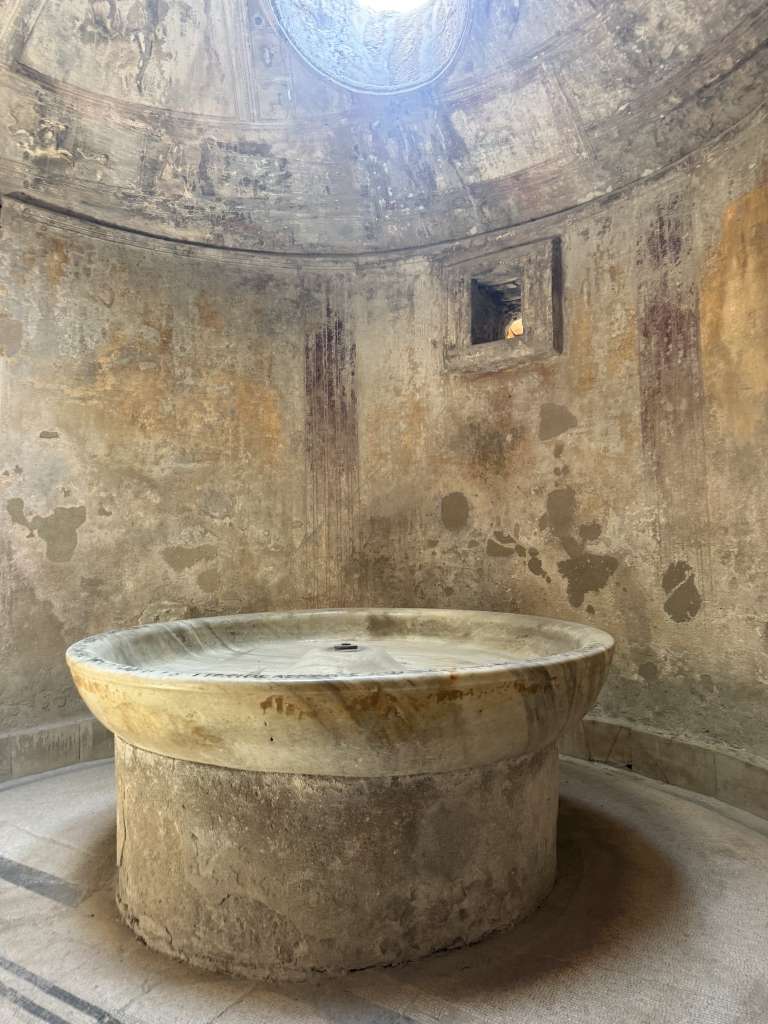
- Impermeability. These structures have stood outdoors and exposed to the elements for hundreds to thousands of years, yet all are still structurally sound and artistically legible (David was only recently moved indoors in 1882; Borri et al., 2006; Paolucci et al., 2006). This is because marble does not dissolve as easily as other stones used for sculpture, like limestone and tuff (e.g., Margolis, 1989). In fact, marble’s relative insolubility made it advantageous in for use in thermal baths, such as the pictured example in Pompeii (Fig. 7b).
- Compositional Purity. The Carrara marble is exceptionally white and compositionally consistent5 (Meccheri et al., 2007). This lends a sense of purity and wonderment to its statuary and accentuates artistic detail in sculpture.
5 – How pure is Carrara Marble really?
The Carrara marble is so chemically pure that it is used globally as a reference material for high-precision isotopic analyses (International Atomic Energy Agency, 2016).
As a final example, compare the visual effect of Danti’s Cosimo I in the guise of Augustus (circa 1572; Fig. 9a), with Giovanni’s Madonna and Child with Saints Peter and Paul (1329; Fig. 9b). Both statues show complex, awe-inspiring figures clothed in draping fabric; however, the brilliant marble of Cosimo gives a clearer sense of form and detail than the beige and porous tuff of Madonna and Child.
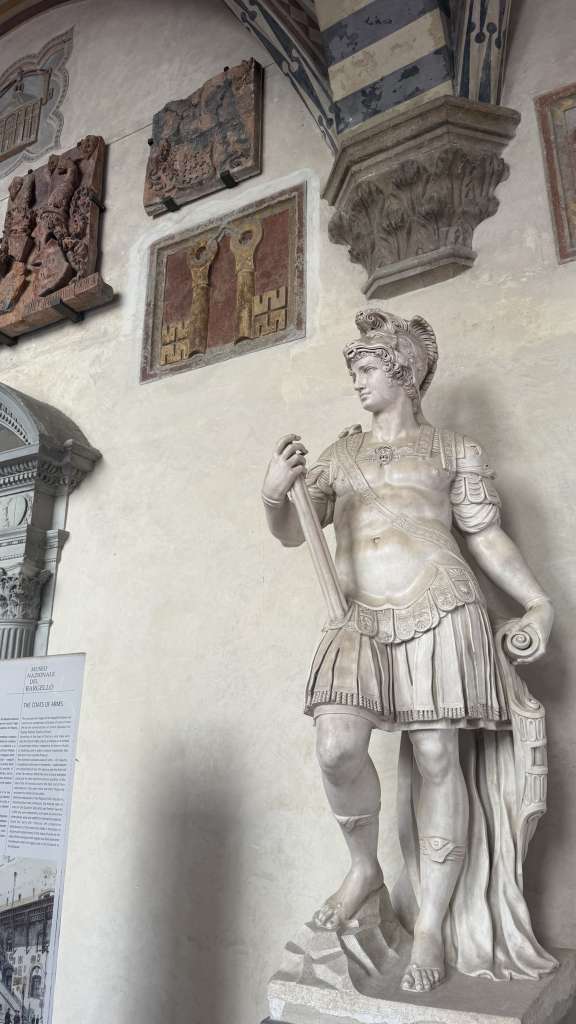
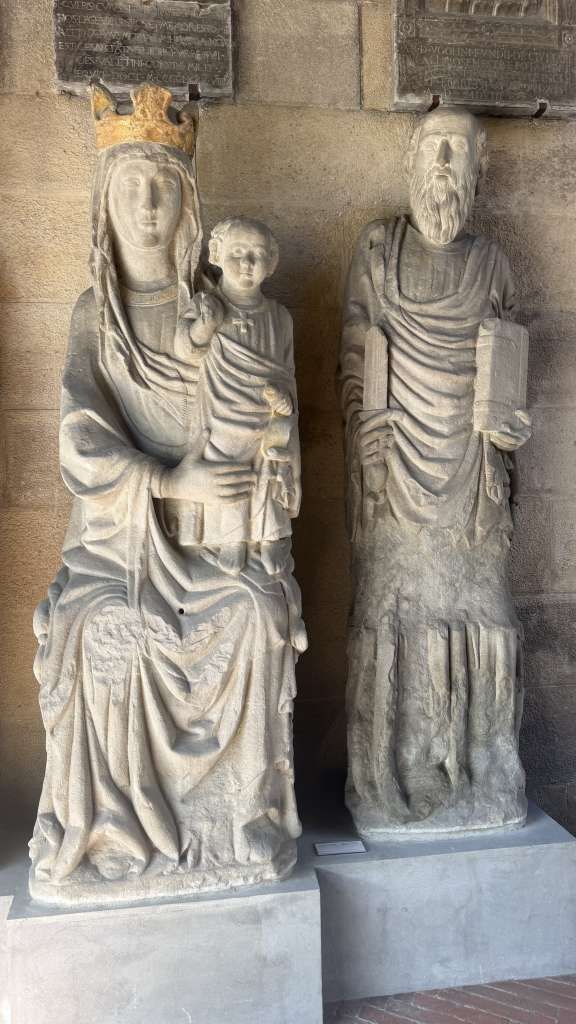
The Romans quarried and shaped the Carrara marble with exceptional craftsmanship. Still, this extraction would have been complicated without the template of cracks caused by regional tectonics, and their artisanship would lack emphasis without the natural workability, resilience, and color of marble itself.
Marble’s resilience is visible in virtually every marble statue from the Roman era. Marble carries detail and shadow in a way that feels intimately human, more so than bronze or stucco. It is striking to observe David in La Galleria Accademia in Florence and feel the power of his gaze and stance, five hundred years after he was carved. For even older structures, like Trajan’s Column, marble bears stories from thousands of years ago to today’s eyes. This material is truly so resilient that you see it and feel it the way Romans did.
Scoria (Pozzolana)
| Rock Type | Igneous; unconsolidated explosive eruption product |
| Composition | Basaltic;6 high in Ca and K |
| Notable Properties | Porous and amorphous (glassy) |
6 – If scoria is different than basalt, why do we say it’s “basaltic” in composition?
“Basaltic” describes the chemical composition — the concentration of various atoms — in a material. Scoria and basalt lava have the same composition, but different properties, because their eruption styles organized those atoms differently when the material cooled from a liquid to a solid (Lockwood et al., 2022).
Basalt is a magma composition characterized by relatively high temperatures (1000 to 1200 ᵒC) and high magnesium and iron contents (Philpotts & Ague, 2009). Italian basalts are particularly rich in calcium because their magma chambers were surrounded by calcium-rich limestone and dolostone; when magma assimilated this surrounding rock, it acquired its high calcium contents. These high calcium contents are preserved in the erupted lava and scoriae.
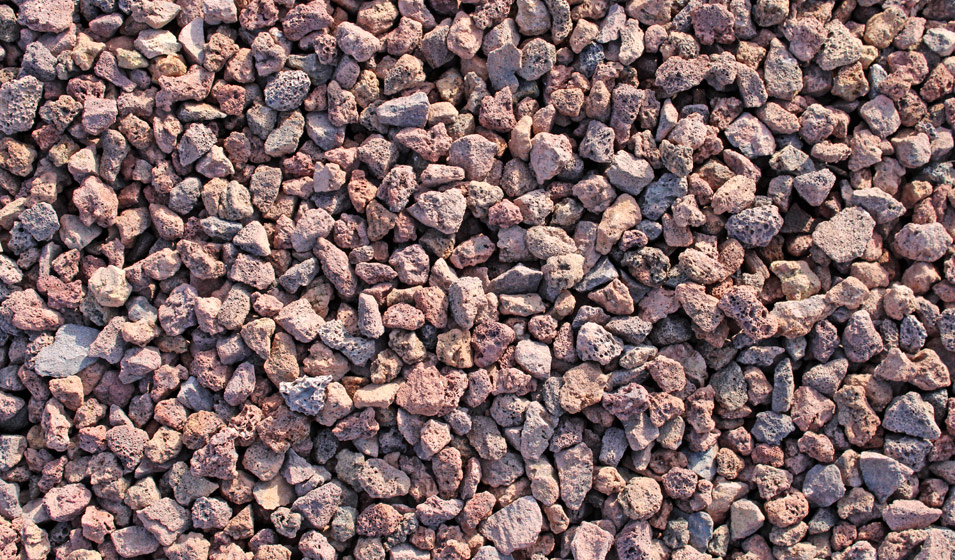
Scoriae are fragments of erupted basaltic lava with a distinctively vesicular (bubbly) texture. This texture is a record of the material’s explosive origin: when eruption blasts gas-rich magma into the air, the liquid rapidly cools into a solid, “freezing” these gas bubbles into place. The rapid cooling also quenches the magma before its atoms can structurally organize, creating amorphous (i.e., glassy) clasts. The result is a crushable, low-density material that tends to “rain out” of the eruption column to form unconsolidated deposits (Lockwood et al., 2022). Vitruvius first recognized these volcanic deposits around Pozzuoli, near modern-day Naples, thus giving them the name “pozzolana” (D’Ambrosio et al., 2015). Pozzolana deposits exist throughout the western and central areas of the Italian peninsula (recall the Tuscan, Roman, and Lucanian Magmatic Provinces; see [3] in Fig. 4). Basaltic pozzolana are generally rich in silica and alumina; in these regions, they are also especially rich in calcium (Conticelli, 1997; 2004; 2009; 2010a-b).
Pozzolana was the key ingredient of Roman concrete. The pozzolanic reaction of concrete formation is shown below (Equation 1; John et al., 2018):

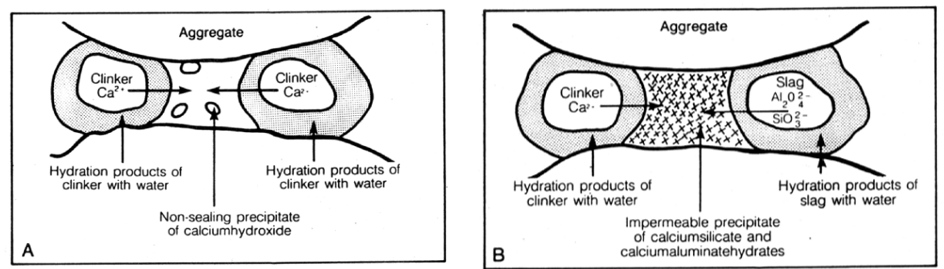
Both Roman (pozzolanic) and conventional mix methods use hydrated calcium compounds to precipitate a cement between adjacent grains of aggregate (ACI Committee E703, 2016; John et al., 2018). By incorporating pozzolana, however, the Roman method introduced silica and alumina to the mix. The resulting precipitate accelerated the setting, hardening, and microstructure development of Roman concrete. It also promoted the development of a denser microstructure with a superior resistance to chemical corrosion (John et al., 2018). This strength is attributed to the “filler effect,” wherein there is “enhanced product growth in pore space, faster filling the voids between clinker particles and hence reducing porosity” (John et al., 2018, p. 7; Sun et al., 2017; Fig. 11b). Pozzolana was also beneficial as an aggregate material: its high surface area and porosity achieved a high bonding strength with a relatively light unit weight (John et al., 2018). Pozzolana therefore contributed both physical and chemical advantages to Roman concrete.
Fig. 12. Pozzolana clasts within the mortar of a brick-faced concrete wall in Ostia Antica (author).
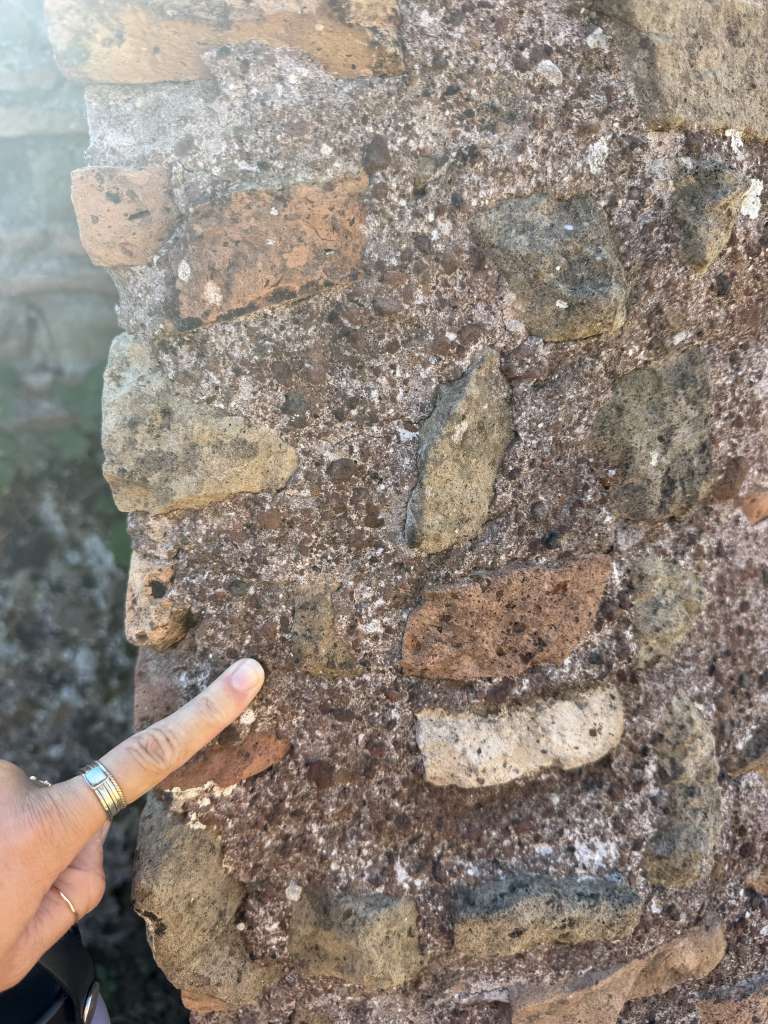
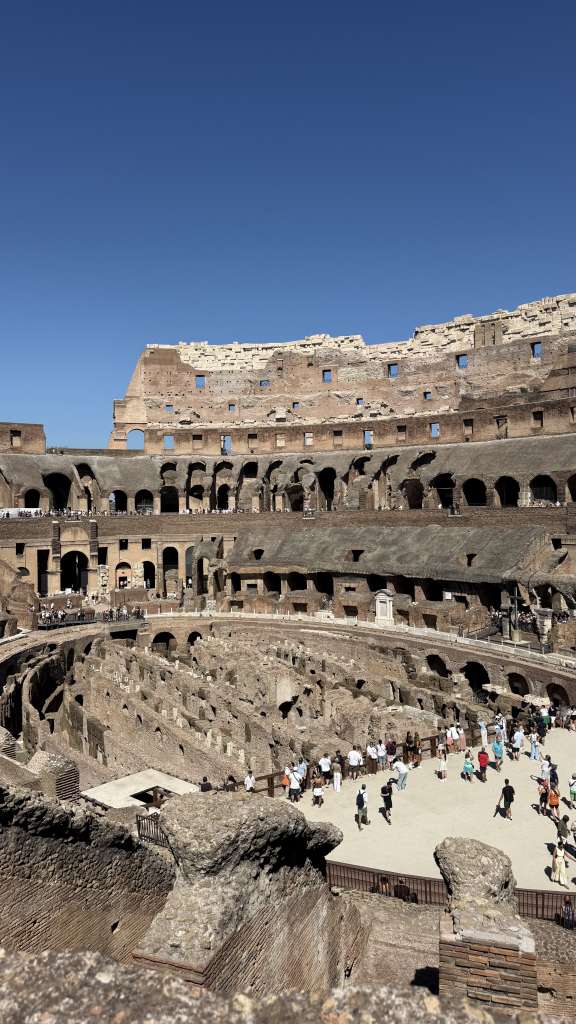
Fig. 13. The interiors of the walls of the Colosseum were built from pozzolanic concrete. Although the majority of walls still bear their brick facing, portions where the brick facing have come away, such as the foreground of this picture, reveal the concrete within (author).
Structurally, the Romans used pozzolanic concrete as mortar and pozzolana clasts of various size as aggregate within concrete (Fig. 12). This construction method is visible in the remnants of arches, aqueducts, and even the Colosseum (Marra et al, 2015; D’Ambrosio et al., 2015; Van Deman, 1934; Fig. 13). In addition to favorable physical and chemical properties, scoria materials were convenient; for example, the mortars observed in Largo Argentina and in the Temple of Castor and Pollux were sourced directly from near-Rome volcanic deposits (D’Ambrosio et al., 2015). This resourcefulness again points to the geologic fortune in which Rome is located. Not only could the Empire access nearby material resources, but those materials were especially advantageous for the Empire’s architectural and infrastructural purposes.
I had never considered the value of scoriae in concrete until Dr. Muench’s presentation on Roman construction materials. This information was a connection of geologic and engineering worlds and almost a contradiction — the properties that make scoria so fragile in geology are the properties that allow it to make concrete so strong. It became a scavenger hunt of mine to find as many examples of pozzolanic concrete as I could around Rome.
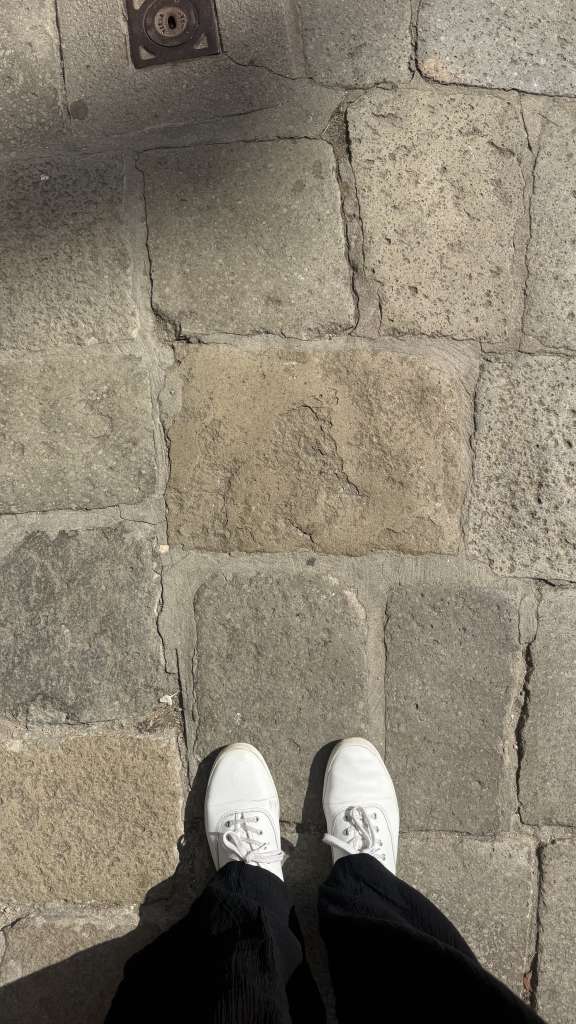
Basalt Lava
| Rock Type | Igneous; lava flow |
| Composition | Basaltic;6 high in Ca and K |
| Notable Properties | Occurs in less dense, vesicular varieties and more dense, microcrystalline varieties |
In contrast to the scoriae produced by explosive eruptions, the basalt stone utilized by Romans was erupted effusively in lava flows. Lava flows feature a variety of morphologies: these may be rubbly or porous (vesicular; Fig. 14c.) or coherent and dense (microcrystalline, Fig. 14a.) In dense morphologies, relatively slow cooling allowed gases to escape and minerals to crystallize prior to total solidification of the flow, facilitating the development of an interlocking crystal structure (Lockwood et al., 2022). This structure is invisible to the naked eye.
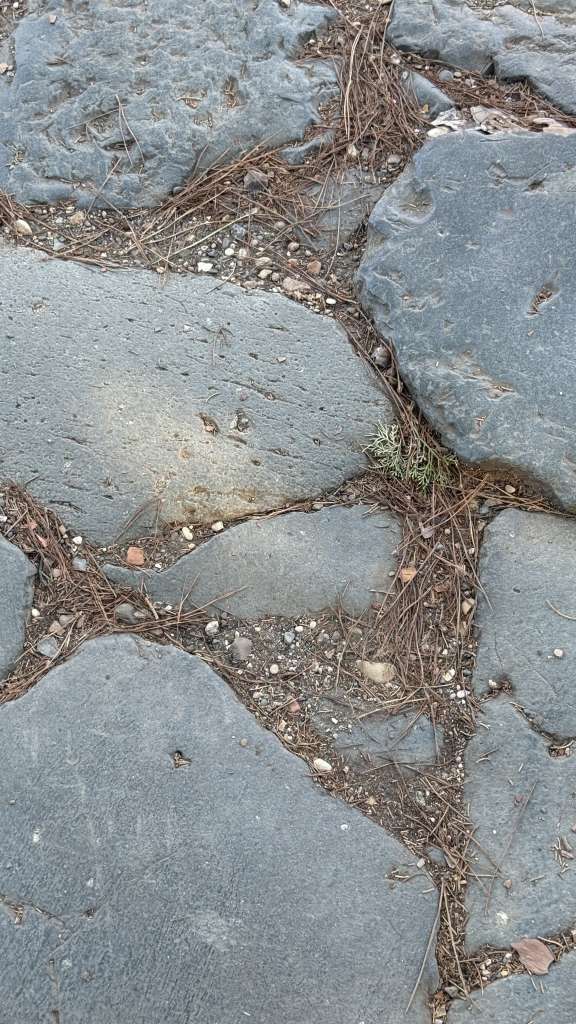
The lava flows of the Roman Magmatic Province cover the majority of the ground surface in the region of Rome (see [4] in Fig. 4; Fig. 15). It is theorized that stonemasons selected different areas within these flows for quarrying based on lava density, texture, and fracture pattern, preferring areas that broke easily into smooth-surfaced, workable blocks (Worthing et al., 2017, 2018). These blocks were then fit together to make the surface of ancient roads like the Appian Way (Worthing et al., 2017) or those of Ostia Antica (Fig. 16).
Fig. 15. Map of volcanic deposits in the vicinity of Rome and their coincidence with major Roman roads (Worthing et al., 2017).
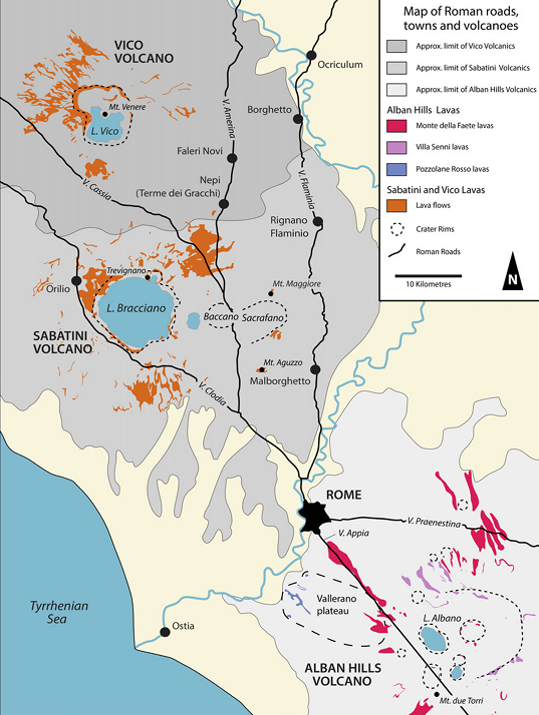
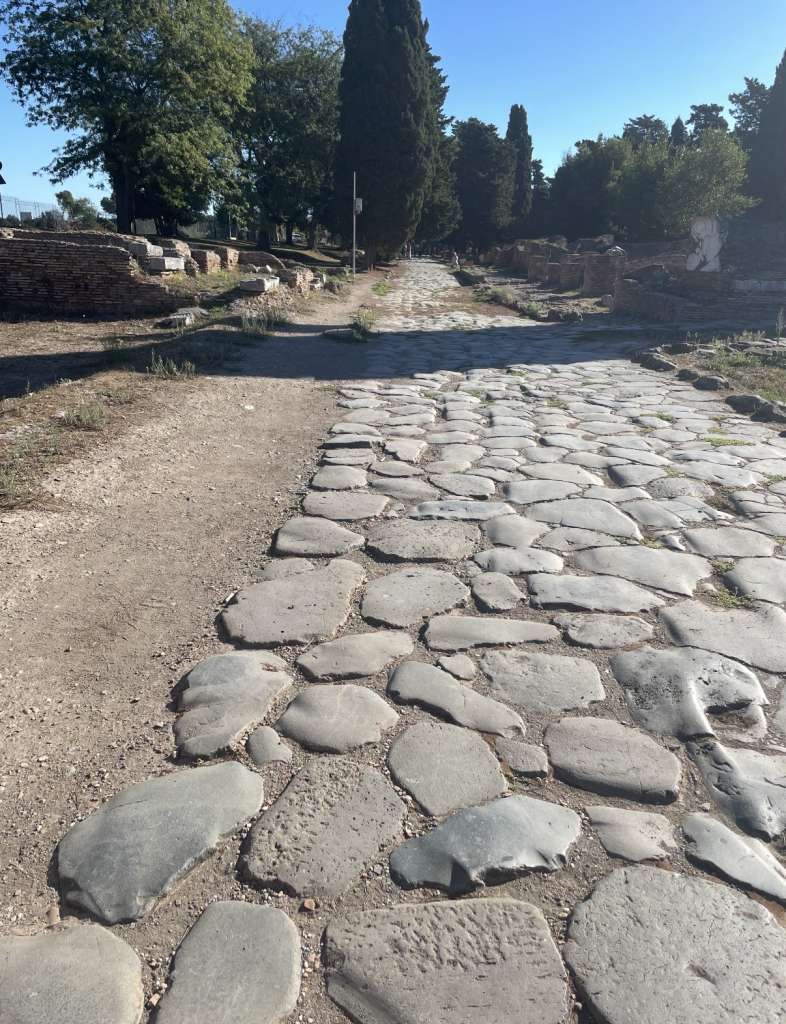
Fig. 16. Dense, microcrystalline basalt paving stones along the roadways of Ostia Antica (author).
Basalt was a favorable paving material because of its high specific gravity and smooth fracture surfaces, but moreover, it was convenient and abundant. Other paving materials existed – brick and travertine, for example – but brick required shaping and firing prior to installation, and travertine could only be quarried in one region east of Rome (Chefetz & Folk, 1984), where thereafter it required kilometers of transport before use. Basalt presented a ready-made material that could: 1) go straight from quarry to application and 2) was available in the immediate vicinity of the road networks branching from the ancient Roman urban center (Fig. 15).
When considered with the abundance of scoria and travertine, basalt further exemplifies how Rome acknowledged the variety of locally available materials and leveraged the best use of each. It is geological coincidence that gave the Empire these resources and the Empire’s engineering excellence that optimized them.
As a volcanologist, I’ve studied basalt all over the world. I hadn’t even realized that there were volcanoes in the vicinity of Rome until I began research for this paper. Still, the more you look, the more universal basalt becomes in the Roman Empire. It’s used in pavement applications all across the peninsula, from Pompeii to Venice to Florence to Rome. The Roman Empire was renowned for its roads, but it seems that we rarely acknowledge how necessary vast basalt resources were to make this incredible transportation network.
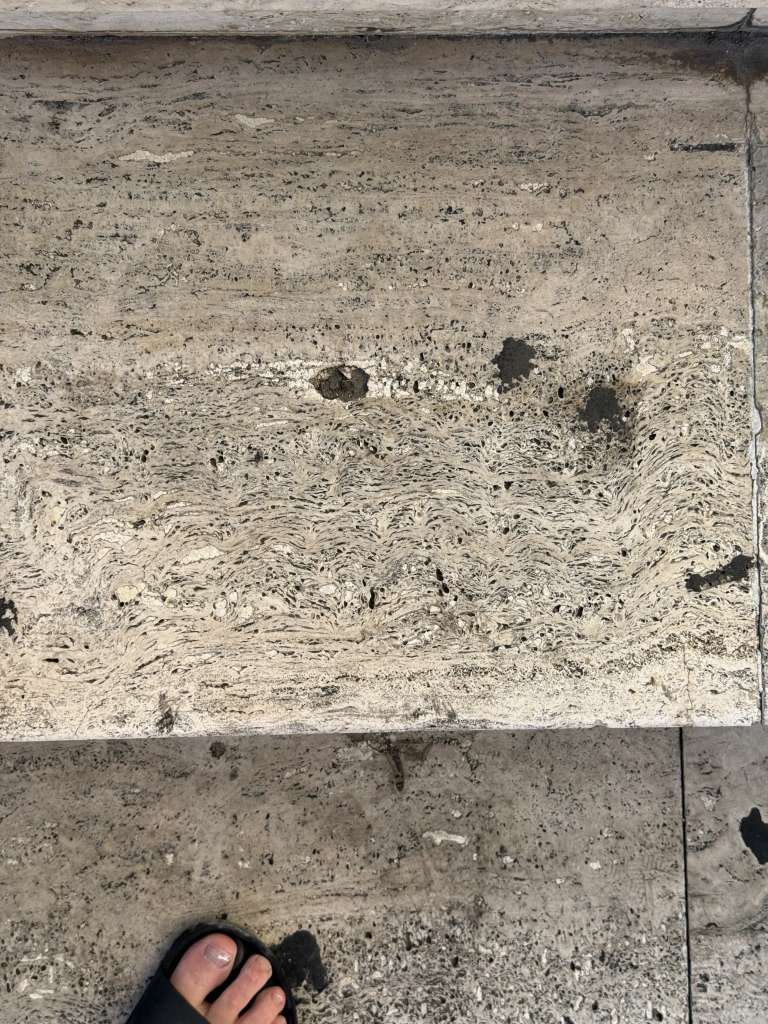
Travertine
| Rock Type | Sedimentary; freshwater evaporite7 |
| Composition | CaCO3 |
| Notable Properties | Horizontally stratified7, highly porous |
7 – What is an evaporite, and why is it so finely layered?
Evaporites are sedimentary rocks that form from precipitation out of solution. For travertine, water becomes saturated with Ca2+ and CaCO3, causing calcite (CaCO3) to precipitate on the floors and walls of the basin in which it forms. These sequential precipitation layers form the stratified structure of travertine.
Not all varieties of travertine are as uniformly layered as travertine in Tivoli. The lateral extent of Tivoli travertine is exceptional because of the size of the basin in which it forms.
Travertine is the rock formed by supersaturation and precipitation of calcium carbonate from freshwater springs. Expansive travertine deposits are present in the Tivoli region west of Rome (see [5] in Fig. 4). These form when thermal waters dissolve calcium from the limestone bedrock, transport it downgradient, then cool and precipitate it in broad, horizontal layers (Chafetz & Folk, 1984; Anzalone et al., 2017). This environment is one of two in the world where local basin topography favors such large-scale, horizontally continuous strata of travertine (Chafetz & Folk, 1984). On the smaller scale, individual strata possess a variety of textures due to patterns of dissolution/precipitation and microbial activity (Anzalone et al., 2017; Fig. 18).
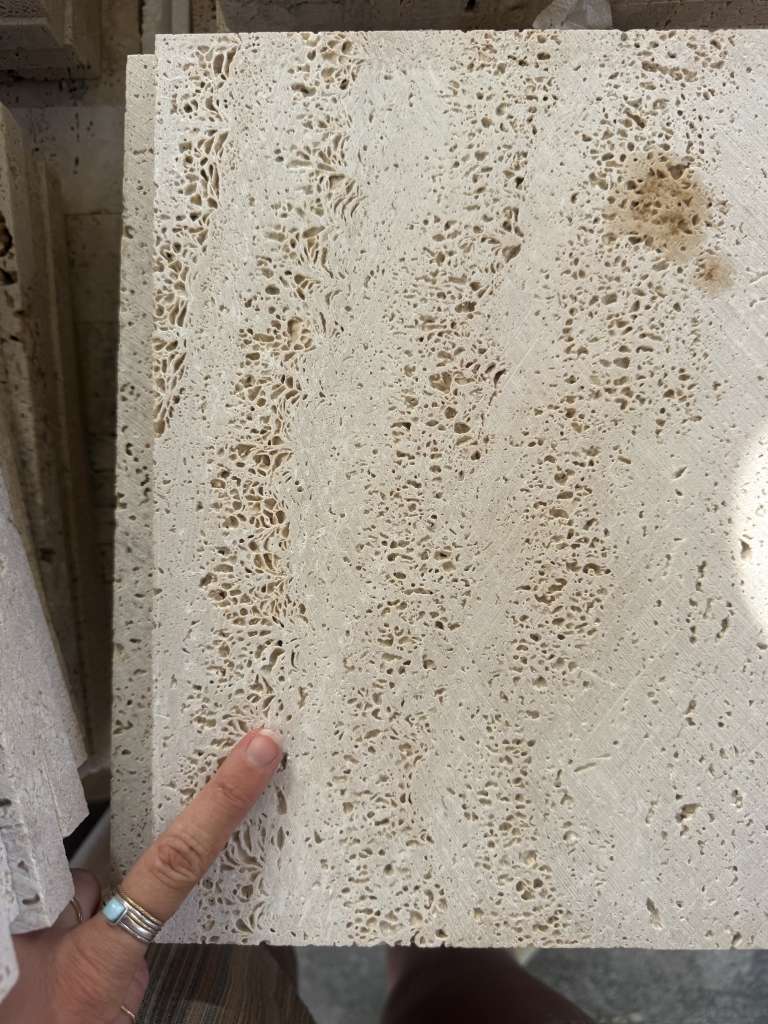
Fig. 18. Patterns of layered microbial growth in travertine tiles at Pacifici quarry (author).
Fig. 19. Travertine facing installed within the walls and arches of the Colosseum (author).
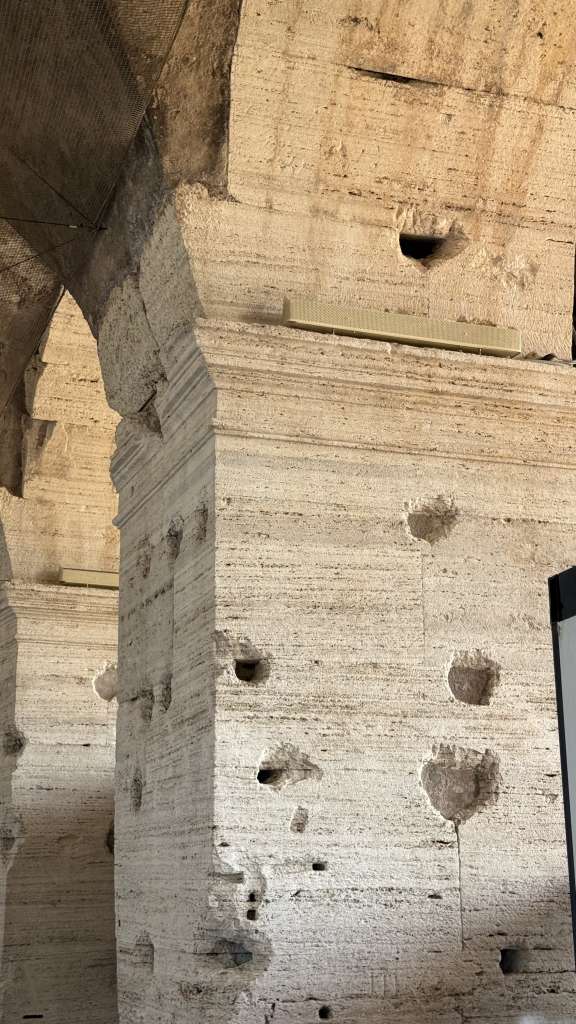
The ancient Romans acknowledged that travertine was similar in softness and color to luxurious marble but was relatively lightweight and convenient to extract and transport (Grawehr, 2022). Not only was the Tivoli quarry close to Rome, but the predictable stratification of travertine in this area allowed local stonemasons to yield both blocks and tiles for a variety of uses (Fratelli Pacifici S.p.A., personal comm., Sep 16 2026). Accordingly, travertine was used throughout imperial Rome to restore structures originally made of weaker material (e.g., volcanic tuff3) and to create brilliant facades over darker building interiors, as was done in the Colosseum (80 C.E.; Fig. 19; BBC News, 2011; Grawehr, 2022). Furthermore, the horizontal layering of travertine granted it a high uniaxial compressive strength relative to its weight, making it useful for pedestals and foundations (Table 1; Vallardi, 1982; Jackson et al., 2005; Lamprecht, 1984; Fig. 20). To this day, Tivoli produces expert stonemasons and exports the majority of the world’s ornamental travertine (Fratelli Pacifici S.p.A., personal comm., Sep 16 2026).
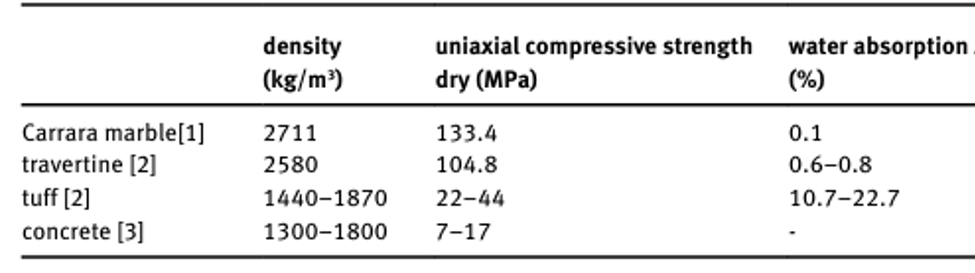
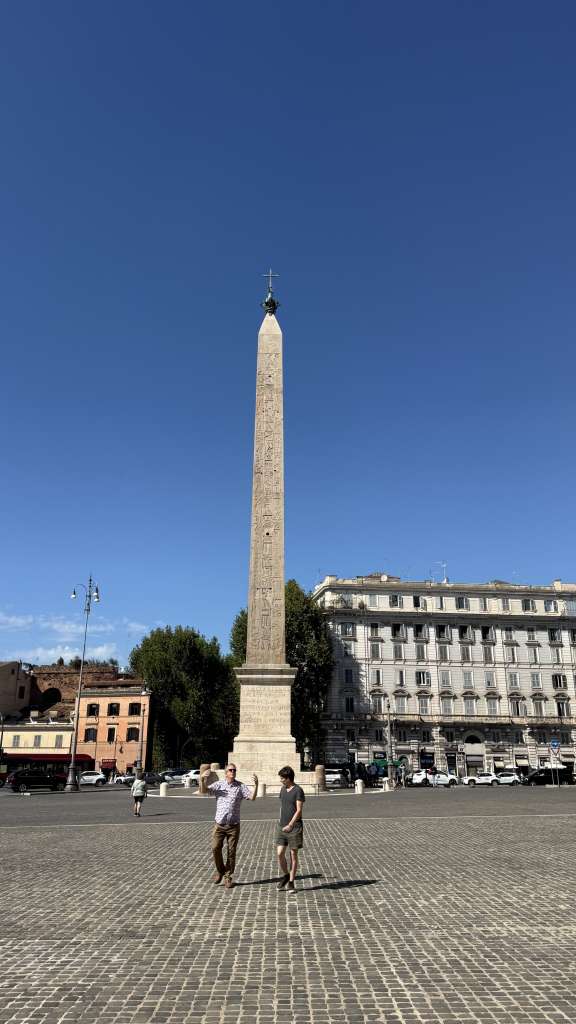
Fig. 20. The Lateran Obelisk resting on a pedestal of travertine (author). Note the inspiring awe of sculptor and freemason Richard Rhodes in the foreground.
Travertine is the last and perhaps the best example of how geological circumstance favored the ancient Empire. Tivoli travertine is geologically rare, requiring a unique combination of groundwater, bedrock, and tectonics in order to exist; yet this material is so common in Rome that it is found on everything from iconic monuments to sidewalk curbs (Fig. 17a). The Romans recognized both the beauty and functionality of this material and engineered it accordingly.
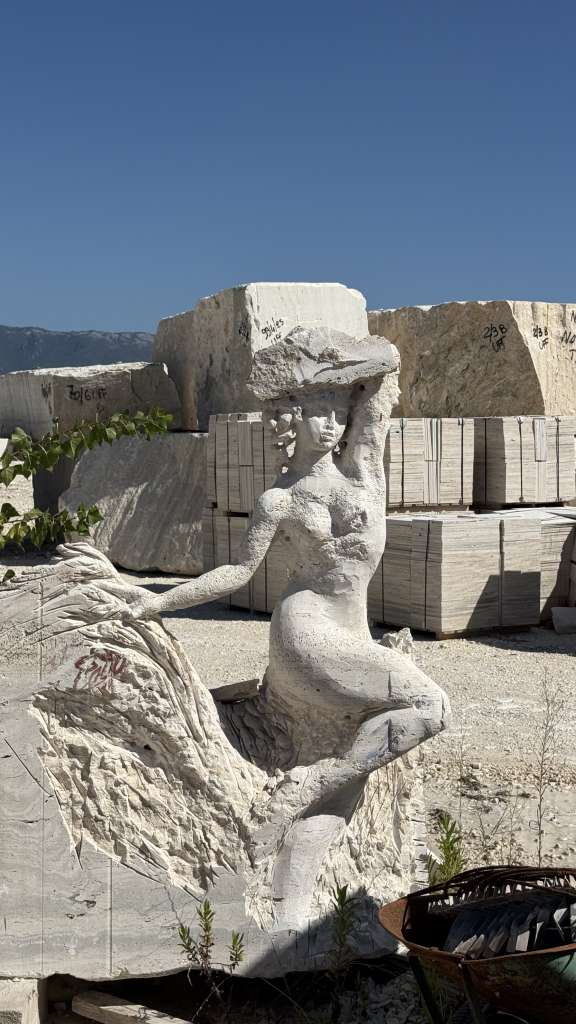
I’ve only ever seen travertine in small deposits around warm springs in upstate New York. The scale of travertine mining in Tivoli is incredible to any observer, but to a geologist, it feels surreal. This rock type is so rare everywhere else in the world, but here they use it for sidewalks? This observation spoke to the variety of scales on which Rome operated. It could source the most rare and stunning marbles from all across Egypt and Greece, but needed to go only next door to Tivoli to source world-class travertine. The geological luck here seems almost comical.
Reflecting on the Intersection of Roman Geology and Engineering
In this analysis of ancient Roman rock resources, I’ve emphasized how the unique geologic position of Rome set the Empire for success. The complex geology of the Italian peninsula endowed ancient Rome with a variety of materials – dolomite, marble, pozzolana, basalt, and travertine, among many others – each of which had unique properties and uses to the ancient Empire. The geological provenance of these materials informs their use and persistence in Roman engineering.
That being said, there is a confirmation bias when we base our findings on only the structures that remain. We don’t know what rock resources or methodologies the Romans tried and failed because those attempts are no longer observable. The abundance and variety of resources available to the Romans makes me wonder what else they considered and invented and how much remains lost to the rock record (or left for us to discover).
Finally, I hope that this paper reminds us that naturally sourced construction materials are storytellers. Engineers typically think of rock resources in terms of physical properties and quantifiable experiments; the Romans, however, understood these materials through majorly luck, trial, and error. They took what they were given — which was geologically quite a myriad of stuff, frankly — and applied their values of discipline, brute force, and creativity to build the Empire. The fact that many of those engineering feats remain standing today is a testament to the power of the Roman Empire and the opportunity that lies in geological knowledge of place. In engineering analyses, we are often required to simplify a situation in order to model and quantify it. These sterile solutions are undeniably valuable, but they lack context. In the modern world and throughout history, we have engineered solutions to solve problems, as opposed to solving problems about engineered solutions. Geology is the reminder that context matters and engineering is irrevocably tied to place.
References
ACI Committee E703. (2016). Concrete fundamentals. (CCS-0(16)). American Concrete Institute.
Anzalone, E., D’Argenio, B., & Ferreri, V. (2017). Depositional trends of travertines in the type area of Tivoli (Italy). Rendiconti Lincei, 28(2), 341–361. https://doi.org/10.1007/s12210-017-0595-1
BBC News. (2011, March 22). BBC’s history of the Colosseum. BBC. https://www.bbc.co.uk/
Beckmann, M. (2011). The column of Marcus Aurelius: The genesis and meaning of a Roman imperial monument. University of North Carolina Press. https://doi.org/10.5149/9780807877777_beckmann
Bernoulli, D. (1964). Zur Geologie des Monte Generoso: Ein Beitrag zur Kenntnis der südalpinen Sedimente. Beiträge zur Geologischen Karte der Schweiz, Neue Folge, 118, 1-134.Bernoulli, D. (2007). The pre-Alpine geodynamic evolution of the Southern Alps: A short summary. Bulletin für Angewandte Geologie, 12, 3-10.
Bocaletti, M., Elter, P., & Guazzone, G. (1971). Plate Tectonic Models for the Development of the Western Alps and Northern Apennines. Nature Physical Science, 234(49), 108–111. https://doi.org/10.1038/physci234108a0
Boncio, P., & Lavecchia, G. (2000). A structural model for active extension in Central Italy. Journal of Geodynamics, 29(3–5), 233–244. https://doi.org/10.1016/S0264-3707(99)00050-2
Borri, A. (2006). Diagnostic analysis of the lesions and stability of Michelangelo’s David. Journal of Cultural Heritage, 7(4), 273–285. https://doi.org/10.1016/j.culher.2006.06.004
Bressan, G. and Melchiorri, C. (2012). Via Ferrata: A short introduction [Flyer]. Club Alpino Italiano. Retrieved fromhttps://www.theuiaa.org/grades-standards/via-ferrata/.
Carmichael, S.K., Ferry, J.M. and McDonough, W.F. (2008a) Formation of replacement dolomite in the Latemar carbonate buildup, Dolomites, Northern Italy: Part 1. Field relactions, mineralogy, and geochemistry. Am. J. Sci., 308, 851–884.
Ciotoli, G., & Guerra, M. (2015). Distribution and physico-chemical data of Italian bottled natural mineral waters. Journal of Maps, 12(5), 917–935. https://doi.org/10.1080/17445647.2015.1096846
Coli, M. and Criscuolo, A. (2021). The Carrara Marble: geology, geomechanics and quarrying. Earth and Environmental Science, IOP Conf. Series: 833 (012120). https://doi:10.1088/1755-1315/833/1/012120
Conti, P., Cornamusini, G., & Carmignani, L. (2020). An outline of the geology of the Northern Apennines (Italy), with geological map at 1:250,000 scale. Italian Journal of Geosciences, 139(2), 149–194. https://doi.org/10.3301/IJG.2019.25
Conticelli, S., Boari, E., Avanzinelli, R., De Benedetti, A. A., Giordano, G., Mattei, M., Melluso, L., and Morra, V., 2010a, Geochemistry, isotopes and mineral chemistry of the Colli Albani volcanic rocks: constraints on magmagenesis and evolution, in The Colli Albani volcano (eds. R. Funiciello and G. Giordano), 107–39, Special Publicationsof IAVCEI, 3, Geological Society of London, London.
Conticelli, S., Francalanci, L., Manetti, P., Cioni, R., and Sbrana, A., 1997, Petrology and geochemistry of the ultrapotassic rocks of the Sabatini Volcanic District, Central Italy: the role of evolutionary processes in the genesis of variably enriched alkaline magmas, Journal of Volcanology and Geothermal Research, 75, 107–36.
Conticelli, S., Laurenzi, M. A., Mattei, M., Avanzinelli, R., Melluso, L., Tommasini, S., Boari, E., Cifelli, F., and Perini,G., 2010b, Leucite bearing (kamagfugitic/leucititic) and free lamproitic ultrapotassic rocks and associated shoshonitesfrom Italy: constraints on petrogenesis and geodynamics, in The geology of Italy: tectonics and life along platemargins (eds. M. Beltrando, A. Peccerillo, M. Mattei, S. Conticelli and C. Doglioni), Journal of the Virtual Explorer,36(20), paper 20, https://doi.org/10.3809/jvirtex.2010.00251
Conticelli, S., Marchionni, S., Rosa, D., Giordano, G., Boari, E., and Avanzinelli, R., 2009, Shoshonite and sub-alkalinemagmas from an ultrapotassic volcano: Sr–Nd–Pb isotope data on the Roccamonfina volcanic rocks, RomanMagmatic Province, southern Italy, Contributions to Mineralogy and Petrology, 157, 41–63.
Conticelli, S., Melluso, L., Perini, G., Avanzinelli, R., & Boari, E. (2004). Petrologic, geochemical and isotopic characteristics of potassic and ultrapotassic magmatism in central-southern Italy: Inferences on its genesis and on the nature of mantle sources. Periodico di Mineralogia, 73(1), 135-164.
D’Ambrosio, E., Marra, F., Cavallo, A., Gaeta, M., and Ventura, G. (2015). Provenance materials for Vitruvius’ harenae fossiciae and pulvis puteolanis: Geochemical signature and historical-archaeological implications. Journal of Archaeological Science: Reports, 2, 186-203. https://DOI:10.1016/j.jasrep.2015.01.012
De Haas, T. C. A. and Tol, G. W. (Eds.). (2017). The Economic Integration of Roman Italy: Rural Communities in a Globalizing World. Koninklijke Brill.
Delbrück, H. (1990). History of the art of war. University of Nebraska Press.
Doglioni, C. (1987). Tectonics of the Dolomites (southern alps, northern Italy). Journal of Structural Geology, 9(2), 181–193. https://doi.org/10.1016/0191-8141(87)90024-1
Geopop. (2026, February 27). The geological history of Italy from 250 million years ago to today [Video]. YouTube. https://www.youtube.com/watch?v=DTOssDc8keo
Giordano, G., De Benedetti, A. A., Diana, A., Diano, G., Gaudioso, F., Marasco, F., Miceli, M., Mollo, S., Cas, R. A. F., & Funiciello, R. (2006). The Colli Albani mafic caldera (Roma, Italy): Stratigraphy, structure and petrology. Journal of Volcanology and Geothermal Research, 155(1–2), 49–80. https://doi.org/10.1016/j.jvolgeores.2006.02.009
Grawehr, M. (2022). Travertine in Rome: Its style and meaning. In A. Haug & A. Hielscher (Eds.), Materiality in Roman art and architecture (pp. 163-179). De Gruyter. https://doi.org/10.1515/9783110764734-010
Harris, S. (2025). Paillage pouzzolane : Bienfaits, utilisation et mise en place. OBTGJG. https://win.feuerwehr-grossheide.de/paillage-pouzzolane-bienfaits-utilisation-et-mise-en-place/
Henry S. Chafetz, Robert L. Folk. (1984). Travertines: Depositional Morphology and the Bacterially Constructed Constituents. SEPM Journal of Sedimentary Research, Vol. 54. https://doi.org/10.1306/212F8404-2B24-11D7-8648000102C1865D
International Atomic Energy Agency. (2016). Reference sheet: Certified reference material IAEA-603 (calcite): Stable isotope reference material for δ13C and δ18O [PDF]. IAEA.
Jackson, M. D., Marra, F., Hay, R. L., Cawood, C., & Winkler, E. M. (2005). The judicious selection and preservation of tuff and travertine building stone in ancient Rome. Archaeometry, 47(3), 485-510. https://doi.org/10.1111/j.1475-4754.2005.00215.
Jackson, M.D., Deocampo, D., Marra, F., Scheetz, B.E., 2010a. Mid-Pleistocene volcanic ash in ancient Roman concretes. Geoarchaeology 25, 36–74.
John, E., Matschei, T., & Stephan, D. (2018). Nucleation seeding with calcium silicate hydrate – A review. Cement and Concrete Research, 113, 74–85. https://doi.org/10.1016/j.cemconres.2018.07.003
Lockwood, J. P., Hazlett, R. W., & de la Cruz-Reyna, S. (2022). Volcanoes: Global perspectives (2nd ed.). Wiley-Blackwell.
Mahaney, W. C., Kapran, B., & Tricart, P. (2008). Hannibal and The Alps: unravelling the invasion route. Geology Today, 24(6), 223–230. Portico. https://doi.org/10.1111/j.1365-2451.2008.00695.x
Margolis, S. V. (1989). Authenticating ancient marble sculpture. Scientific American, 260(6), 104–111. https://doi.org/10.1038/scientificamerican0689-104
Marra, F., D’Ambrosio, E., Gaeta, M., & Mattei, M. (2015). Petro-chemical identification and insights on chronological employment of the volcanic aggregates used in ancient Roman mortars. Archaeometry, 57(6), 1154–1173. https://doi.org/10.1111/arcm.12154
Marra, F., Karner, D.B., Freda, C., Gaeta, M., Renne, P.R., 2009. Large mafic eruptions at the Alban Hills Volcanic District (Central Italy): chronostratigraphy, petrography and eruptive behavior. J. Volcanol. Geotherm. Res. 179, 217–232.
Marroni, M., Meneghini, F., & Pandolfi, L. (2017). A revised subduction inception model to explain the Late Cretaceous, double-vergent orogen in the precollisional western Tethys: Evidence fromthe Northern Apennines. Tectonics, 36,2227–2249. https://doi.org/10.1002/2017TC004627
Meccheri, M., Molli, G., Conti, P., Blasi, P., & Vaselli, L. (2007). The Carrara Marbles (Alpi Apuane, Italy): a geological and economical updated review. Journal of the German Society for Geosciences, 158(4), 719–736. https://doi.org/10.1127/1860-1804/2007/0158-0719
Meister, P., Mckenzie, J. A., Bernasconi, S. M., & Brack, P. (2013). Dolomite formation in the shallow seas of the Alpine Triassic. Sedimentology, 60(1), 270–291. Portico. https://doi.org/10.1111/sed.12001
N.D. (2025). White Travertino’s historical significance: From ancient Rome to modern MCM adaptations. COLORIA GROUP. Retrieved Sep 8 2026 from https://www.coloriagroup.cn/news/white-travertino-s-historical-significance-from-ancient-rome-to-modern-mcm-adaptations.html
Paolucci, A. (2004). The David in Florence’s Accademia is young Michelangelo’s masterpiece. In S. Bracci, F. Falletti, & M. Matteini (Eds.), Exploring David: Diagnostic tests and state of conservation (p. 12). Giunti Editore.
Paolucci, A., Amendola, A., & Buonarroti, M. (2006). Michelangelo’s David: From symbol to myth. Harry N. Abrams.
Philpotts, A. R., & Ague, J. J. (2009). Principles of igneous and metamorphic petrology (2nd ed.). Cambridge University Press.
Schwabenblitz. (n.d.). Relief map of Italy [Stock illustration]. Adobe Stock. https://stock.adobe.com/images/relief-map-of-italy/114388592
Sun, J., Shi, H., Qian, B., Xu, Z., Li, W., & Shen, X. (2017). Effects of synthetic C-S-H/PCE nanocomposites on early cement hydration. Construction and Building Materials, 140, 282–292. https://doi.org/10.1016/j.conbuildmat.2017.02.075
UNESCO World Heritage Centre. (2009). The Dolomites. UNESCO. https://whc.unesco.org/en/list/1237.
US Military Academy. (2012, April 26). Caesar’s campaign against the Helvetii [Map]. World History Encyclopedia. https://www.worldhistory.org/image/239/caesars-campaign-against-the-helvetii/
Vallardi, F. (Ed.). (1982). Marmi italiani: Guida technica. Vallardi.
Van Deman, E. B. (1934). The building of the Roman aqueducts. Carnegie Institution of Washington.
Wortel, M. J. R., & Spakman, W. (2000). Subduction and Slab Detachment in the Mediterranean-Carpathian Region. Science, 290(5498), 1910–1917. https://doi.org/10.1126/science.290.5498.1910
Worthing, M. A., Laurence, R., & Bosworth, L. (2018). Trajan’s Forum (Hemicycle) and the Via Biberatica (Trajan’s Markets): an HHpXRF Study of the Provenance of Lava Paving in Ancient Rome (Italy). Archaeometry, 60(6), 1202–1220. Portico. https://doi.org/10.1111/arcm.12374