
Introduction
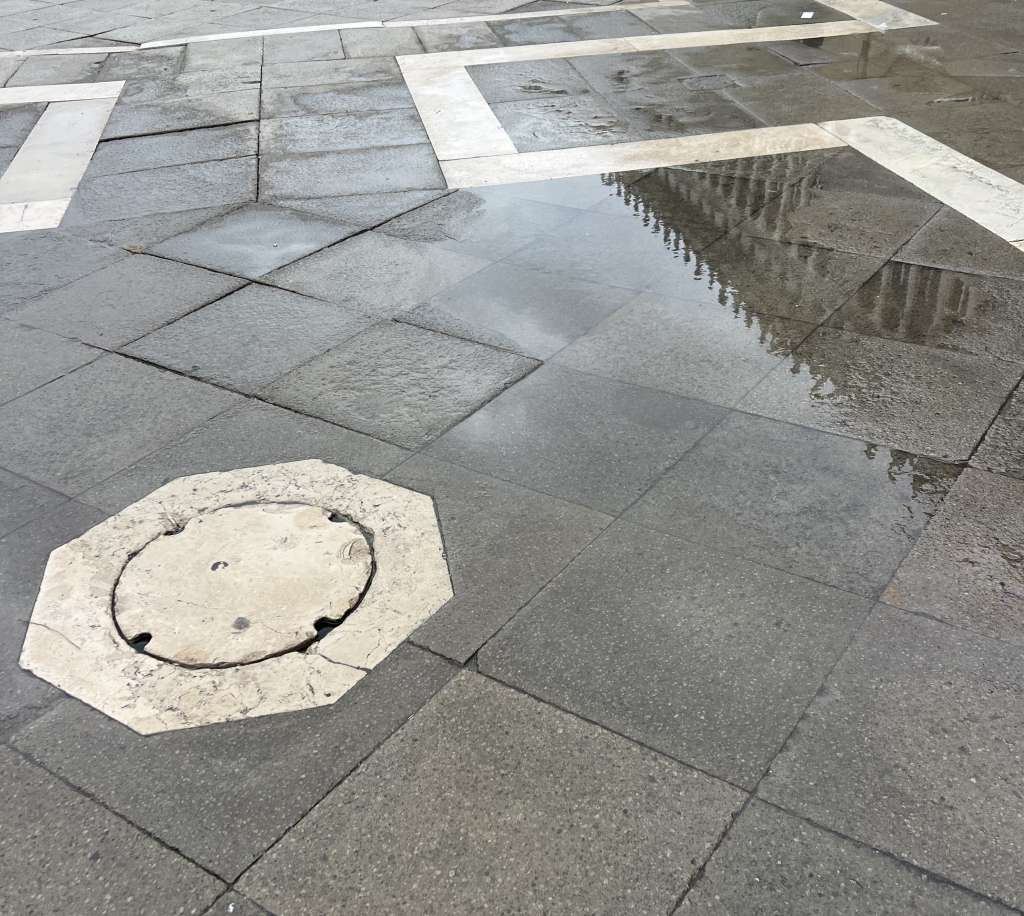
Venice has survived over 1500 years in a shallow lagoon connected to the Adriatic Sea, blossoming into a city full of rich history and beautiful architecture (Madden, 2010). Hordes of tourists flock to the city every day. They marvel at the extensive network of canals that divide the streets, enjoy fresh seafood, and laugh it off when the rising tide bubbles through the drains, wetting their socks (Fig. 1). Walking through the streets of Venice this summer, I overheard someone say, “I’m glad I got to see Venice before it sinks.” Statements like these are commonly uttered, but with Venice’s prevalence in history and media, its destruction is impossible to imagine. However, after years of bargaining with the sea for more time, Venice is getting closer to being bested once and for all.
To understand Venice, it is important to understand the political atmosphere that surrounded its creation. Thomas F. Madden explores this subject in his book, A History of Venice: Queen of the Seas. Initially, the lagoon provided sanctuary to groups of Romans fleeing barbarian invaders. Their town was safeguarded by the low-lying, sandy islands that required detailed knowledge to navigate. After Attila the Hun sacked the nearby Roman city of Aquileia, many people sought refuge from the invaders on these islands. Isolated in the lagoon, and following the fall of the Byzantine empire, a unique culture and political system flourished (Madden, 2010).
However, the relationship between Venice and the water is complicated at best. While offering necessary geographical protection from invaders, the lagoon water is also a hazard to the safety of the city. Venice has a long history of floods caused by high tide, or “acqua alta”, as the phenomenon is referred to in Italian. Over 100 severe flooding events have been documented since 782 C.E. (Camuffo et al., 2000). During these events, water enters the lowest floors of buildings and covers the streets, disrupting usual foot and vehicle traffic. In 1966, a devastating flood submerged Venice in more than 1 meter of water for more than half a day (Gugliuzzo, 2017). Climate change adds yet another layer to the threat of acqua alta. With rising sea levels and an increase in storm intensity, tide levels are increasingly reaching heights (Fletcher et al. 2009).
This article examines the records of ancient Venetians’ responses to flooding, and how their flood control practices have evolved over time. Additionally, it will explore what flood prevention measures are currently being proposed to ensure the future of Venice.
The Realities of Living on Water
Building on the Venetian lagoon presented a unique set of challenges for the early settlers. With an ever-growing population, they needed to build the shelters and infrastructure necessary for a functioning city. However, there were two main problems unique to the area they were settling in. First, the lagoon’s soft soil had a low load-bearing capacity (Foraboschi, 2017). Second, the brackish lagoon water threatened the structural integrity of porous ancient bricks (Foraboschi, 2017).
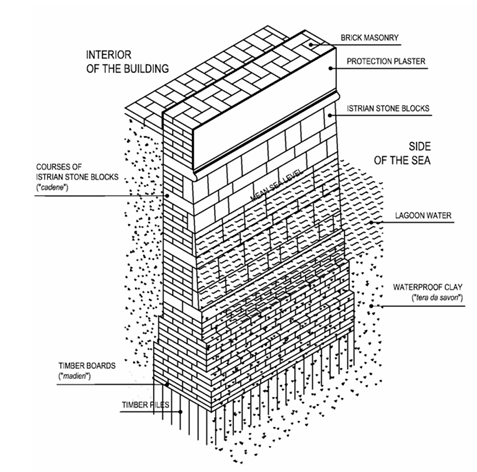
The first problem was tackled with a ground modification technique called pile driving, where wooden logs were driven into the soft soil sitting at the base of the lagoon to increase the density of the soil, effectively increasing its strength and stiffness (Foraboschi, 2017). These timber piles avoided decay because the movement of water introduced large amounts of clay and silt to the wood surface (Bahna, 2024). This factor, combined with the low oxygen levels in the water, resulted in petrified wood that continues to support historical landmarks such as the Rialto Bridge (Bahna, 2024).
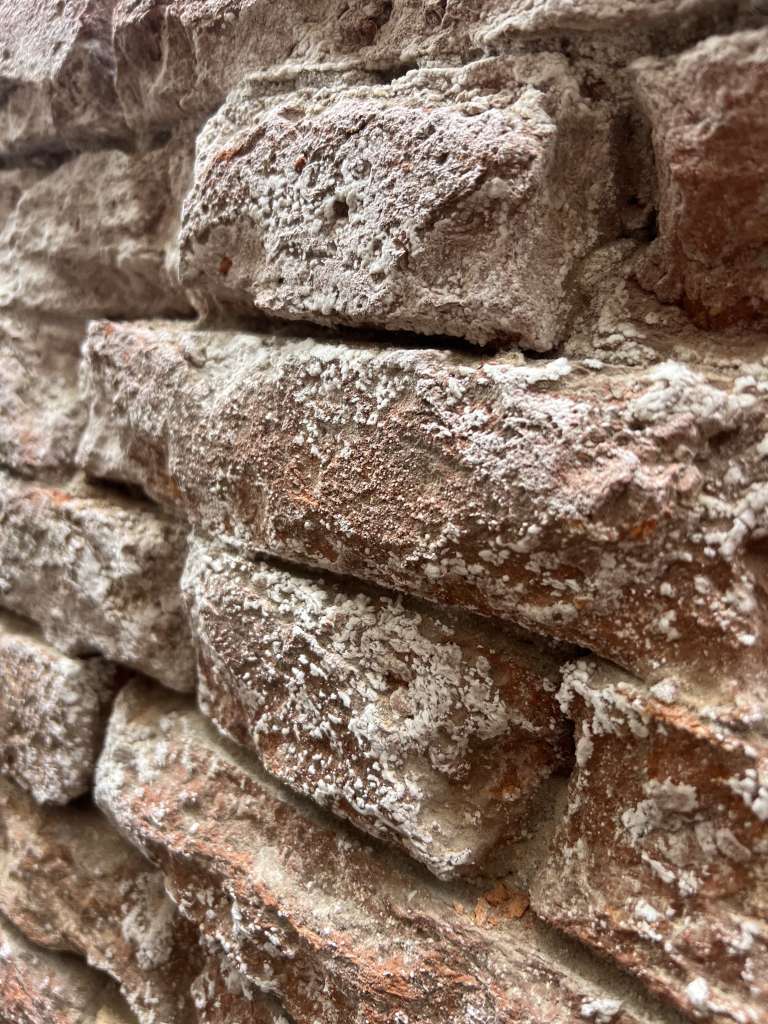
Once building foundations were built using this technique, Venetians had to devise a method to protect their brickwork from the brackish water in the lagoon. When brackish water encounters a porous brick, it will enter the interior of the brick, and precipitate out once the water evaporates (Foraboschi, 2017). Crystallization can coat both the exterior and interior of bricks (Fig. 2), leading to crack formation as pressure builds up due to this crystallization (Foraboschi, 2017).
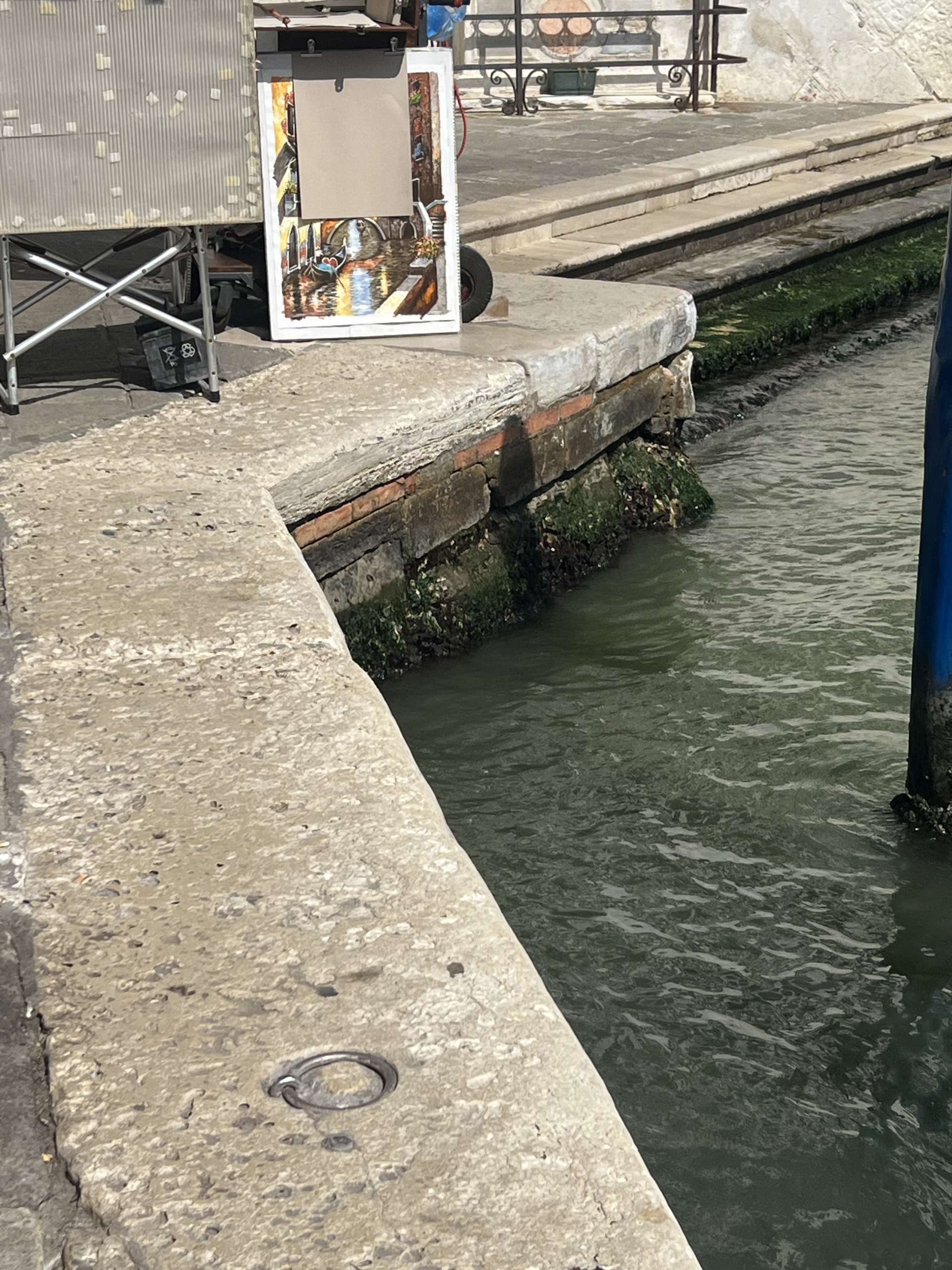
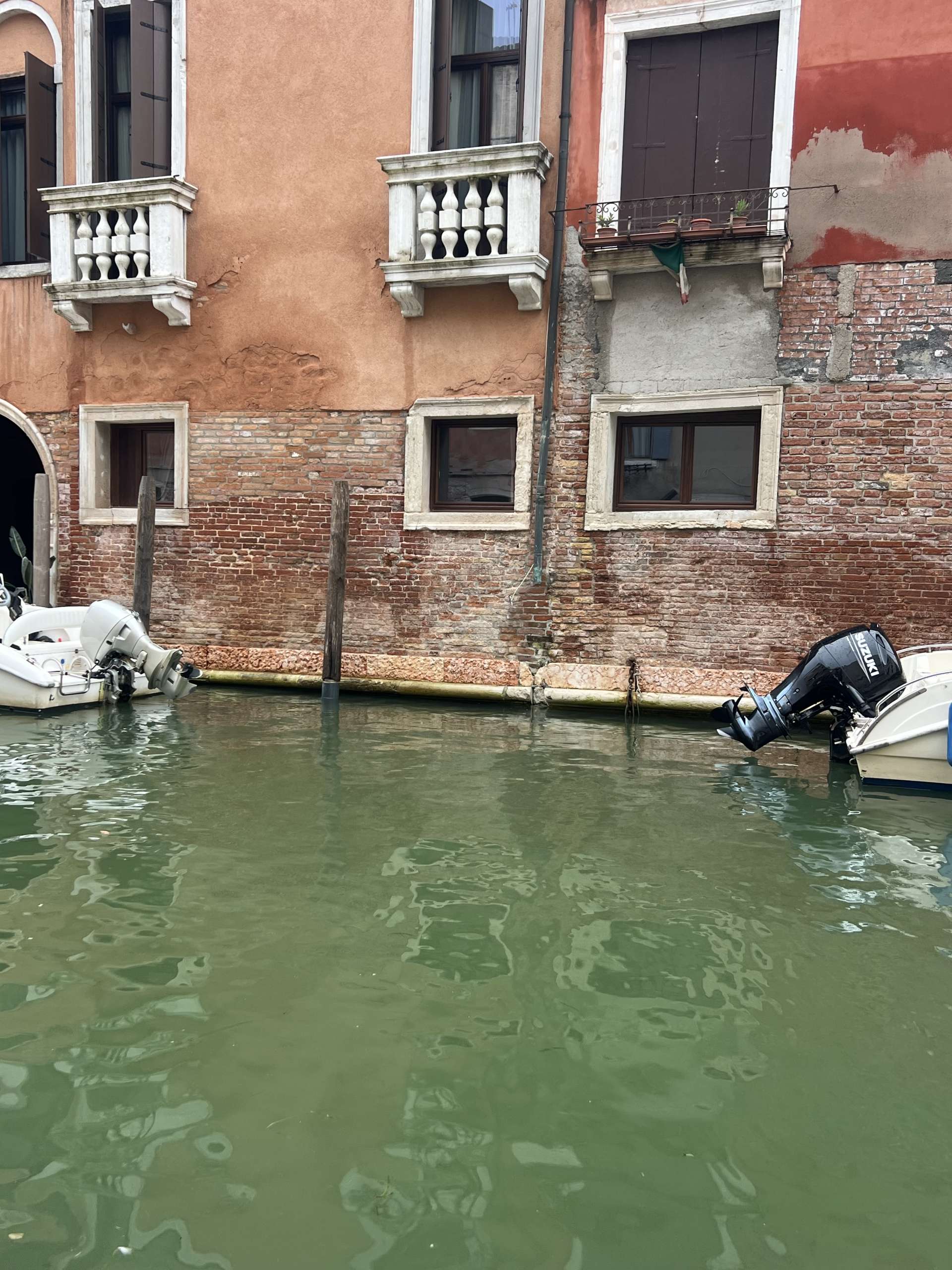
To prevent water from reaching these porous bricks, early Venetians utilized a specific type of highly impermeable stone from Istria, lining the brick foundations of structures lying on top of the timber piles (Bahna, 2024). Typically, Istrian stone covers brickwork underneath the water level. However, certain buildings utilize this stone much further up the building wall to provide further protection in case of acqua alta (Foraboschi, 2017). Below the plaster and above-water brickwork in most buildings lies a horizontal layer of Istrian stone, which helps to minimize rising damp (Fig. 3 and 4) (Foraboschi, 2017). Walking throughout Venice, it is apparent where this prevention method failed, resulting in loose or missing sections of plaster and damp bricks (Fig. 5).
River Diversion
Starting in the thirteenth century, the Venetians began hydraulic intervention projects to preserve their lagoon. The primary goal of these projects was to reduce the sediment that was filling the Venetian lagoon, and to facilitate the flow of water entering and exiting it (Bondesan et al., 2012). In this section, I will specifically focus on the changes made to the Piave river in the early sixteenth century, using information from an article written by Aldino Bondesan and Paola Furlanetto on Italian river diversions in 2012.
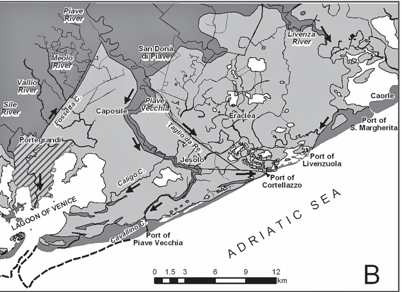
The Piave river still serves as a prominent waterway in the region of northern Italy. It flows near the Venetian lagoon and historically emptied into the northern part of the lagoon (Fig. 6). In 1534, a large storm caused water in the Piave river to escape its natural channel, flooding the Venetian plain. Large amounts of water and sediment were pushed into the Venetian lagoon. This sedimentation was a concern for the Venetian residents. The lagoon’s navigability could be reduced if the flow of water into it is decreased. Sedimentation also reduced the drainage of water within the lagoon, increasing flood risk (Bondesan et al., 2012).
After this flood, the Venetian government ordered the construction of a large embankment along the right bank of the Piave. The goal of this project was to contain any further increases in river volume within the Piave riverbed. After further consideration, authorities decided that the embankment alone was insufficient to withstand the force of the river. This led to the creation of the Taglio da Re bypass and the Cavetta Capala channel (Fig. 6). The Taglio da Re connected to the Piave north of the Cavetta Capala, but both emptied near the Port of Cortellazzo (Bondesan et al., 2012).
These bypasses successfully diverted floodwaters and silt away from the lagoon and into the Adriatic Sea, serving as effective flood diversion channels. However, the sedimentation problem persisted within the lagoon. In the seventeenth century, an even larger project was undertaken to deal with this problem. The entire course of the river was redirected into the previously constructed Taglio da Re bypass, and the Sile river was moved into the Piave river channel. This created a lake in the nearby floodplains. Unfortunately, about twenty years after this diversion, an embankment collapsed and the Piave returned to its original course, marking the end of manmade alterations to the river (Bondesan et al., 2012).
Seawalls
Another method of flood prevention outside of the Venetian lagoon was the construction of seawalls. There is a collection of islands that separate the lagoon from the Adriatic Sea, with three main inlets that allow water transfer. Storms and the constant assault of waves on this shoreline threaten erosion of this important barrier (Ciriacono, 2018). Until the seventeenth century, the shore was protected with wooden beams that were buried in layers into the outer slope of a dyke, with stones placed between them (Franco et al. 1993). However, the costs of timber climbed in the late seventeenth century, and this method required constant maintenance, leading Venetian Authorities to seek a more cost-effective solution (Ciriacono, 2018). They eventually opted for sloped, stone seawalls known as the “murazzi”, constructed throughout the mid-eighteenth century (Ciriacono, 2018).
The main material in these walls is Istrian stone. As previously discussed, Istrian stone is highly impermeable, making it an excellent candidate for these sea-facing walls. At the time of their construction, pozzolana mortar had also just been discovered, and was used to bind the Istrian stones together (Franco et al. 1993). Pozzolana triggers a reaction when mixed with lime and water, turning the calcium hydroxide into a stable and dense crystalline gel that leads to a low porosity mortar (Khan, 2017). The use of pozzolana played a part in ensuring the success and longevity of these seawalls (Ciriacono, 2018).
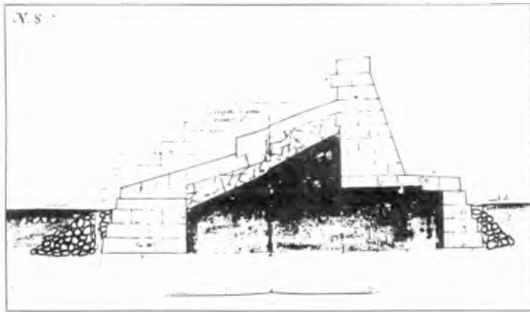
The shape of the murazzi was also carefully chosen to protect the shoreline behind it. The murazzi are over 4 meters high, around 1 meter thick, and are gently sloped towards the sea (Fig. 7) (Ciriacono, 2018). As the main purpose of the barriers is to absorb the force of waves from the sea, this sloped shape reduces this force by causing the wave to break early and then run up the wall, harmlessly dissipating its energy.
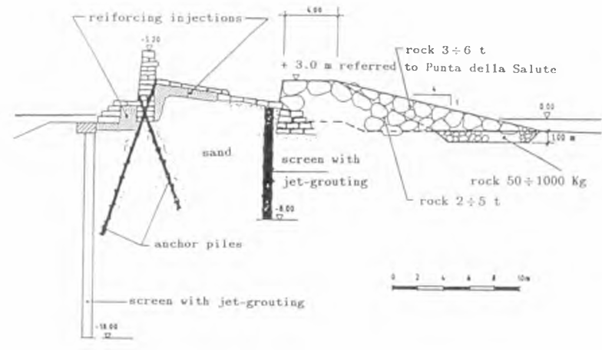
The murazzi are still in use today, with their design having been improved over the years (Fig. 8). One addition is outward facing sections of stone, called “spurs”, which are intended to break up and dissipate the energy of incoming waves (Ciriacono, 2018). However, despite their impressive design, the murazzi are far from indestructible. In 1966, the historic storm breached the murazzi in multiple places and extensive repair work was done to restore the walls (Franco et al. 1993).
Ground Level Elevation
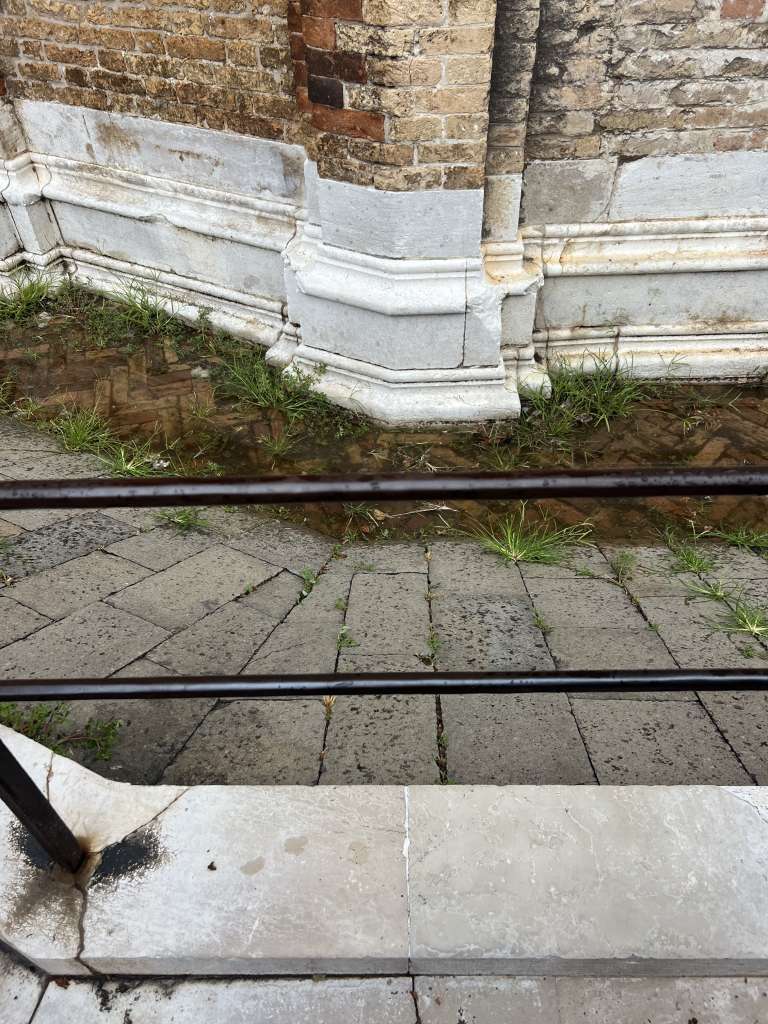
During an Engineering Rome study abroad program, I toured Venice with twenty other students. On the tour, came across a beautiful church situated at the end of a large plaza. As we walked closer to the base of the church, we could see a short stone slope that descended to meet it (Fig. 9). The base of the church began almost a foot below the stones that we were walking on, built on a layer of waterlogged red brick. This small portion of exposed red bricks is indicative of a simple but ingenious flood prevention technique. Since the very beginning of Venetian history, the ground level has been regularly built up to accommodate the variable tide levels (Fletcher et al. 2009). In the book Flooding and Environmental Challenges for Venice and its Lagoon, C.A. Fletcher and T. Spencer found that “The average long term rate of buildup in the ground level has a value of more than thirteen centimeters per century” (Fletcher et al., 2009, p. 107).
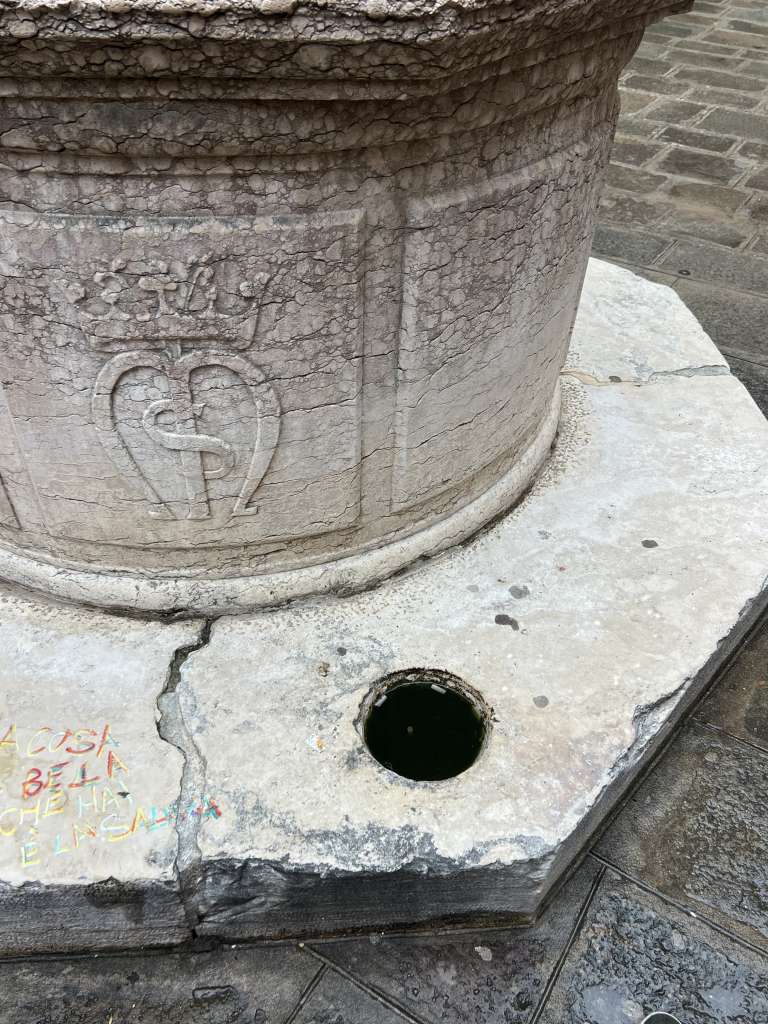
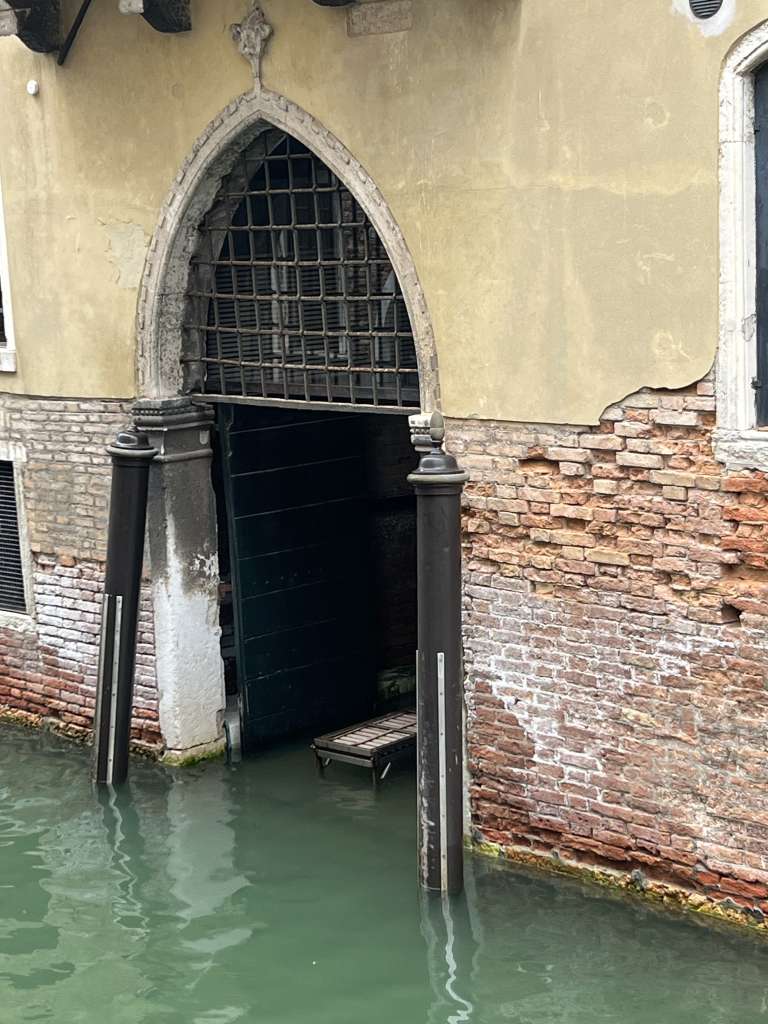
Nearly every aspect of infrastructure in Venice has been subject to this treatment. City streets, walking paths, and public spaces such as the square have all been built up (Fletcher et al. 2009). Acqua alta also posed a threat to the main water source of the Venetians. Raising the well height (Fig. 10) along with the rising ground level prevented brackish lagoon water from entering and contaminating these vital sources of drinking water (Fletcher et al. 2009). These changes did not only apply to public spaces. In the late nineteenth century, an engineer decreed that every Venetian citizen should raise the height of their house’s ground floor, as well as their windows and doors (Fletcher et al. 2009). Despite these modifications, some ground floors of houses are used for boat storage or only contain temporary furniture (Fig 11).
MOSE
In 1966, the tide surpassed its record height and continued to rise, sparking growing concern among Venetians. A combination of intense Sirocco winds and rain caused a storm that flooded Venice entirely (Trincardi, 2016). If any residents dared to walk across St. Marco’s Square, the water would reach their shoulders. The fallout of this disaster was severe. Hundreds of homes, businesses, and works of art were damaged or entirely lost.
While the fear of floods was a prevalent concern in Venice, the flood of 1966 acted as a wakeup call. A large-scale solution was needed to reduce the devastating impacts of acqua alta. The MOSE project, which stands for Modulo Sperimentale Elettromecanico, thus began. This project was ambitious, evidenced by the fact that it became fully operational in 2020, over thirty years after its initial conceptualization and fifty years after the flood that triggered its creation (Faranda et al., 2023).
The MOSE system is a collection of barriers at the three inlets connecting the Adriatic Sea to the lagoon: Choigga, Malamocco, and Lido (Sammarco et al., 2024). Each barrier is made up of a varying number of gates, with 78 gates across all the inlets (Sammarco et al., 2024). These gates rise during periods of high tide, separating the lagoon and the Sea. When the gates are applied, the Adriatic Sea can rise to a tide level of up to 3 meters above the mean sea level, while the tide within the lagoon will remain relatively stable (Sammarco et al., 2024). The overarching mechanism of the barriers is similar between the inlets, but each one was adapted for the unique channel it operates in. For example, the Lido inlet features two barriers, separated by a manmade island and the Lido gate control center, whereas the other two inlets only have one (Venezia Nuova Consortium, 2024). The Choiggia and Lido barriers are also equipped with small locks, which allow boat traffic to pass through even when the gates are raised (Venezia Nuova Consortium, 2024).
These thick steel gates are up to 20 meters wide, 28 meters high, and 5 meters thick (Sammarco et al., 2024). At each barrier, the gates are attached to a concrete caisson built directly into the seabed with a hollow for the gate to rest in (Fig. 12), so that the MOSE gates remain level with the canal when they are inactive (Venezia Nuova Consortium, 2024).
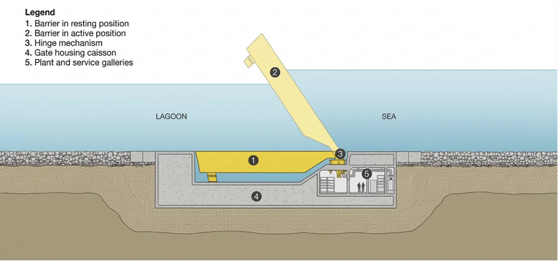
Each of the MOSE gates is connected to its respective caisson by 2 hinges that let the gates rotate as one about a single axis (Sammarco et al., 2024). The male element of the hinge is connected to the gate, whereas the female element is connected to the caisson. Maintenance of the MOSE gates is made possible by a section of tunnel within each caisson. When all the caissons are put together, a long tunnel forms that enables maintenance workers to travel underneath the gates (Sammarco et al., 2024). Regular maintenance plays a significant role in the survival of MOSE (Fig. 13). Right now, two of the most pressing problems are marine growth that covers the gate hinges, and large amounts of sediment gathering in the caissons (Biondi, 2026).
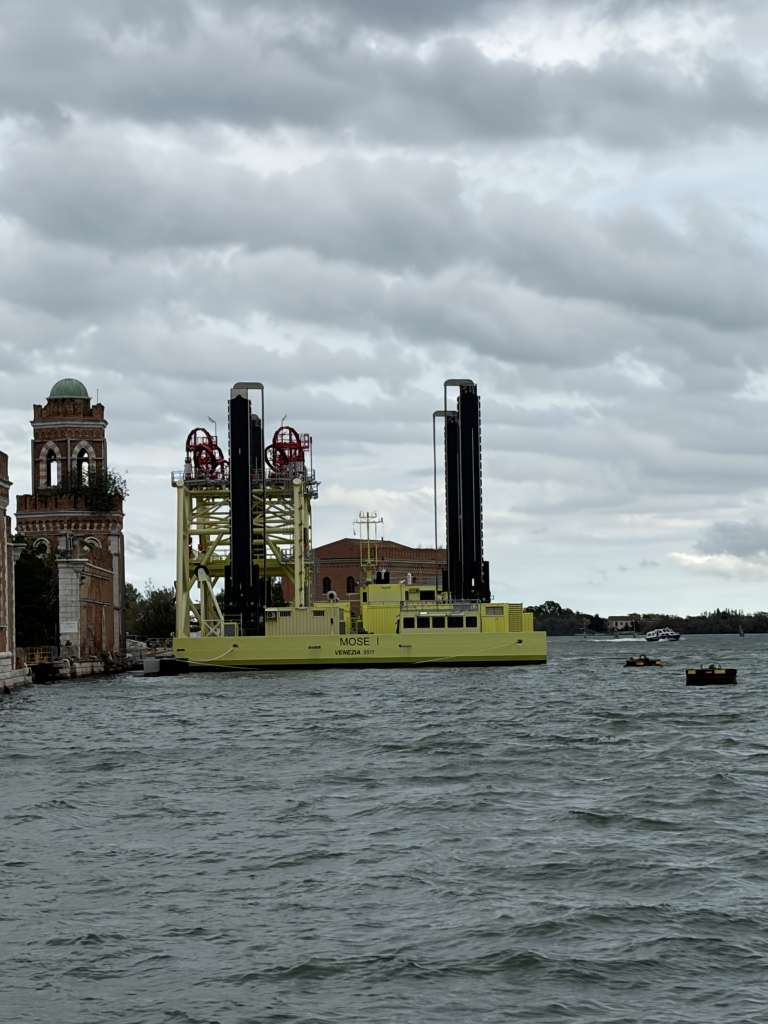
A large concern regarding the MOSE project was its environmental and economic impact. If the inactive gates continuously blocked the flow of water through the inlets, the water of the Venetian lagoon could become stagnant, harming the delicate ecosystem within it. Temporary obstructions in the gates’ channels can significantly reduce the time it takes to renew the water in the lagoon, which may lead to decreased oxygen levels and increased water temperatures (Biondi, 2026). However, the unobtrusive gate design has thus far avoided these environmental consequences. The design also enables the lagoon to remain accessible by boat, allowing the transfer of people and materials to continue at an uninterrupted pace, crucial to the Venetian economy.
The barriers are only deployed in instances of a forecasted tide of over 1.3 meters (Biondi, 2026). When this call is made to activate the gates, compressed air is inserted into them. As air fills the gates and water exits through openings at the bottom, the gates rise to about 45 degrees, becoming lighter (Sammarco et al., 2024).
The installment of the MOSE gates has temporarily alleviated the risk of severe flooding that would mimic the events of 1966. In the past six years, the gates have already been deployed over one hundred and fifty times (Whittle, 2024). However, while the gates were initially believed to be a long-term solution that would preserve Venice for a century, new data suggests that they will not last for as long as engineers expected. In Venice, the water level has risen over a foot since the nineteenth century (Fig. 14 and 15) (Bahna, 2024). The gates only accommodate a tide level of 3 meters above mean sea level, meaning that if the water rises high enough that waves can surpass this height, MOSE will become obsolete.
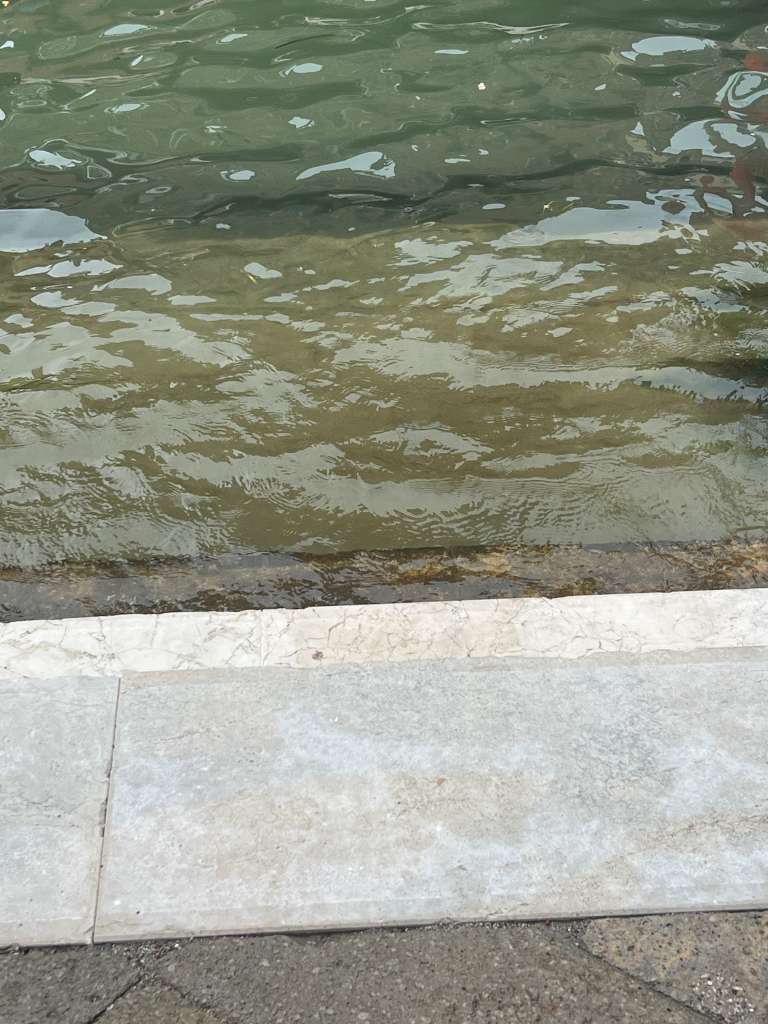
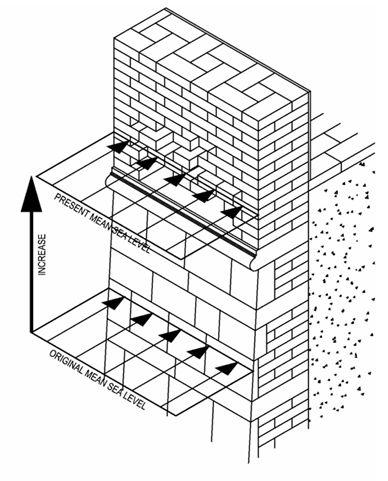
Even before the barrier becomes submerged with water, rising water levels pose serious issues. In a study titled “The prediction of floods in Venice: methods, models and uncertainty”, it was estimated that if the current rate of emissions remains unchanged, “late in this century, MOSE could be activated for approximately 260 days per year” (Biondi, 2024). A drastic decrease of water flow between the lagoon and the sea would change the lagoon’s ecosystem and reduce biodiversity. With all these considerations, the consensus is that MOSE will only remain a feasible solution for anywhere from 50 to 75 years (Francesca, 2024).
Public opinion of MOSE reflects these anxieties. The six-billion-dollar project faced delays and scandals during its construction. Many people now view it as a costly and impermanent solution (Vianello, 2021). However, as MOSE continues to effectively combat hundreds of instances of acqua alta, it is a reason for hope. Although MOSE was not the miracle solution many Venetians had hoped for, it proves that we have the technology to protect the city from devastating floods.
Proposed Solutions
Engineers are seeking the next step forward in Venetian flood prevention. Victor Bahna’s 2024 thesis explores a proposed solution involving an aquifer located directly beneath the city center, beneath a layer of clay. During the industrial revolution, businesses were allowed to pump water out of the aquifer, causing Venice to sink rapidly. Now, doing the reverse could undo that damage. Drilling wells throughout the city and injecting water back into the aquifer layers could cause the clay layer and the city built on top of it to rise. This idea, although costly, holds the promise of raising Venice by almost 30 centimeters (Bahna, 2024).
Another solution could permanently eliminate the need for tedious flood prevention efforts in Venice. An article written by Lionello et al. (2025) says that the city has always been subject to temperamental, ever-rising ocean tides. Now, some groups are advocating transforming the lagoon into a lake, cutting off access to the Adriatic Sea. Permanent barriers would need to be built within the inlets where the MOSE barriers are currently located. Additionally, the islands and embankments that currently separate the lagoon from the ocean would need to be raised. The cost of this project is nearly four times that of MOSE. It would require constant water quality attention, and the ecosystem of the lagoon would be permanently altered. To account for economic and tourist activity, large locks or a new port would need to be created (Lionello et al., 2025).
Personal Reflections
My experience in Venice opened my eyes to the challenges of engineering in an ever-changing environment. As I walked past the crooked clock towers, peeling plaster, and overflowing drains in St. Mark’s Square, I caught a glimpse of the experiences of Venetians throughout history. The city is a product of tireless efforts to stay afloat. I saw the first levels of buildings turned into storage for boats and waterproof barriers blocking partially submerged doorways. These efforts demonstrate the prevalence that acqua alta has in the day-to-day lives of Venetian residents (Fig. 16).
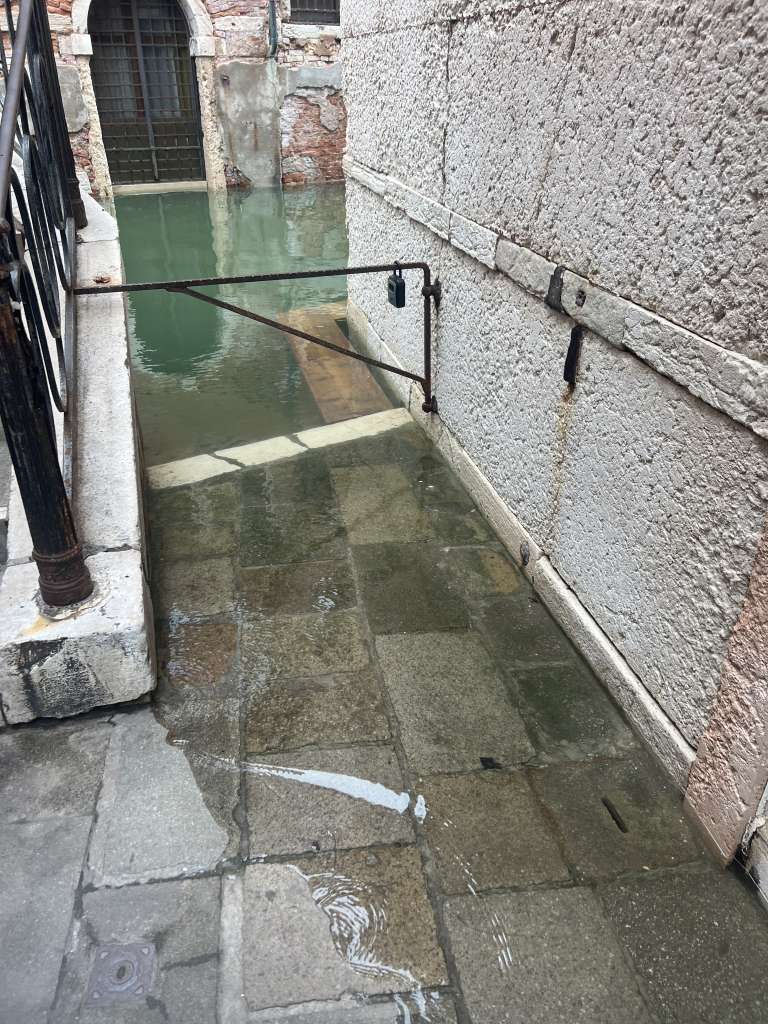
I think that current flood prevention methods have the potential to buy the city a couple of hundred years. Yet new solutions such as pumping water into the aquifer underneath Venice pose risks to the stability of many of the historical buildings within the city, along with private residences. Additionally, this solution would still only delay Venice’s submersion. With the accelerating pace of climate change, a permanent solution to acqua alta needs to be enacted. Despite the costs of isolating the lagoon, I believe that this solution will alleviate the burden of flood prevention for residents. Furthermore, I believe that it is the only way to ensure Venice will remain livable for centuries to come.
I would like to do further research on the role of tourism in the survival efforts of the city. While touring Venice, our guide Stefano Croce discussed how overtourism was plaguing the city. I am curious whether restrictions on tourism can raise money to aid in flood prevention projects, and about the impact that siloing the lagoon from the sea would have on tourism. Regardless of the answer to these questions, Stefano left us with his opinion, and it is one that I share. We must choose between Venice and the lagoon.
Conclusion
The history of Venice reveals a continual effort to adapt the city in order to preserve it. This began with small-scale, personal measures such as constructing buildings with specific materials such as Istrian stone and pozzolana mortar. Eventually these efforts shifted to large-scale hydraulic diversion projects, the systemic raising of the city ground level, and the construction of sea-facing walls around the lagoon barrier islands. Finally, the devastating flood of 1966 acted as a catalyst for the MOSE project, an ambitious collection of flood barriers that cost millions of dollars. However, despite these endeavors, the future of Venice remains uncertain as the quest for a long-term solution persists.
References
Bahna, V. (2024). Contemporary Architecture in a Historic Context: Using Present-Day Construction Techniques to Mitigate the Effects of Sinking in Venice, Italy. https://hdl.handle.net/1794/29880
Biondi, S. (2026). The MOSE Barrier System in Venice: Lessons Learned and Applicability to U.S. Coastal Infrastructure.
Bondesan, A., & Furlanetto, P. (2012). Artificial fluvial diversions in the mainland of the lagoon of Venice during the 16th and 17th centuries inferred by historical cartography analysis. Géomorphologie : Relief, Processus, Environnement, 18(2), 175–200. https://doi.org/10.4000/geomorphologie.9815
Camuffo, D., Secco, C., Brimblecombe, P., & Martin-Vide, J. (2000). Sea storms in the Adriatic Sea and the western Mediterranean during the last millennium. Climatic Change, 46(1–2), 209–223. https://doi.org/10.1023/a:1005607103766
Ciriacono, S. (2018). Management of the lagoon and urban environment in 18th-century Venice. Water History, 10(2–3), 141–161. https://doi.org/10.1007/s12685-018-0218-5
Faranda, D., Alberti, T., & Coppola, E. (2023). Attributing Venice Acqua Alta Events to a Changing Climate and Evaluating the Efficacy of Mose Adaptation Strategy. https://doi.org/10.5194/ems2023-26
Foraboschi, P. (2017). Specific structural mechanics that underpinned the construction of Venice and dictated Venetian architecture. Engineering Failure Analysis, 78, 169–195. https://doi.org/10.1016/j.engfailanal.2017.03.004
Fletcher, C., & Spencer, T. (2009). Flooding and environmental challenges for Venice and its lagoon: State of knowledge. Cambridge University Press.
Francesca. (2024, December 20). Climate and Mose in the fate of Venice. Fondazione Venezia Capitale Mondiale Della Sostenibilità. https://vsf.foundation/en/climate-and-mose-in-the-fate-of-venice/
Franco, L., & Tomasicchio, G. R. (1993). Hydraulic and mathematical modelling of historical and modern seawalls for the defence of Venice Lagoon. Coastal Engineering 1992, 1879–1894. https://doi.org/10.1061/9780872629332.144
Gugliuzzo, E. (2017). The “Serenissima” at Hazard: The Historical Phenomenon of Acqua Alta in Venice. https://doi.org/10.6092/2240-7715/2017.2.33-45
Khan, A.-R. (2017). Performance of concrete blended with pozzolanic materials in marine environment. MATEC Web of Conferences, 120, 03012. https://doi.org/10.1051/matecconf/201712003012
Lionello, P., Fant, V., Pasquier, U., Tosi, L., Cozannet, L., Nicholls, R. J., Cramer, W., Cremades, R., Giupponi, C., Hinkel, J., Sfriso, A., Teatini, P., Vafeidis, A. T., Umgiesser, G., & Haasnoot, M. (2025). Pathways for Adaptation of Venice and Its Lagoon to Sea-Level Rise. https://doi.org/10.21203/rs.3.rs-7420349/v1
Madden, T. F. (2010). A history of Venice: Queen of the seas. Recorded Books.
Marini, P., & Schubert, L. (2026). From the Venice Charter of 1964 to the Venice Appeal for a renewed urban culture. Conservar Património. https://doi.org/10.14568/cp35171
Progetto. MOSE Venezia. (2024, November 21). https://mosevenezia.eu/progetto/
Sammarco, P., Fischione, P., Romano, A., Bellotti, G., & Dalla Villa, S. (2024). Prototype data analysis of the dynamics of the Venice Gate-barriers during an extreme storm event. Coastal Engineering, 194, 104623. https://doi.org/10.1016/j.coastaleng.2024.104623
Trincardi, F., Barbanti, A., Bastianini, M., Benetazzo, A., Cavaleri, L., Chiggiato, J., Papa, A., Pomaro, A., Sclavo, M., Tosi, L., & Umgiesser, G. (2016). The 1966 flooding of Venice: What time taught us for the future. Oceanography, 29(4). https://doi.org/10.5670/oceanog.2016.87
Vianello, R. (2021). The mose machine: An Anthropological Approach to the building of a flood safeguard project in the Venetian Lagoon. Shima: The International Journal of Research into Island Cultures, 15(1). https://doi.org/10.21463/shima.104
Whittle, A. (2024, October 4). Mose: The audacious project to protect Venice from flooding and preserve the Venetian Lagoon. College of Engineering. https://engineering.nd.edu/news/mose-the-audacious-project-to-protect-venice-from-flooding-and-preserve-the-venetian-lagoon/