
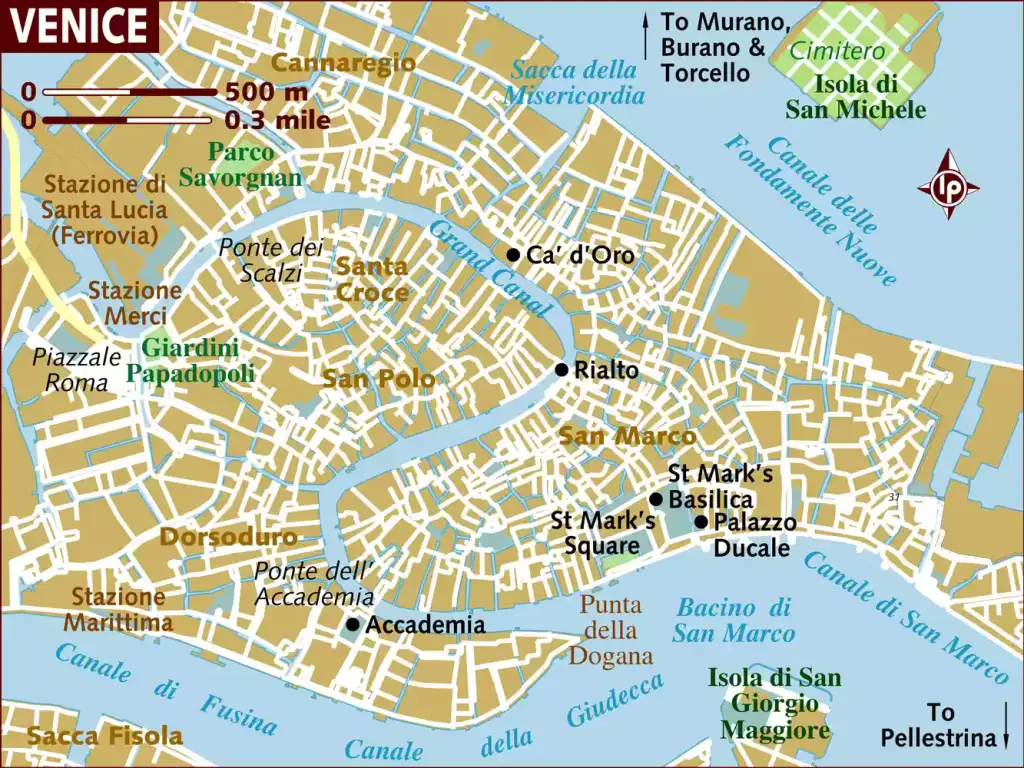
This paper will explore the rainwater cistern systems that brought fresh water in for many centuries and the MOSE barriers that now keep salty water out. I will use a historical lens to provide context about the city and studies on the subharmonic resonance and hydraulics the MOSE barriers utilize to protect the lagoon. Climate change poses a serious threat to Venice, so this paper explores the resilience Venetians have already shown regarding water and considers how much more effort protecting the city is worth. See Figure 1 for a map of Venice.
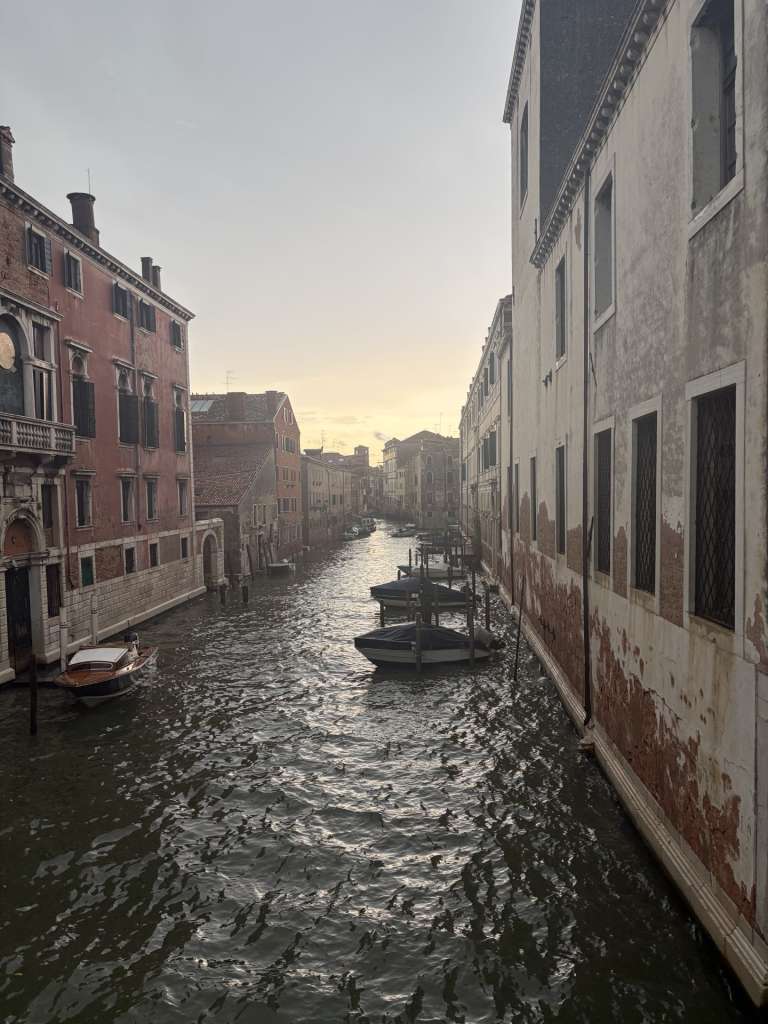
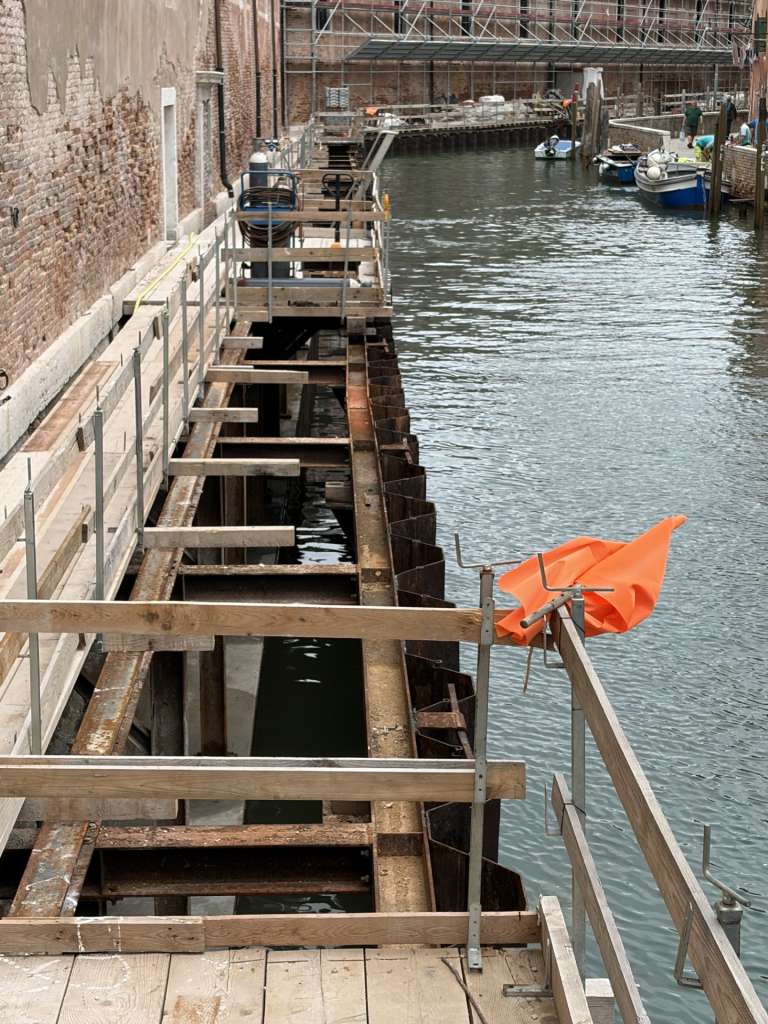
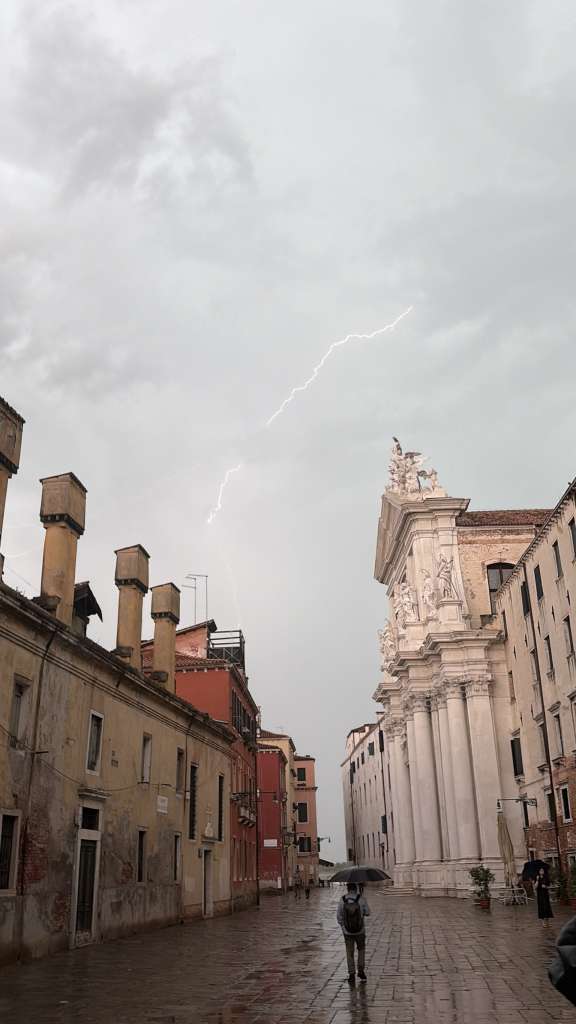
This summer I got to experience two different versions of Venice, Italy. The first time was sweltering and packed with classic tourist activities, the postcard version of Venice. But the second time, just a month later, was my favorite because I got to explore how the Venetians adapt to high tides and rain in a city surrounded by a salty lagoon. Figure 2 was taken on my second trip. While exploring the city, I noticed outdated infrastructure, such as trashed rainwater cistern systems, but also new infrastructure, such as the canal bank construction pictured in Figure 3. Observing these in person made me want to understand how Venetians throughout history have lived their everyday lives amongst the changing tides. Engineers marvel at the City of Water because each project there is a unique challenge.
Literature Review
The lagoon defines Venice. Their genius ways of navigating and building in it make it so that only they could settle there. Venice was created by refugees of the Western Roman Empire in the 5th century who were fleeing barbarian attacks from the Huns (Schor, 1871, p. 1). The Huns did not have the boat-building technology to enter the shallow lagoon, but those that became the Venetians did. Schor (1871) writes, “the islands so populated soon gave a strange sight of activity. The muddy lands, were made firm, houses and churches built, vessels constructed in order to hold communication with the terra ferma and to attend to the commerce which was just then beginneng to flourish” (p. 1).
In the 7th century, the first Doge was elected, Paul Lucio or Paoluccio Anafesto of Eraclea. He unified all the islanders in the area and began the reform of the government. The main powers of the Doge included commanding the army, electing bishops, and collecting taxes. During the 8th and 9th centuries upheaval and constant warfare between islands led to the turnover of many Doges and reshuffling of political duties. Eventually, after the Venetians defeated the Hungarian army in the 10th century, a unified Venice settled into peace (Schor, 1871, pp. 3-20).
Rainwater Cistern Systems
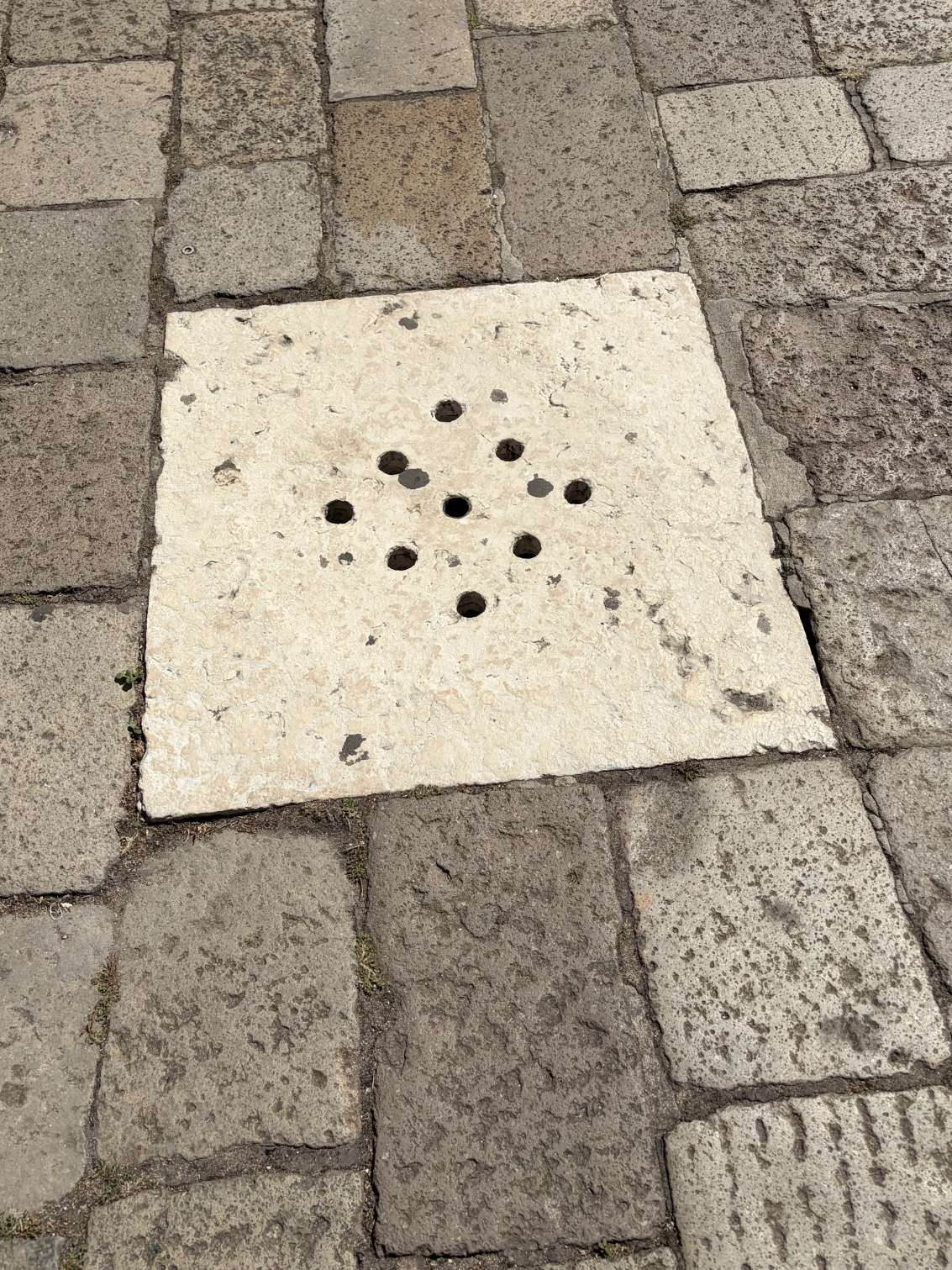
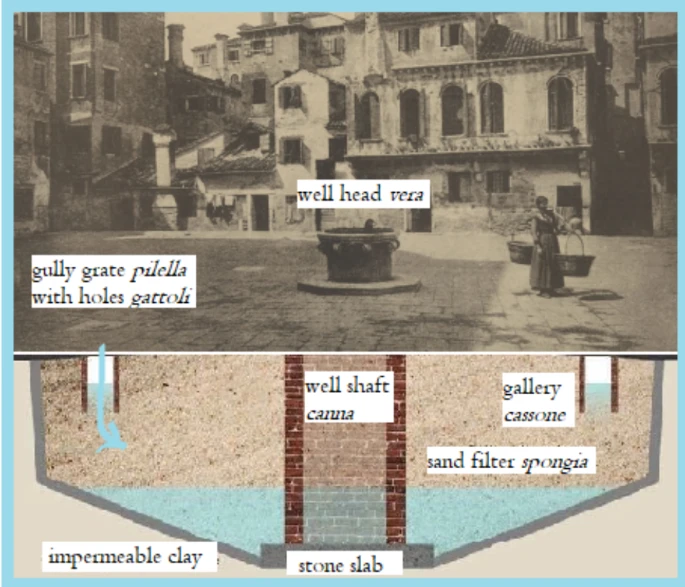
It is ironic how in a city surrounded by salty water, there is a serious lack of fresh water. Fresh water is necessary for people to live, so Venetians had to figure out a way to collect, treat, and distribute rainwater. They developed a rainwater cistern system throughout the entire city, shown in Figure 4. The process included drains that collected rainwater, sand to filter it, and an underground cistern that stored the fresh water for the citizens. Figure 5 shows the aforementioned drains. This simple method provided fresh water to Venetians for many centuries.
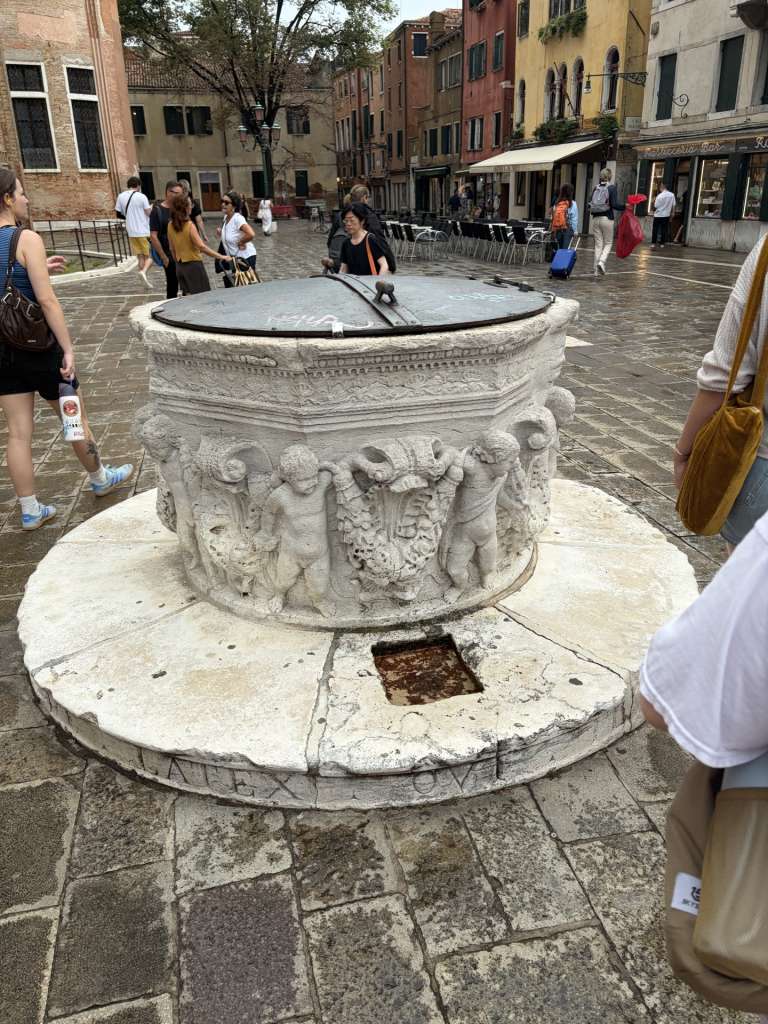
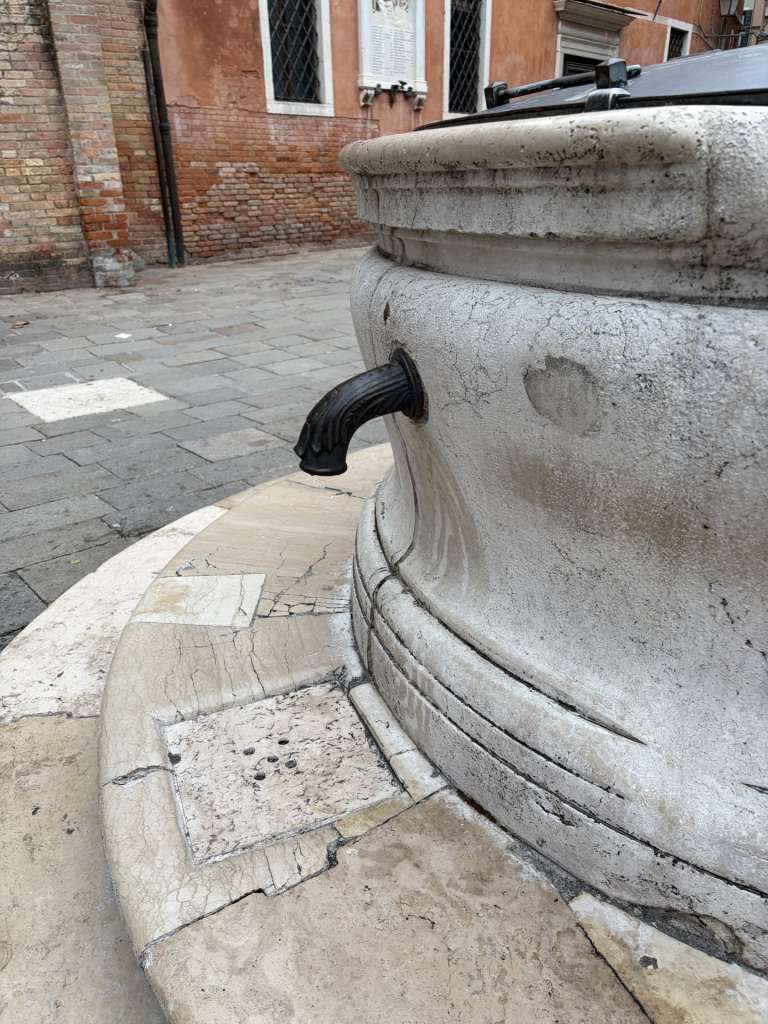
Throughout the eleventh and twelfth centuries, new cisterns were funded for public and private areas, totaling in about 5000 cisterns in all of Venice. Public cisterns were opened once a day by special keyholders, whereas many upper-class people had private cisterns they could access whenever (Gentilcore, 2021, para. 33). Figure 6 shows the pipe where fresh water was accessed. According to Gentilcore (2021), “by the sixteenth century much of Venice’s open space—its squares and streets—was dedicated to water capture in order to supply these cisterns” (para. 11). To supplement this system, fresh water was also shipped from the mainland. A new building style was created to maximize the collection of rainwater, the Venetian Double House (Gentilcore, 2021, para. 11). The complex was designed such that “each unit in a block of dwellings shared an internal courtyard but had its own outer door, interior stairway and indoor underground cistern, fed by rainwater from the roof and the limited paving around the building” (Gentilcore, 2021, para. 11).
From an urban planning perspective, the Venetian Double House was a great way to make use of limited space. The majority of Venice underground is taken up by these cistern systems, canals, and building foundations. Especially on an island, often times the only way to accommodate more citizens is by building up. Today, apartments are a more sustainable method of living than single-family homes because electricity, water, and horizontal space are conserved. I imagine that the Venetian Double House became the most sustainable way of living at the time because it was an efficient way to collect the most rainwater and the cistern was easily accessible to many citizens.
In 1575-1577, a terrible epidemic caused people to rethink the hygiene of their drinking water. Veronese doctor and astronomer Annibale Raimondo blamed the epidemic on high tides and flooding that caused salty lagoon water to drain into the cistern (Gentilcore, 2021, para. 1). The epidemic wiped out a quarter of the city’s population, a majority of whom were poor and couldn’t afford safe drinking water (Gentilcore, 2021, para. 1). The Venetian health officers did their best to clean the wells and remove “a certain muddy mixture so foul that it caused illness” (Gentilcore, 2021, para. 2). Unfortunately, it was almost impossible to remove all the salt water that had seeped into the sand and continued to cause health problems (Gentilcore, 2021, para. 2). To account for this seepage, a new layer was introduced, “the cistern’s walls and floor were lined with a layer of impermeable clay half a metre thick to prevent the rainwater from flowing away (and saltwater from flowing in). Located in the centre of the cistern was the well-shaft (canna), built of special bricks (pozzoli) and water-permeable mortar (two parts clay to one part sand), into which the water would accumulate. The well-head sat on top of the shaft, allowing access to the water below” (Gentilcore, 2021, para. 9).
In times of high tide, the fresh water would have to be drained, and the sand flushed with fresh water to remove the residual brackish water. Street cleaners would also plug the drain holes with clay when high tides were predicted (Gentilcore, 2021, para. 14). Figure 7 highlights each part of the system.
Upon my visit to Venice, I noticed that all the cisterns are locked and some are filled with trash. They are no longer used to collect fresh water for Venice. Instead, fresh water is delivered by giant pipes connecting the city to the mainland (Stefano Croce). Once the pipes were built, it required a lot less effort to maintain the supply of fresh water to the city. Beyond turning the tap, countless tradespeople and hours of shipping supplemental river water into the cisterns were necessary for Venice to function as a city. A mainland city could have access to water from a nearby river or lake and build their structures on foundations that weren’t prone to shifting with the tides. However, the wonder I felt weaving through narrow car-free streets and crossing canals as gondoliers ferry people around the city helped me to understand why all that effort was worth it to the Venetians.
Fresh water is essential to everyday life no matter where you live. The amount of effort that goes into delivering drinking water to people is shocking. Throughout history Venetians have developed ways to make that possible and avoid another epidemic from too much brackish water in their supply. From rainwater cistern systems to piping water in from the mainland, the thirst of the Venetians is quenched.
Acqua Alta Weather Patterns
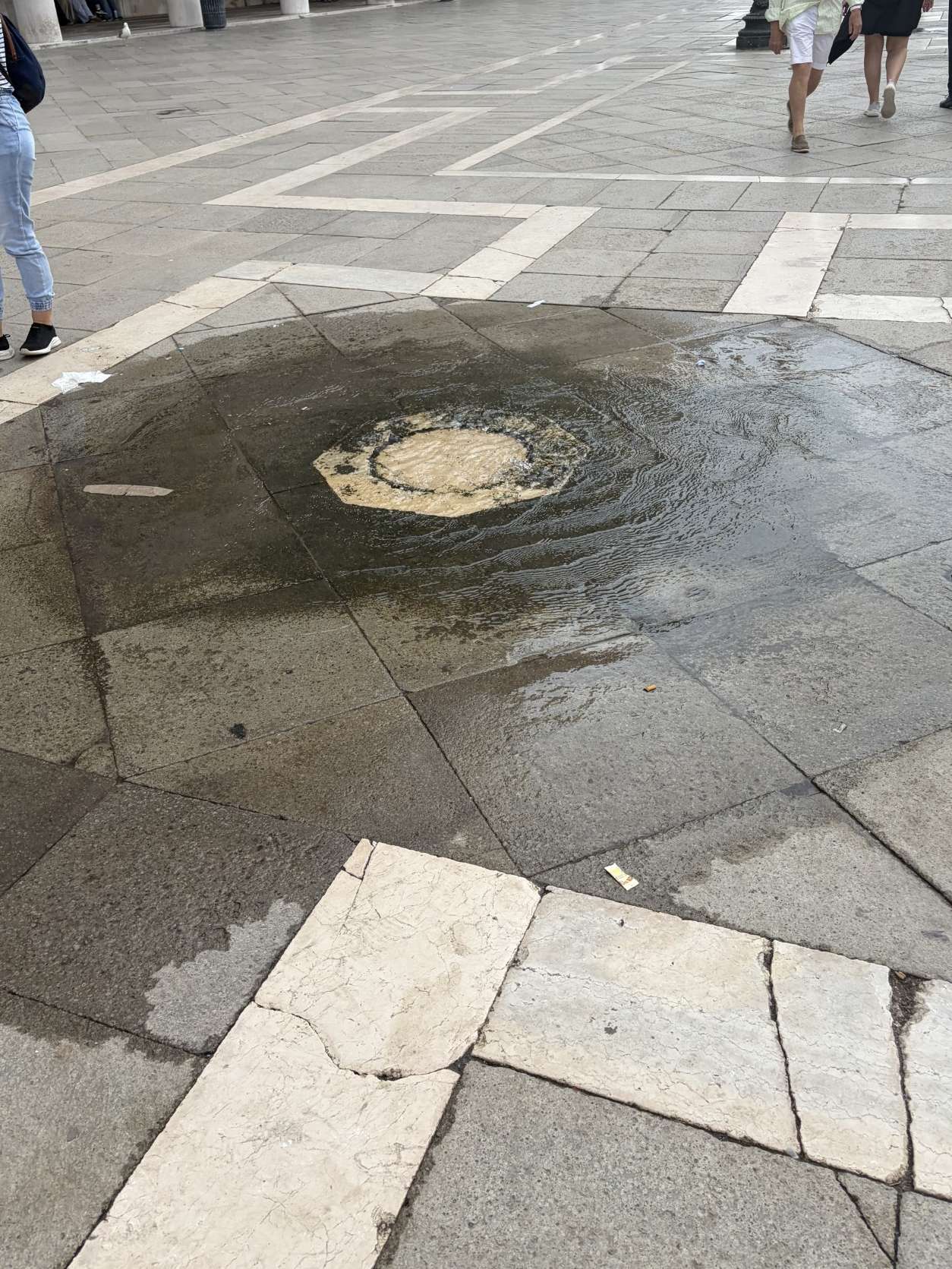
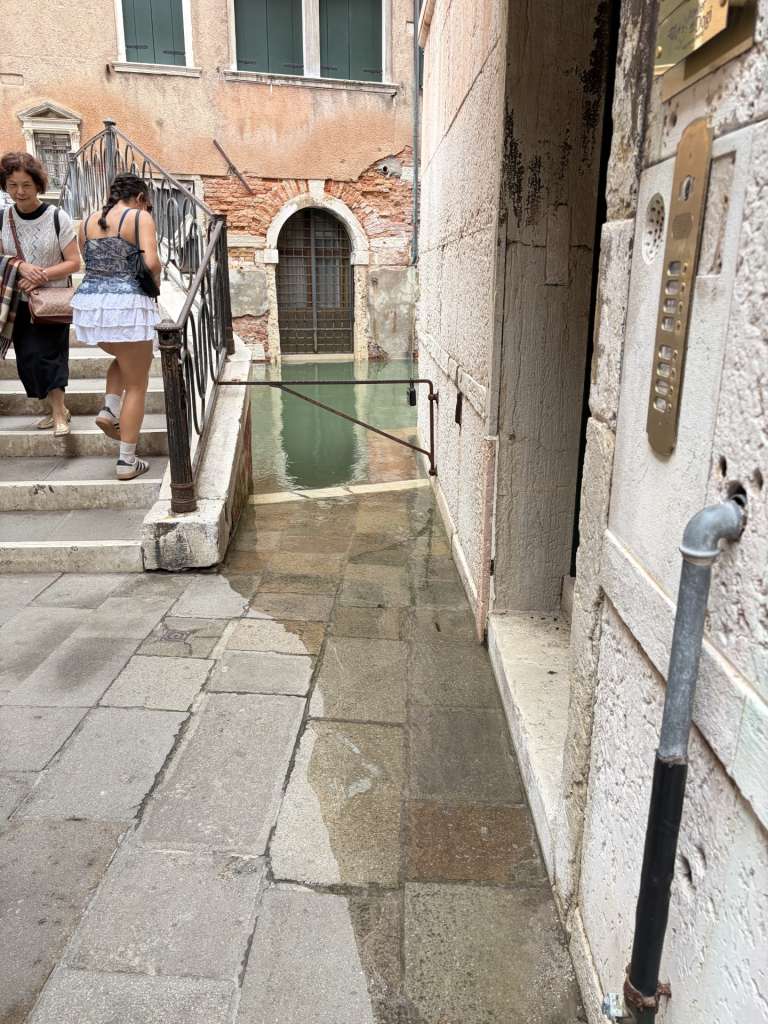
The second dilemma caused by settling in a brackish lagoon is that high tides flood canals and seep into infrastructure. I witnessed this firsthand when the class visited Venice. Rain poured and wind roared, causing roiling waters to flood some canals and bubble up out of stormwater drains. See Figures 8 and 9.
Especially due to rising sea levels around the world, high tides are a continuous worry for Venetians. Ground floor building levels and walkways get flooded, transportation of people and goods get disrupted, and the lagoon ecosystem is strained. Locals have adapted well to the issues associated with the high tide. Very minimal furniture is placed on the ground level, and everyone owns thigh high rubber boots so that they can traverse through the water (Stefano Croce). Figure 10 shows a canal overflowing.
Faranda et al. (2023) describes the weather patterns that create this issue, “when strong winds blow across the Adriatic Sea towards the Venetian Lagoon, they can cause an increase in the water level, known as storm surge. This is because the winds push the water towards the city and the narrow entrance of the lagoon limits its ability to escape. The synoptic weather situation that causes these strong winds is typically a low- pressure system over the Tyrrhenian Sea, known as Genoa Low. If combined with high- pressure systems over central and northern Europe, this creates a strong pressure gradient and thus strong winds blowing towards Venice” (Faranda et al., 2023, para. 2).
These conditions cause Acqua Alta, in English that means high water. The worst Acqua Alta events were recorded in 1966, 2018, and 2019 and caused serious damage to Venice, including the infamous Saint Mark’s Basilica (Squires, 2008). People living in Venice must deal with detrimental consequences every time it simply rains, a challenge many others never have to experience.
Response to High Tides
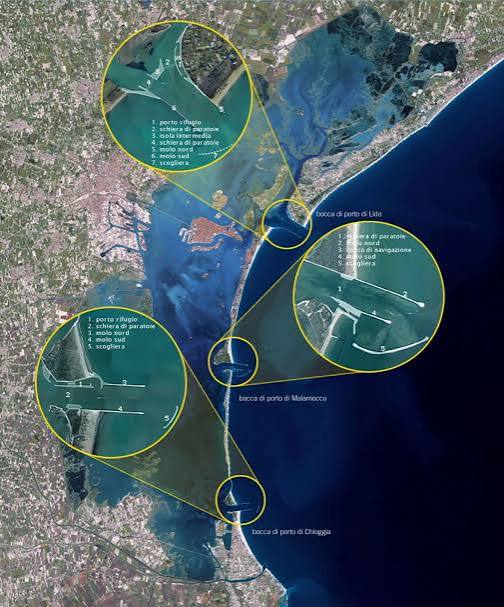
The most remarkable solution to this issue is the creation of the Modulo Sperimentale Elettromeccanico, the Experimental Electromechanical Module, (MOSE) barriers. A system of 78 inflatable barriers can be raised to protect the lagoon from high tides in the Adriatic Sea. Figure 11 shows where the barriers are placed.
The main controversy regarding the barriers is the extremely high cost of €6 billion, with estimated annual maintenance costs of €8 million (Squires, 2008, para. 4). Venetian and Italian governments are hesitant to fund such a project that will incur port fees and delay shipments whenever the barriers go up (Giupponi, 2024, para. 8). Giupponi (2024) also warns that closing the lagoon off from the sea limits sediment accumulation on the salt marshes which puts the survival of the lagoon at risk (para. 8).
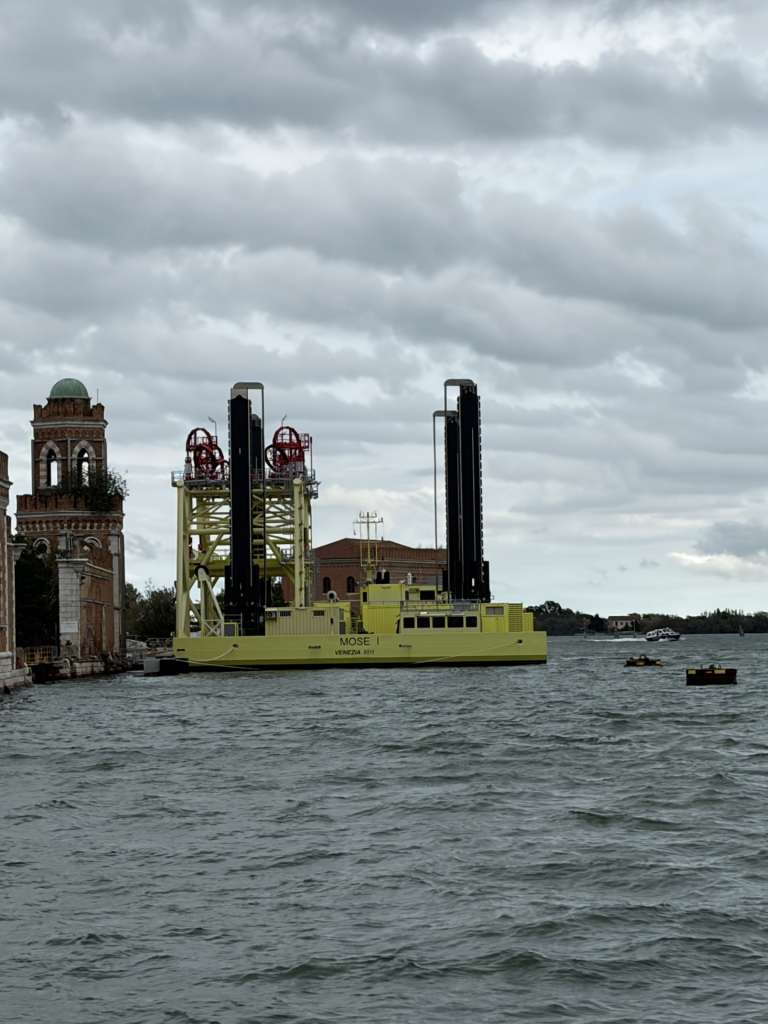
Squires (2008) states that, “the 300-tonne hinged panels, 92ft wide and 65ft high, will be fixed to massive concrete bases dug into the sea bed” (para. 6). They are routinely maintained by a specially equipped boat, shown in Figure 13. Simple hydraulic processes are used to raise and lower the barriers. When not in use, they are filled with water to weigh them down and store them in cases below the surface of the water. Then, in just 31 minutes they can be raised to defend the lagoon. They are pumped full of air, the water drains out, and they float upright (Buckley, 2022, para. 33). Figure 14 provides a visual for this simple process. Buckley (2022) explains that the barriers withstand the pressure of the Adriatic Sea by being raised four or five at a time, with a three-inch gap between each barrier (para. 35).
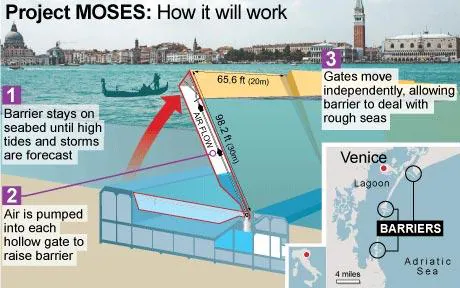
When designing the MOSE barriers, engineers had to consider the resonance patterns of the waves and how the barriers would oscillate and interact with the water. A study done by Paolo Sammarco et al. (2024) reviews the 2D and 3D experimental model tests done on the barriers. Sammarco et al. (2024) writes, “gates were subjected to regular and irregular, linear and nonlinear waves, combined with currents. The extensive experimental campaigns highlighted the excitation of a subharmonic resonance phenomenon in which the gates oscillate at a frequency half of that of the incident waves and in opposition of phase with the immediate neighboring gates” (Sammarco et al., 2024, para. 6).
The finding of the subharmonic resonance sparked new research to try to interpret it. Studies demonstrated that these modes depend on the gate geometry and inertia, water depth, and the amplitude of the incident wave motion (Sammarco et. al, 2024, para. 7). The equation below is a simple harmonic motion equation. However, strong forcing waves create an irregular, extremely sensitive response in the barriers. The equation to model the wave becomes a nonlinear combination of several interacting oscillations that does not look as simple as the equation below (Sammarco et al., 1997, p. 1). Sammarco et al. (1997) found that as modulational amplitude increases, the barrier motion becomes chaotic and very hard to predict.
Simple Harmonic Motion equation where A is the amplitude, ω is the angular frequency, and t is the time.
C.C. Mei et al. (1994) includes that “neighboring gates may oscillate out of phase in a variety of ways, at half of the frequency and with relatively large amplitude” (p. 2). This highlights how the out-of-phase motion will eventually erode the barriers and hinges, especially in a brackish environment. Venice spent €6 billion on this project, so they have to ensure that the lifespan of the solution was worth it.
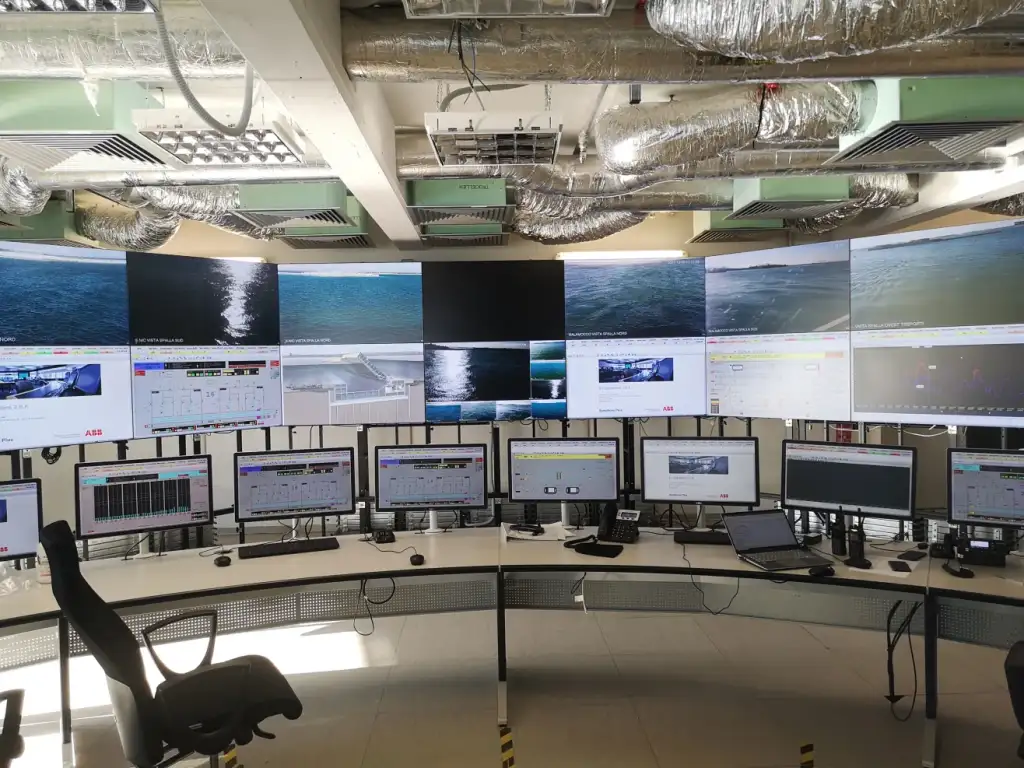
The officials in the control center hold a lot of power because each time high tides are predicted, they must decide whether or not to raise the barriers. See Figure 12 for a look into the control room. For example, a tide of 125 cm above normal levels could be predicted but then unforeseen wind and rain cause it to really rise to 138 cm. Mistakes in the past have urged officials to set a minimum of 110 cm above normal levels to raise the barriers (Buckley, 2022, para. 45). Beyond the erosion of the technology with continued use, there are many other sensitive effects of the MOSE that must be balanced.
Things to take into consideration are the environmental effect on the lagoon when cutting it off from the Adriatic, the cost of raising the barriers versus sacrificing certain islands, and the fact that boats can’t get through when the barriers are up. Fletcher and Spencer (2005) discuss that the lagoon’s connection to the Adriatic Sea is important because it is “ensuring that the tide could penetrate deep inside the lagoon, in and out twice a day to wash the sewage away, keep the waterways healthy, and the canals and channels deep” (p. 11). But the question remains how much of the city and the lagoon officials are willing to sacrifice because, as our Venetian tour guide Stefano Croce said, in 50 years the Venetians will have to choose between saving the lagoon or saving Venice.
Personal Reflections
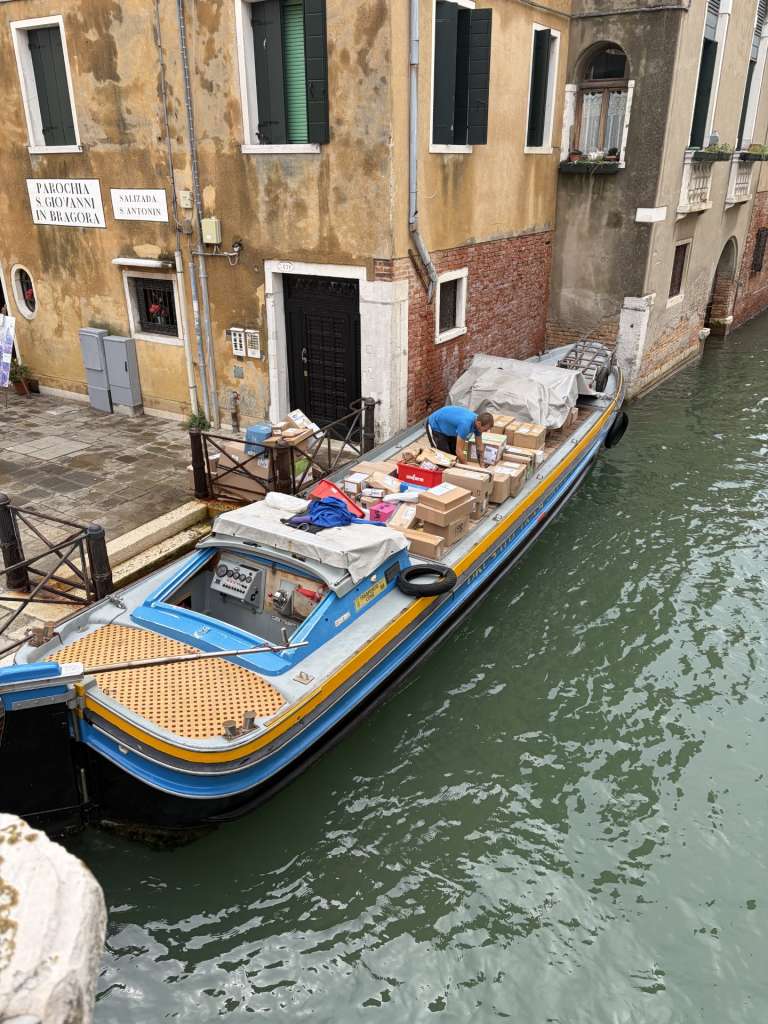
Venice is truly a magical place. I really enjoyed the peaceful neighborhoods that weren’t overflowing with tourists. It was also a relief to be able to walk without being worried about being run over by a car. The slower pace of life could be felt in every charming bridge and colorful building. As someone who loves to be by the water, I enjoyed the city’s connection to the lagoon. I also thought that the vaporetto system was very easy and convenient to use. Commuting by boat is an everyday occurrence. Before coming to Venice, all I really knew was that people used boats instead of cars. But visiting it sparked so many more questions relating to drinking water, building structures, flood control, and deliveries. Figure 15 shows a delivery boat with Amazon packages. I wanted to understand all the background processes that make it a livable city. I am amazed at what engineers can accomplish, and Venice is a special type of challenge. Seeing Venice makes me excited for my future career and the different things I will be able to design to move water in and out of a city.
Around every corner in Venice there was a learning experience for me as an engineer. I am very grateful that my class got to do a guided city tour with Stefano Croce because he pointed out many structural design details that one cannot learn on the average city tour. Venice proves that with the right infrastructure, ambition, and funding any city can be livable.
It’s saddening to think of abandoning a place rich with history and a unique way of life. However, it’s amazing that it’s already lasted this long, even almighty Ancient Rome has been reduced to ruins. Most of the city is devoted to tourism; only 50,000 citizens actually live on the island (Stefano Croce). That is the same size as the University of Washington student population. No one wants to consider it, but is it time for Venice to succumb to the Adriatic Sea and fully sink into the lagoon? The world must weigh the costs of keeping Venice afloat because the solutions are becoming more expensive and damaging to the lagoon ecosystem.
Summary
Throughout the centuries, Venetians have proven their adaptability when it comes to bringing fresh water in and keeping brackish water out. The common denominator in every issue the city of Venice has is high tides. Rainwater cistern systems were utilized to filter and collect essential fresh water. High tides contaminated the fresh water and caused an epidemic, so rainwater cistern systems have been replaced with giant pipes connected to the mainland. To reduce flooding and prolong the life of structures, the MOSE barriers were designed and implemented around the lagoon. This system has been developed to keep the high tides from ruining the city, but the Acqua Alta events will only become more drastic as time goes on.
It is time to consider what is next for Venice and how long the MOSE barriers will protect the city. The world continues to learn from the ruins of Ancient Roman engineering, so even if Venice succumbs to the lagoon, it would continue to inspire engineers for centuries to come.
References
Bakerjian, M. (2019). Use these tips and map when visiting Venice neighborhoods. Trip Savvy. https://www.tripsavvy.com/venice-neighborhoods-map-and-info-1548179
Buckley, J. (2022, February 18). The flood barriers that might save Venice. CNN. https://edition.cnn.com/travel/article/mose-venice-flood-barriers
Faranda, D., Ginesta, M., Alberti, T., Coppola, E., & Anzidei, M. (2023a, November 8). Attributing Venice acqua alta events to a changing climate and evaluating the efficacy of Mose Adaptation strategy. Nature News. https://www.nature.com/articles/s41612-023-00513-0
Fletcher, C. A., & Spencer, T. (Eds.). (2005). Flooding and environmental challenges for Venice and its Lagoon. Google Libri. https://books.google.it/books?id=8l9dfXu8OgYC&dq=fresh%2Bwater%2Bin%2Bvenice&lr=&source=gbs_navlinks_s
Gentilcore, D. (2021, October 5). The cistern-system of Early Modern Venice: Technology, Politics and Culture in a hydraulic society – water history. SpringerLink. https://link.springer.com/article/10.1007/s12685-021-00288-2
Giupponi, C., Bidoia, M., Breil, M., Corato, L. D., Gain, A. K., Leoni, V., Fard, B. M., Pesenti, R., & Umgiesser, G. (2024, March 14). Boon and burden: Economic performance and future perspectives of the Venice Flood Protection System – Regional Environmental Change. SpringerLink. https://link.springer.com/article/10.1007/s10113-024-02193-9
Sammarco, P., Tran, H. H., & Mei, C. C. (1997). Subharmonic resonance of Venice gates in waves. Part 1. Evolution equation and uniform incident waves. Journal of Fluid Mechanics, 349, 295–325. doi:10.1017/S0022112097006848
Sammarco, P., Fischione, P., Romano, A., Bellotti, G., & Dalla Villa, S. (2024). Prototype data analysis of the dynamics of the Venice gate-barriers during an extreme storm event. Science Direct. https://www.sciencedirect.com/science/article/pii/S0378383924001716#b34
Schor, J. (1871). History of Venice, from the beginning down to the present time. Colombo Coen. https://books.google.it/books?id=DxpG1QqOG8EC&dq=History+of+Venice+From+the+Beginning+Down+to+the+Present+Time&lr=&source=gbs_navlinks_s
Squires, N. (2008, December 6). “Moses project” to secure future of Venice. The Telegraph. https://www.telegraph.co.uk/news/worldnews/europe/italy/3629387/MOSEs-project-to-secure-future-of-Venice.html